Maria Corina Machado’s Nobel Peace Prize Marks a Turning Point for Bitcoin in Venezuela
Maria Corina Machado’s Nobel Peace Prize underscores Bitcoin’s vital role in Venezuela’s fight for democracy and economic freedom.
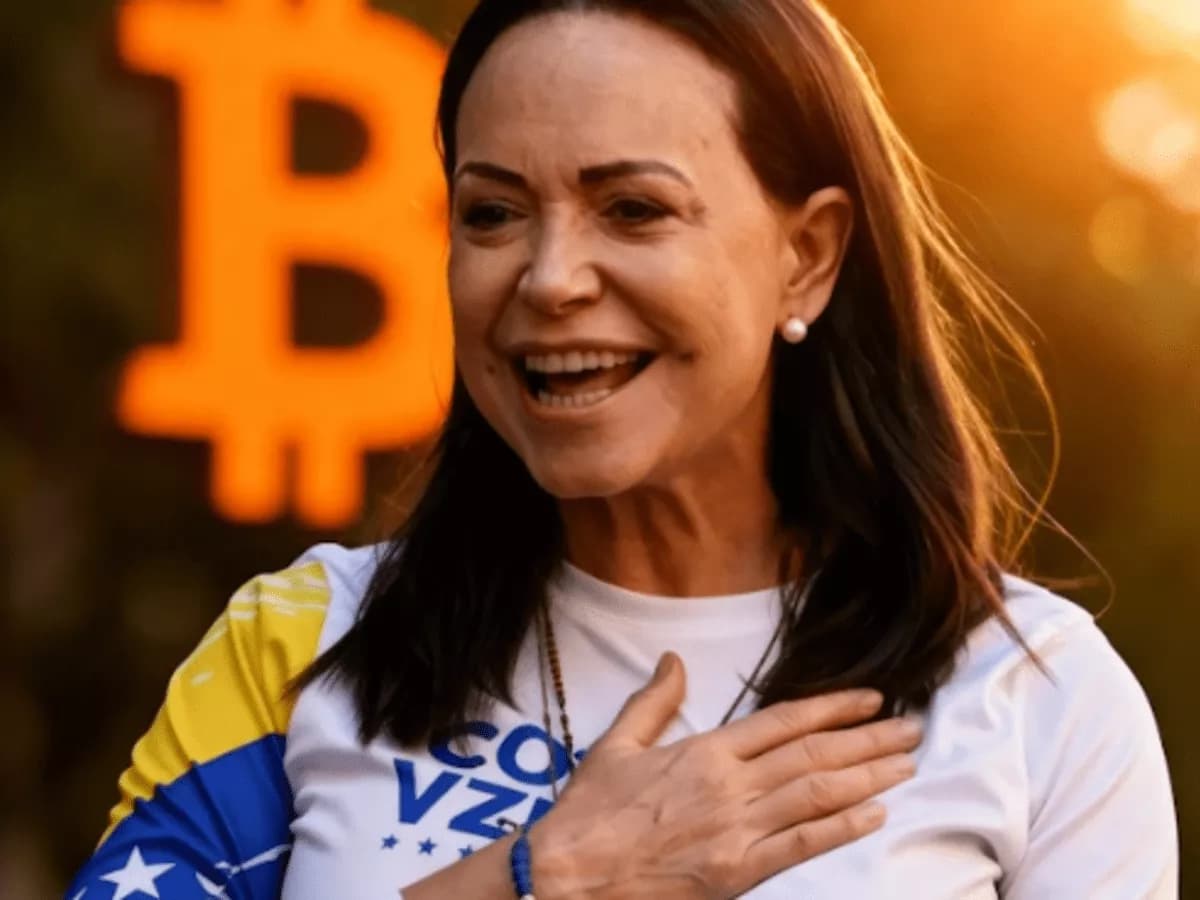
Maria Corina Machado, Venezuela’s leading opposition figure, has been awarded the Nobel Peace Prize, a recognition that celebrates not only her fight for democracy but also her embrace of Bitcoin as a tool for economic freedom. Her award has sparked excitement across the cryptocurrency community, highlighting how digital assets have become an unlikely lifeline for millions of Venezuelans enduring years of hyperinflation and state control.
The Nobel Committee’s chair, Jorgen Watne Frydnes, stated that Machado met Alfred Nobel’s original criteria for advancing “fraternity between nations” and the promotion of peace. The 58-year-old politician has long stood at the forefront of Venezuela’s pro-democracy movement, pushing for transparent governance and market-oriented reforms despite years of persecution by the ruling regime.
Machado’s relationship with Bitcoin began as a response to financial censorship. As government restrictions tightened and traditional payment channels were blocked, her political movement turned to Bitcoin donations to sustain its activities. “Fortunately, unlike bank wires, which the regime usually blocks, Bitcoin donations cannot be seized,” she said. “Let’s use this technology to bring about the change Venezuela desperately needs.”
Beyond political utility, Machado has expressed a broader vision for Bitcoin’s role in Venezuela’s future. She has proposed including the cryptocurrency as part of a national reserve if a democratic transition occurs, arguing that digital assets could restore financial sovereignty and stabilize the economy after years of hyperinflation and corruption.
Venezuela’s citizens, meanwhile, have already adopted Bitcoin and other cryptocurrencies out of necessity. With the bolívar effectively worthless and exchange rates heavily manipulated, digital assets now serve as a practical means of preserving value and conducting transactions. Stablecoins — particularly dollar-pegged tokens — are used daily for payments, remittances, and trade, allowing citizens to bypass the collapsing banking system.
“Bitcoin allows me to help my mom with all she needs in a disaster like Venezuela,” wrote journalist Javier Bastardo on X. “I can support her because of Satoshi Nakamoto. You can’t understand how important this tech is to me and my family.” His words echo the sentiment of countless Venezuelans who have found financial refuge in decentralized technology.
At the same time, the Venezuelan government has been exploring its own use of cryptocurrencies, reportedly preparing to conduct oil transactions through stablecoins in an effort to sidestep renewed U.S. sanctions. The move reflects the complex duality of crypto adoption in Venezuela — both a state instrument for sanctions evasion and a tool of survival for ordinary citizens.
Machado’s Nobel Peace Prize win thus transcends national politics. It signals global recognition of how blockchain technology and Bitcoin, once dismissed as speculative novelties, can empower societies trapped in economic and political repression. In Venezuela’s struggle for freedom, Bitcoin has evolved from a hedge against inflation into a symbol of resilience — and now, a beacon of hope acknowledged on the world stage.