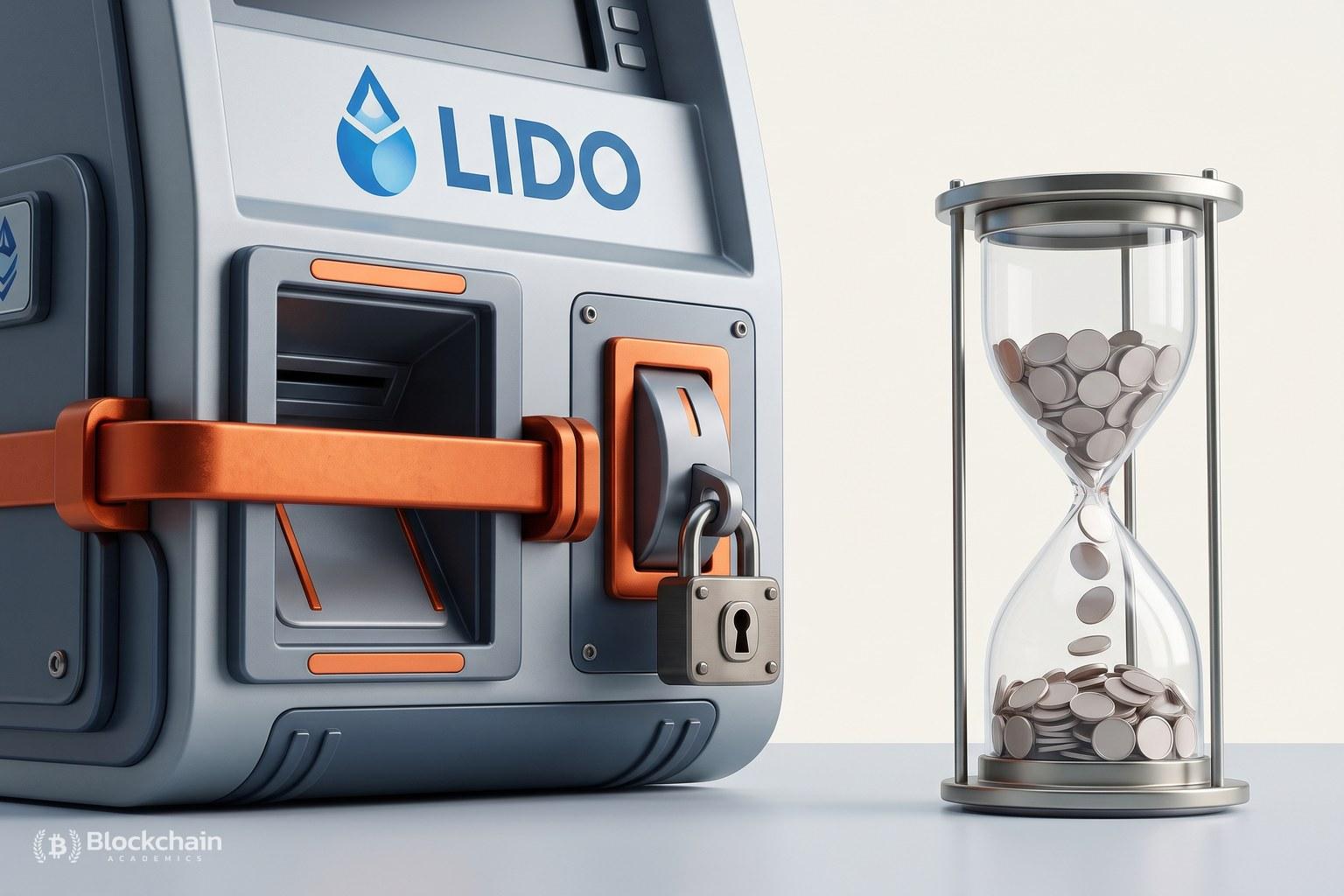
Lido Lend Pause Plan Would Block Repayments but Not Interest
A November 9 Lido Lend proposal would let an emergency pause block repayments, liquidations and lender withdrawals while interest keeps accruing. Configured bounds run from one minute to 60 days, and a governance path could make a pause indefinite.
Lido Lend's proposed emergency pause would stop borrowers from repaying loans and lenders from withdrawing, while borrowing interest keeps accruing through the interruption. The design sits in a November 9 consolidated proposal on the Lido research forum. It is a proposal, not a live market pause.
The November 9 proposal says a pause stops market actions "including repayment, liquidation and settlement." The text is headed "Final Proposal," but it also says edits are expected before a Lido DAO onchain vote.
The interest mechanics are the part borrowers should read twice. The controller specification states:
"It does not stop the interest clock: a later successful accrual covers the time since the market's last update."
Lido Lend controller specification
Translation: a borrower locked out during a pause could get repayment access back owing more than when the pause began.
Why the pause is so broad
The proposal gives a protective rationale. Initial markets would use issuer-published collateral rates, not secondary-market prices. If the trading price of collateral fell without a rate change, liquidation could become uneconomic, and settlement could hand lenders collateral worth less than the debt canceled. Pausing everything contains that risk. The cost is that repayers get trapped too.
Lido Lend builds on a modified Morpho Blue codebase and adds a controller that can reject transactions in each market. The core contracts are reported deployed on Ethereum mainnet, but market creation and the web interface would come after approval. The expected first market would lend WETH against wstETH collateral.
Softer tools, and who holds the switch
There are milder options. A "freeze" stops new borrowing, new collateral activation and collateral withdrawals from positions with debt, but keeps repayment, liquidation, lender withdrawals and settlement open. The Risk Steward Committee can impose one instantly. Lifting it requires an Operational Committee Easy Track motion, which LDO holders can object to.
A Guardian ban blocks an account's new borrowing and collateral maturation without itself touching repayment, liquidation, settlement or collateral withdrawal. Guardians cannot lift it. The first market would launch with one contributor-run Guardian and a 1-of-1 quorum, with independent Guardians intended later.
A full pause needs the proposed Lend Emergency Brakes Committee: 3 of 6 signatures, triggered through CircuitBreaker. It depends on periodic heartbeats and gets one pause per registration. It cannot set the duration, extend it or end it early. Another use requires re-registration.
Duration is the open question
The repository's mainnet profile selects a five-minute initial pause, with bounds from one minute to 60 days. Those are published configuration values, not confirmation of the first market's setting.
There is also a governance route to something longer. Under published Dual Governance code, an authorized Reseal Committee can use the Reseal Manager, when governance is outside its "Normal" state, to replace an active finite pause with an indefinite one without a fresh ordinary DAO vote. The Lido DAO Agent can change role assignments.
The Exit Book has its own pause that halts new withdrawal requests and fills, but it cannot bypass a paused market controller.
What it means
The repayment restriction lands hardest on the leveraged staking trades Lido Lend is designed to serve: pledge stETH, borrow ETH, stake it again, repeat. For anyone running that loop on a WETH/wstETH market, the risk is not a long pause so much as a pause of unknown length while debt keeps accruing and the exit stays shut. A five-minute default makes that minor. A 60-day ceiling, or an indefinite reseal, does not.
Lender-side exits are getting attention too: Lido has separately proposed Fallback Exits, a settlement mechanism that lets lenders exit without available loan tokens.
Next steps are DAO acceptance, publication of market-specific parameters and a separate motion to create the first market. Forum discussion continued with a signer declaration on November 14, but no completed acceptance vote or first-market creation has been announced.