BPI Report Pitches Bitcoin Mining for Curtailed Scottish Wind
Britain pays Scottish wind farms to switch off and gas plants to switch on. A Bitcoin Policy Institute report argues bitcoin miners could buy that curtailed power, while conceding savings and emissions effects still need analysis.
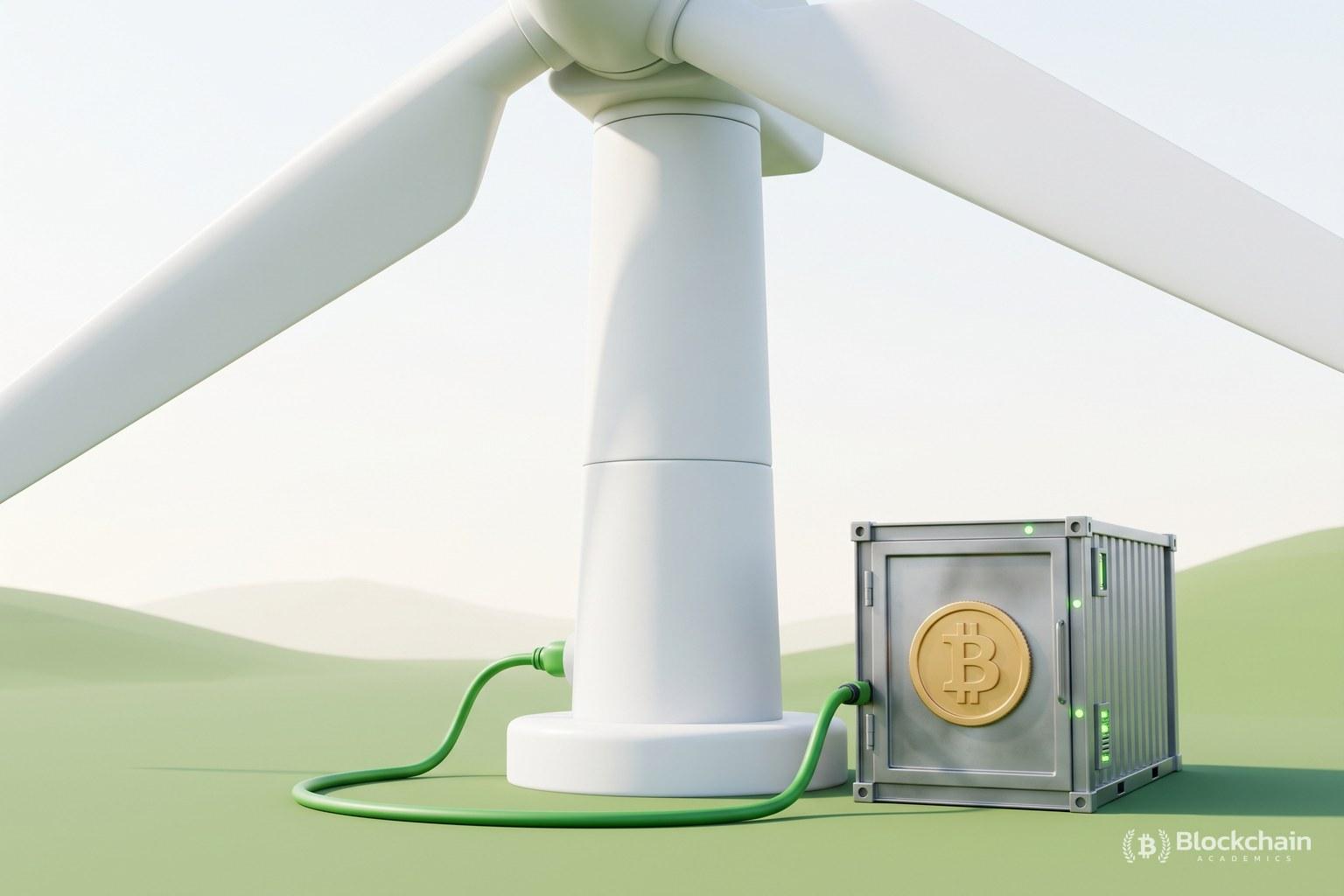
Britain pays Scottish wind farms to switch off, then pays gas plants elsewhere to switch on. A new report from the Bitcoin Policy Institute (BPI) argues that the country could put bitcoin miners in the middle of that transaction, letting them absorb surplus wind power that grid operators currently pay to waste. The paper, titled "Britain's Biggest Opportunity," was written by BPI executive director Conner Brown and Joey Garcia, head of regulatory affairs at Xapo Bank.
The grid problem behind the pitch
Scottish wind generation has grown faster than the transmission infrastructure needed to carry power south to England, where demand is highest. The result is a structural mismatch: grid operators compensate Scottish wind farms for staying idle while paying gas-fired stations further south to ramp up.
How large that bill is depends on which figure you take. One estimate puts payments to wind generators to switch off at more than £1 billion ($1.32 billion), without stating a period. A narrower figure for 2024 is £393 million paid to wind farms to curtail 8.3 TWh of output. The two numbers are not reconciled in the available reporting. According to the research findings, 98% of curtailed output came from Scotland, and the value of wind curtailment in Britain rose 91% year over year.
Why miners, not data centers
The report's core claim is about flexibility. Miners, it argues, can act as buyers of last resort, soaking up power that would otherwise go unused and switching off when the grid needs them to. It contrasts them with firm loads such as AI data centers.
"Traditional data centers can contribute, but most require firm, uninterrupted power near metropolitan fibre hubs and cannot profitably shut down whenever the wind stops blowing,"
the authors write. They go on:
"Bitcoin mining is different: it is modular, quick to deploy and relocatable (requiring only a power source and an internet connection), able to curtail fully and for long periods without disrupting any customer's workload, and viable at partial utilization when consuming low-cost or otherwise curtailed power."
One way to picture the distinction: a data center is like a factory that needs the lights on every hour of the day, while a miner behaves more like a buyer who only shows up when the shelves are overstocked. Because a miner needs only a power source and a connection, it can be brought to the electricity rather than waiting for the electricity to be carried to it, which is precisely what Scotland's congested transmission lines struggle to do.
Modeling and limits
A separate modeling analysis from May 2026, cited in coverage of the report, found that a 20 MW mining operation next to a 100 MW wind farm could use 83% of the farm's curtailed energy, lift overall system revenue by 32%, and raise the farm's effective capacity factor from 29% to 32%. The mining-for-curtailment argument itself is not new globally; what the BPI paper does is apply it to Britain's particular geography.
The report is not unqualified. It states that potential consumer savings, emissions and infrastructure costs require further analysis, so the benefits remain unestablished. It also warns that banking restrictions and inconsistent investment and tax rules threaten Britain's competitiveness as a bitcoin hub, despite a strong legal framework in which bitcoin has legal recognition as property.
What it means
This is an advocacy paper from a bitcoin-focused think tank, co-written by an executive at Xapo Bank, and it should be read that way. Its strongest argument is economic rather than ideological: if grid operators already pay for energy that is never used, a buyer of last resort has some value. Its weakest point is the one the authors concede, that system-wide savings and emissions effects are unquantified.
The policy ask is practical. Banking access and tax clarity, not legality, are the barriers the report identifies, and those are the levers Westminster would have to pull before any curtailment business model could take root.