Ethereum Glamsterdam Mainnet Slips to 2027 Over Gas Change Risks
Ethereum core developers said Glamsterdam's earliest mainnet date is mid-January 2027 if specs stay unchanged. A ChainSecurity review found 200 issues tied to proposed gas changes, and a Hoodi testnet rehearsal is pencilled in for Dec. 16 or 17.
The earliest Ethereum's Glamsterdam upgrade can reach mainnet is mid-January 2027, and only if its existing specifications stay unchanged, developers said at the Nov. 19 All Core Developers meeting.
Changing the specifications could push activation to April or May 2027. Developers had originally hoped to activate Glamsterdam on mainnet in December.
Ansgar Dietrichs, who chaired the meeting, considered late January or early February more realistic than mid-January. Deciding in January could mean a late February or early March launch even if the rules do not change.
Outreach to affected projects
Ethereum Foundation developer Rahul Kothari said the foundation, ChainSecurity and Dedaub had contacted at least 50 companies affected by the proposed gas changes.
ChainSecurity completed an assessment on Nov. 18 that disclosed 200 findings: 3 high severity, 30 medium and 167 low, with none critical. Twenty-four findings require smart contract upgrades or migrations. Affected systems include exchanges, wallets, bridges, staking protocols and governance applications, with possible consequences ranging from operational interruptions to locked funds and incorrect reward calculations.
Kothari said the three high-severity cases were addressed or expected to be fixed by mid-December. Medium-severity projects gave completion dates up to Jan. 10.
The gas proposals
The problems stem from two proposals. EIP-8037 raises the cost of creating new state: the state charge for contract creation would rise from a previous base of 32,000 gas to 183,600 gas, alongside separate execution charges. EIP-8038 changes the cost of accessing and modifying existing state. Its authors argue Ethereum's growing database has made some operations more resource-intensive since the Berlin upgrade, while affected applications were built around existing gas costs.
Contributor Milonite reported about 2,100 temporary contracts created and destroyed daily, up from about 1,200 in August. Creation gas for those contracts could rise as much as six times.
Client split and next steps
Most execution clients, including Geth, Nethermind, Reth and ethrex, favored keeping current rules. Erigon preferred modifications, and Besu had reservations but could proceed. Marius van der Wijden said altering the refund time could hurt other contracts.
Toni Wahrstätter argued for caution on any rewrite:
"Every spec change could, again, break new invariants that we are not aware of breaking yet,"
Dietrichs proposed running Glamsterdam on the Hoodi testnet in the week of Dec. 14, with Dec. 16 or 17 as possible dates, subject to developer approval. Teams wanting spec changes should prepare a concrete alternative before the Nov. 26 consensus-layer call, which will decide whether the December rehearsal goes ahead.
Background and market
The delay follows the postponement of Glamsterdam's Oct. 26 testnet activation after researchers found problems with existing mainnet contracts. The Ethereum Foundation identified eight contract assumptions that could break and issued a notice to developers on Nov. 6. By Nov. 9 it had received four reports of potentially impacted deployed contracts.
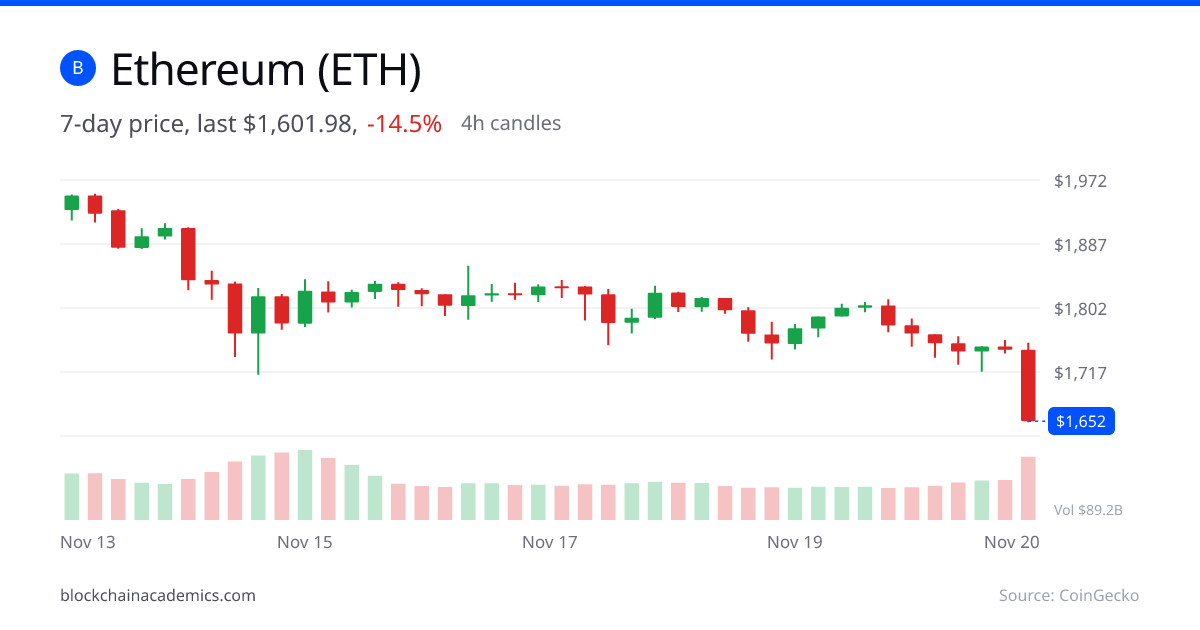
ETH traded at $1,750.36, down 3.32% over 24 hours, as the delay was reported.
Developers also discussed narrowing the scope of the following upgrade, Hegotá, for quantum-resistant work, and paused new execution-layer additions while evaluating post-quantum transaction designs. Compatibility concerns surfaced around draft EIP-8151. The discussion touches on the plan Ethlabs proposed on Nov. 12 to pull Quick Slots from Hegotá and bring post-quantum readiness forward to 2027, which core developers have not approved.