
Bitcoin Implied Volatility Climbs as Traders Pay for Protection
Bitcoin implied volatility gauges are climbing as traders buy options protection. BSIV hit 51.6%, Volmex reached 52.2 and DVOL stood at 46.0, while spot ETF outflows reached $3.47 billion this month and put/call ratios favor downside bets.
Traders are paying up for bitcoin options protection as prices fall, and the main implied volatility gauges are moving higher. Block Scholes' BSIV reached 51.6% after gaining 8.4 points, about 19% week over week. Volmex's bitcoin volatility index added 23% this month and 40% this quarter to 52.2.
Deribit's DVOL, one of the most closely watched gauges, stood at 46.0 on November 20, 2026, after hovering at about 46% through the period. Readings vary by provider.
Bitcoin dropped to around $61,450 in mid-to-late November, a multi-month low.
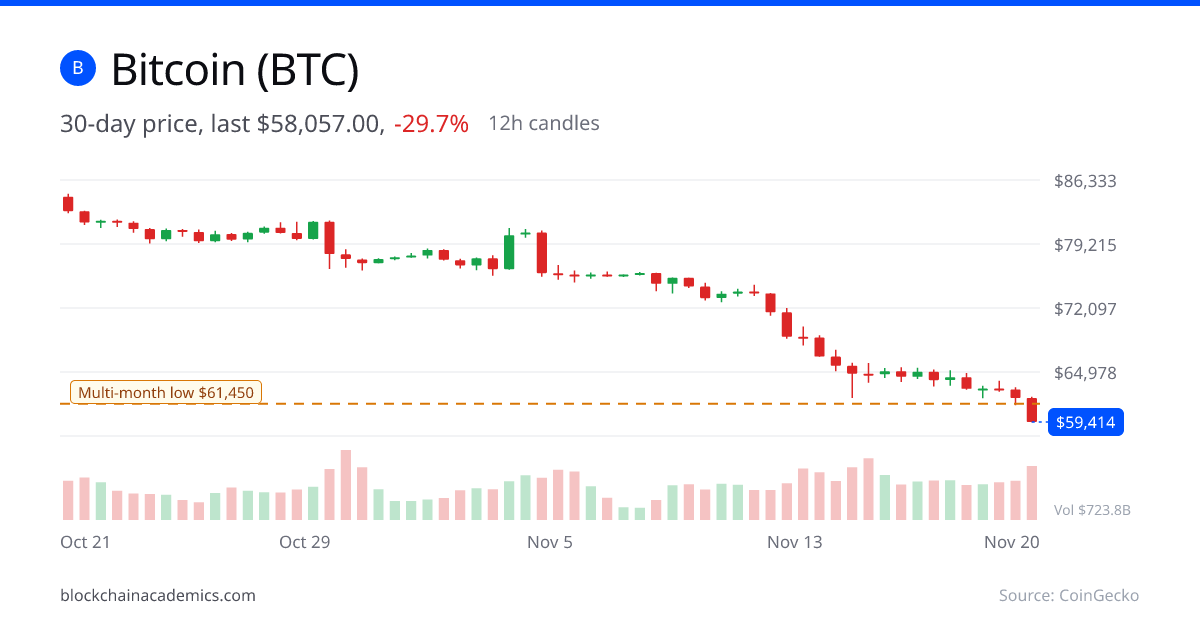
Spot bitcoin ETFs recorded net outflows of more than $580 million on Thursday, the day Anthropic debuted on Nasdaq, according to SoSoValue data. That took month-to-date net outflows to $3.47 billion. We covered that session when bitcoin fell below $62K as ETFs logged a $582M outflow.
Options positioning points the same way: put/call open-interest ratios show a strong preference for downside bets.
Implied above realized
Traders are paying for movement that has not happened yet. Thirty-day realized volatility ran at 33% to 44%, below the implied gauges. If price action stays inside that band, the volatility premium could deflate.
Beyond crypto
The rise is not confined to digital assets. Implied volatility is also climbing across stocks and commodities as investors buy options to hedge falling prices.
The VIX, the main U.S. equity volatility gauge, has risen, though published readings differ: one puts it up 22% at 25.43, another up 52% this month and 81% this quarter at 29.5. The gold volatility index rose 10% this month and 21% this quarter to 28.7.
The increases follow a third quarter in which volatility in bonds and oil spiked. The MOVE index, which tracks bond volatility, rose 54% between July and September as yields climbed. The oil volatility index rose 21% on turmoil in the Middle East.
What it means
The prevailing fear runs counter to an earlier-week narrative that money would rotate back into bitcoin after the Anthropic IPO. Instead, ETF outflows continued and hedging demand grew.
Timing adds a risk. Traditional markets go offline for the weekend, while crypto trades around the clock and could bear the brunt if concerns persist.