Bitcoin Faces a Quantum Migration Problem With 6 Million BTC Exposed
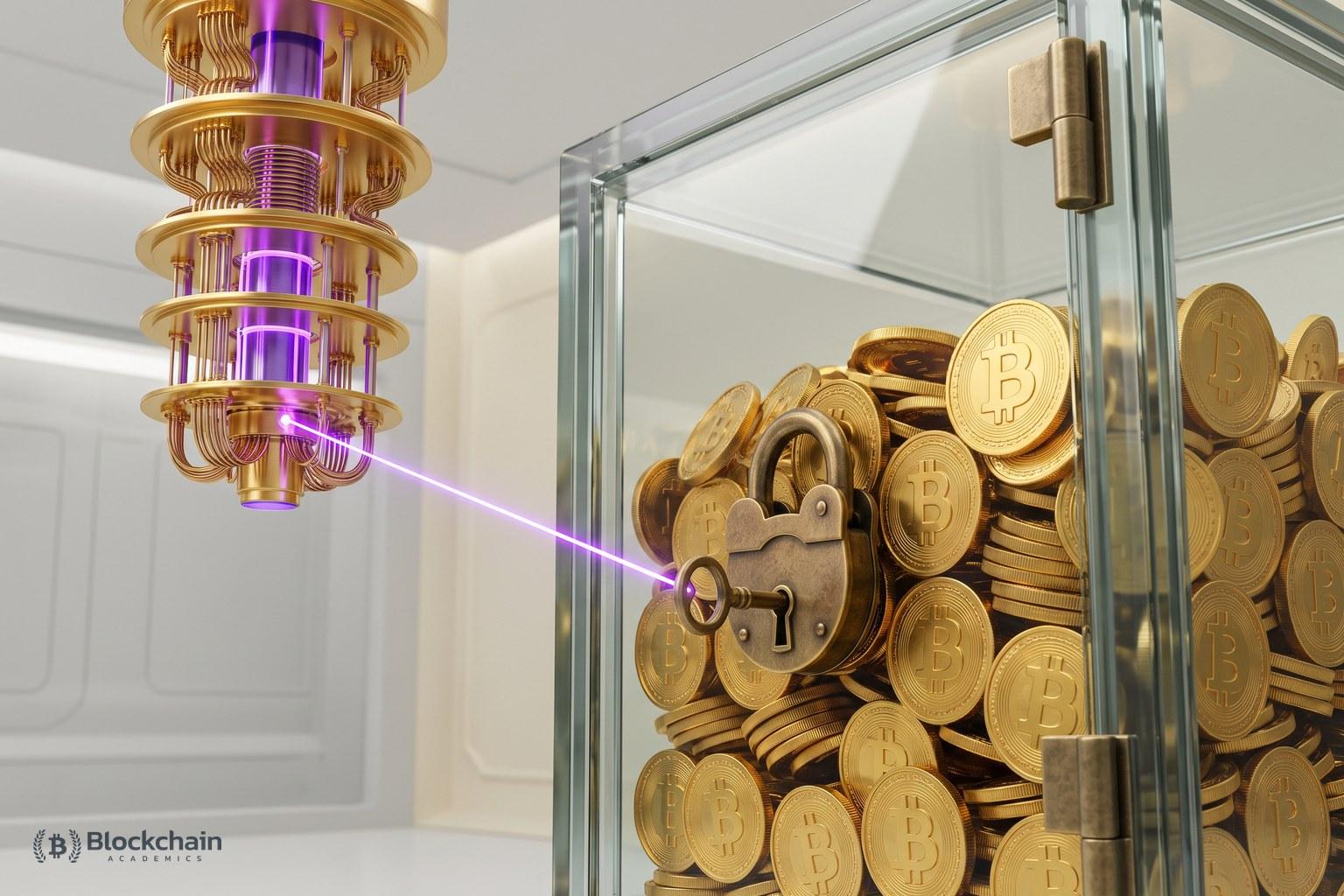
More than 6 million BTC, about 31.2% of supply, sit behind publicly visible keys. No quantum computer can break them today, but Bitcoin has no adopted plan to migrate those coins, and custody systems and bridges lack production-ready post-quantum standards.
More than 6 million BTC, about 31.2% of circulating supply, sat behind publicly visible keys in October, according to Glassnode data. No quantum computer today can break Bitcoin's signatures, and the coins are safe for now. The harder question is how the network would move them to quantum-resistant security if that changes, and no plan has been adopted to answer it.
Two estimates, one range
The exposure figure varies by source and date. A Glassnode estimate from May 2026 put the amount of exposed BTC at roughly 6.04 million coins, while broader research puts the figure at 6 to 7 million BTC, or 30 to 35% of supply. The May and October numbers come from different Glassnode snapshots, so they are reported as given rather than reconciled.
A narrower slice is the most vulnerable. About 1.7 million BTC sit in legacy pay-to-public-key (P2PK) addresses, where the public key is openly on chain. A quantum attacker would only need to work backward to the private key from a key already in public view.
Proposals without a schedule
Two drafts address the signature problem. BIP-360 and BIP-361 propose new signature schemes and a phased move away from legacy signatures. As of November 2026, both remain drafts with no activation timeline.
Developers disagree on the central design choice. One camp would restrict coins that do not migrate, which protects the network from a flood of stolen BTC but means the protocol effectively decides the fate of coins whose owners never moved them. The other would keep upgrades voluntary, which avoids that problem but leaves dormant coins exposed if keys are ever cracked. Neither approach has been adopted.
The logistics are the hard part
Think of it as replacing the locks on millions of doors while the building stays occupied. Choosing a new lock is one task. Getting every tenant, including those who never check their mail, to swap it is another.
Cysic CEO Leo Fan has argued that upgrading the cryptography is only half the battle, noting that multi-party custody systems and cross-chain bridges lack production-ready post-quantum standards.
"The clock that matters is migration,"
Leo Fan, CEO of Cysic
Size adds friction. Post-quantum signatures are bulkier and take more block space, and a mass migration could congest the network. IOSCO's November 2026 report highlighted the complexity of upgrading Bitcoin's cryptography.
Early experiments
Some work is already under way. StarkWare carried out what it described as the first quantum-safe Bitcoin transaction on mainnet in August 2026, and Blockstream has been testing post-quantum signatures.
Other chains have already shipped protocol changes: NEAR added post-quantum transaction signing in July, and Algorand introduced native Falcon-1024 accounts in August.
What emerges is a gap between threat and preparation. The threat is not imminent, but the proposals remain drafts, the governance question is unresolved, and the custody systems and bridges that would have to move alongside the network still lack production-ready post-quantum standards. That is why the migration debate matters before any machine capable of an attack exists.