Optimizely Hack Plants Crypto Clipper on 178 Sites, Including Ledger
Malicious JavaScript served through Optimizely Web hit visitors of 178 organizations on Nov. 16, swapping copied crypto addresses, skimming cards and targeting older iPhones. Check every transfer you made that day.
One compromised vendor was enough. On 16 November 2026, a hijacked experimentation platform pushed wallet-swapping malware to visitors of 178 organizations, including Ledger, Zoom, the BBC, CNN and HSBC. The haul so far is small: about $7,040 had reached attacker wallets by Monday. The exposure is wider than that number suggests.
According to Scott Helme of Report URI, "On 16 November 2026, malicious JavaScript was served to visitors of 178 organizations through the Optimizely Web experimentation platform." Report URI checked 1,611 Optimizely snippets and found 188 infected. Salesforce, GitLab, IKEA, Equifax and Air France-KLM were also on the list.
How the attack worked
The attacker never broke into the sites themselves. They wrote code into an optional custom-code field in customers' Optimizely projects, so the malware loaded from a domain each site already trusted. Optimizely said an unauthorized party exploited a vulnerability in its Experimentation account signup flow.
The payload was a clipper, malware that swaps a copied wallet address for one the attacker controls. It targeted Bitcoin, Ethereum, Solana, TRON and Litecoin addresses. Research accounts put the risk plainly:
"With an infected site open in any tab, a crypto address you copied could have been swapped for one the attackers control."
Research accounts (unnamed)
And that was only one job. The code also skimmed payment cards, stole cookies and screenshots, and pushed iOS exploit kits, identified as Coruna and DarkSword, to older iPhones and iPads.
Timeline and the money
Report URI said the first clipper build appeared at 08:10 UTC, and stolen funds were swept to exchanges by 13:03 UTC. The attacker rebuilt the malware 26 times over the course of the attack, adding capabilities and wallets. That is an active operator iterating, not a drive-by script.
Attacker wallets had received about $7,040 by Monday, according to a developer tracking the wallets, in a mix of Bitcoin, Litecoin, Ethereum, TRON and stablecoins.
Cleanup came fast once it started. Ledger's snippet was cleaned at 20:41 UTC, among the first in a mass clean-up between roughly 20:40 and 21:10 UTC. By 21:52 UTC, Report URI found only one infected snippet still live. One developer reported overnight, however, that the attacker's payload server was still responding.
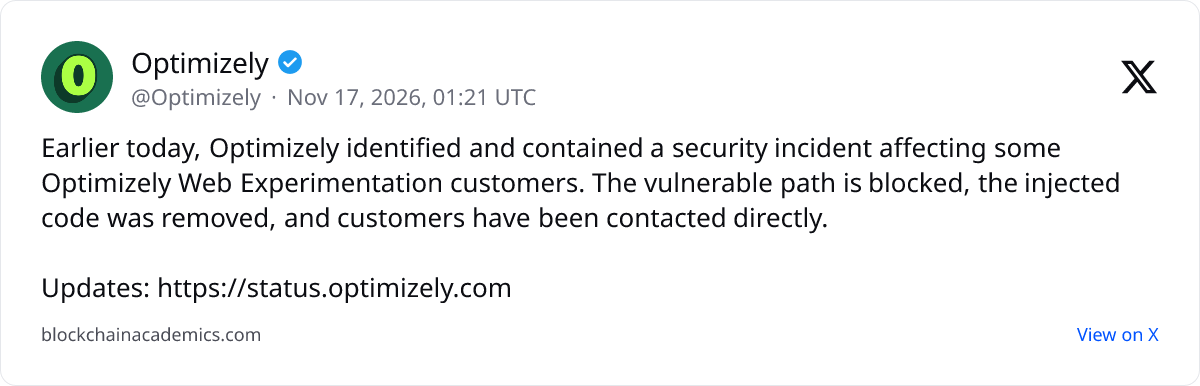
Optimizely's spokesperson said: "We have blocked access to the vulnerable path and deployed a fix." The company also removed the injected code, ended active sessions, revoked tokens and reset access. It has notified customers and is still investigating.
What to do now
Report URI advises anyone who visited an affected site on Nov. 16 to check every crypto transfer made that day against the intended address. It also says to update iPhones and iPads to iOS 18.7.3 or later.
For traders, that means pulling up your outbound transactions from Monday and comparing destination addresses character by character, not just the first and last few.
The bigger picture
The dollar loss is tiny. The number of affected visitors, compromised cards and exposed sessions is still unknown. The real lesson is supply chain: one vendor's signup flaw reached 178 brands, including a hardware wallet maker's site, without any of them being breached directly. For another recent case of login infrastructure failing users, see our report on the Keplr social login flaw, a separate incident that moved about $6 million.
Every third-party script a site loads is someone else's attack surface. This time, one trusted domain was all a clipper needed.