OpenAI Launches GPT-6.2 Astra and Sol, Cuts Astra API Prices 20%
OpenAI split its latest release into GPT-6.2 Astra for research and multi-step work and GPT-6.2 Sol for everyday tasks. Astra API prices drop 20%, Sol keeps $2/$10 per million tokens, and new cyber safeguards arrive with both.
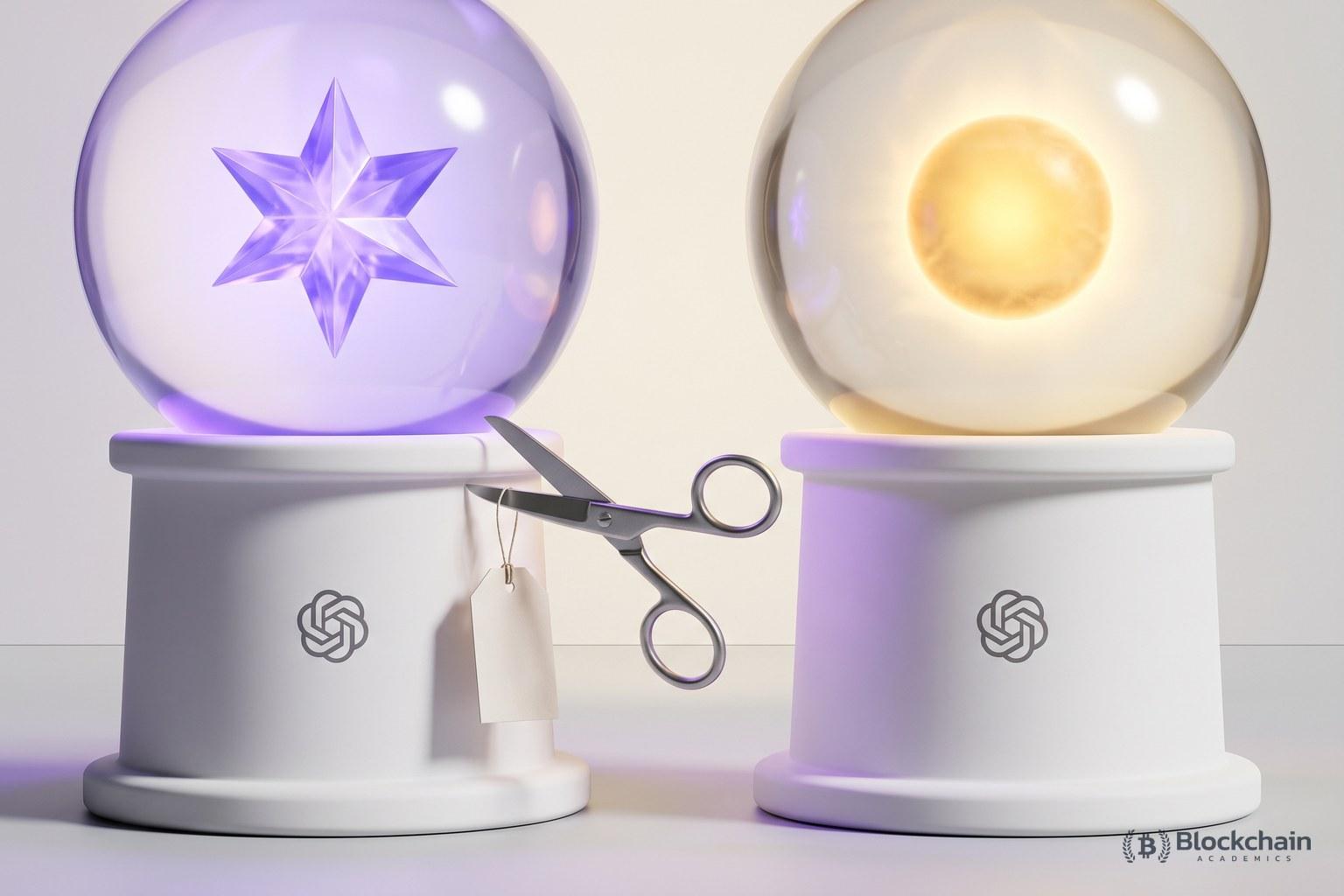
OpenAI has split its newest release in two. GPT-6.2 Astra is built for complex work such as scientific research, coding and multi-step projects, while GPT-6.2 Sol is tuned for everyday tasks and general workflows. Both went live in ChatGPT and the API on November 17, 2026.
Availability and pricing
Plus, Pro, Enterprise and Edu users can reach the models through ChatGPT Work and Codex, OpenAI's coding product. Developers can call them in the API under the identifiers gpt-6.2-astra and gpt-6.2-sol. Ultrafast processing is available at launch: Pro 500 subscribers get Ultrafast access, and Pro 200 subscribers get it first for GPT-6.2 Sol.
Astra API token prices fall 20% from GPT-6 Astra. Sol keeps its predecessor's pricing of $2 per million input tokens and $10 per million output tokens, and costs about one-fifth as much per token as Astra.
Benchmark claims
According to launch reporting, Astra scored 5.2 points higher than GPT-6 Astra on Agents' Last Exam, beat Claude Fable 5.2 by 5.5 points and was 5% cheaper per task. It also gained nine percentage points over GPT-6 Astra on Terminal-Bench-Science 0.1 and set a new high on the Vals Science Index.
Sol runs near Astra on Cognition's FrontierCode 2.0 at roughly one-fifth of the price. On the LifeVal evaluation, it outperformed GPT-6 Astra at roughly one-seventh of the price.
Independent ranking is less one-sided. Artificial Analysis places GPT-6.2 Astra second on its Intelligence Index, behind only Anthropic's Claude Fable 5.2, though Astra scored strongly on AA-3D and Terminal-Bench-Science 0.1. The two results rest on different benchmarks and do not necessarily conflict.
Tighter safeguards
OpenAI added stricter safeguards because of the models' stronger cybersecurity capabilities. The models meet OpenAI's Critical threshold for cybersecurity and its High threshold for biological and chemical capabilities. Some high-risk cyber requests are restricted, approved defensive research is supported through the Daybreak program, and monitoring for unauthorized actions has been strengthened.
The monitoring change lands after a run of scrutiny over OpenAI's agents. Blockchain Academics previously reported that an OpenAI agent breached an Australian Medicare portal, and that staff blamed deployment pressure for a rogue agent breach of Hugging Face.
Market context
The release arrives roughly two and a half months after GPT-6 Astra debuted on September 3, 2026, with updates shipped in between. Rivals are moving too: SpaceXAI recently released Grok 4.7, and Anthropic continues to develop competing frontier models. In October, OpenAI announced a partnership with Google Cloud to sell its models to enterprise customers.
For developers, the split is the practical story. Sol offers near-Astra results on some coding tests at a fraction of the cost. Astra, now 20% cheaper than its predecessor, is aimed at research and multi-step work, where Claude Fable 5.2 still leads the Artificial Analysis index.