Elon Musk’s XChat Bets on Bitcoin-Grade Encryption—But Can It Survive the Quantum Age?
XChat promises end-to-end security using elliptic curve cryptography, but quantum computing casts a looming shadow.
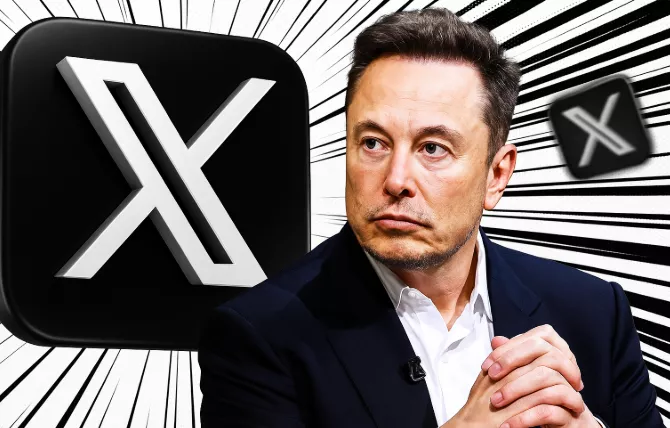
Elon Musk has unveiled XChat, a new messaging platform from X, touting a privacy-first design secured by the same encryption principles that underpin Bitcoin. Promising disappearing messages, cross-platform calls, and zero reliance on phone numbers, XChat aims to redefine digital privacy for a post-SIM world. But behind the buzz, cryptographers are raising urgent concerns: can Bitcoin-grade encryption stand against the rise of quantum computing?
XChat's cryptographic core is built on elliptic curve cryptography (ECC), the same lightweight yet powerful security model Bitcoin uses. Musk says the platform is written in Rust, a language prized for its memory safety and efficiency, and emphasizes a decentralized model of privacy: users don’t need SIM cards, and their identities aren’t tethered to a phone number. In effect, it’s a messaging app for a world where mobile carriers—and central authorities—play a minimal role.
The encryption model powering XChat includes Elliptic Curve Diffie–Hellman (ECDH) for secure key exchanges, ECIES for message encryption, and potentially ECDSA or EdDSA for digital signatures. These protocols ensure that data is end-to-end encrypted and resistant to traditional eavesdropping.
But the real test may not come from hackers or state actors—it may come from quantum physics. Recent breakthroughs in quantum computing suggest that ECC could be broken up to 20 times faster than previously estimated. The root of the vulnerability lies in the elliptic curve discrete logarithm problem. Quantum machines capable of solving this problem could render ECC-based systems obsolete, potentially exposing encrypted messages or allowing impersonation attacks.
For now, ECC remains a gold standard in cryptographic security, with advantages like smaller key sizes and lower energy demands compared to older models like RSA. But researchers warn the timeline for quantum disruption may be far shorter than tech giants like X are preparing for. "Bitcoin-grade encryption" is robust today, but future-proofing requires anticipating a world where quantum decryption is not just possible—but practical.
Musk’s strategy does include hints of forward-thinking. XChat’s infrastructure could potentially accommodate post-quantum cryptographic models like lattice-based schemes or hash-based signatures in future iterations. And with Rust as its foundation, the platform is well-positioned for iterative, security-focused development.
Still, the announcement underscores a broader truth: privacy is entering a new era. As major platforms race to provide encrypted, decentralized, and anonymous communication tools, the tension between innovation and obsolescence intensifies. XChat may be a step toward digital sovereignty, but its long-term security will depend not just on Musk’s vision, but on the speed at which quantum computing becomes a practical threat.