Aster CEO Blames Malicious Liquidations for ASTER Price Swings
ASTER whipsawed between $0.4784 and $0.7124 before settling near $0.50. Aster CEO Leonard Leung says deliberate liquidations hit the insurance fund and calls them likely malicious, but the data and the size of the fund loss are still not public.
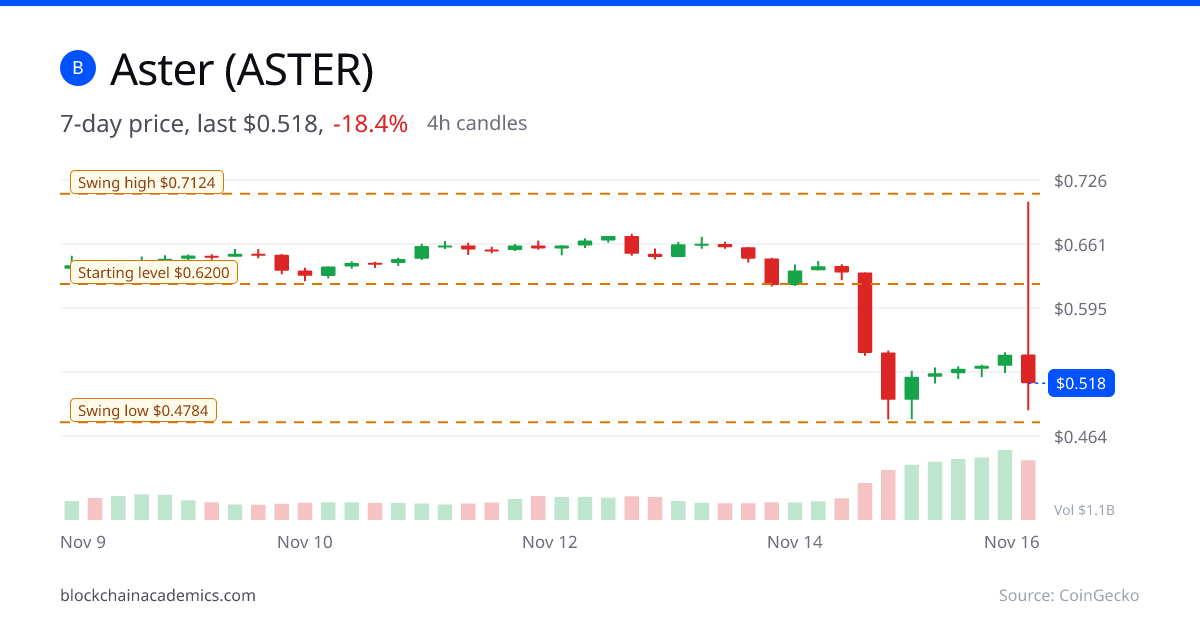
ASTER whipsawed between $0.4784 and $0.7124, and Aster CEO Leonard Leung says the move was no accident. Leung disclosed on November 16 that his team is investigating the swings. He pinned them on deliberate liquidations of leveraged positions that he described as "likely malicious."
The path matters for anyone who got chopped. The token slid from about $0.62 to a low near $0.4784, a drop of roughly 23%. It then bounced to around $0.7124, overshooting where it started, before settling near $0.50. Measured from that intraday spike, the fall was about 32%, a move that showed up on both Aster and Binance. Same tape, different starting points.
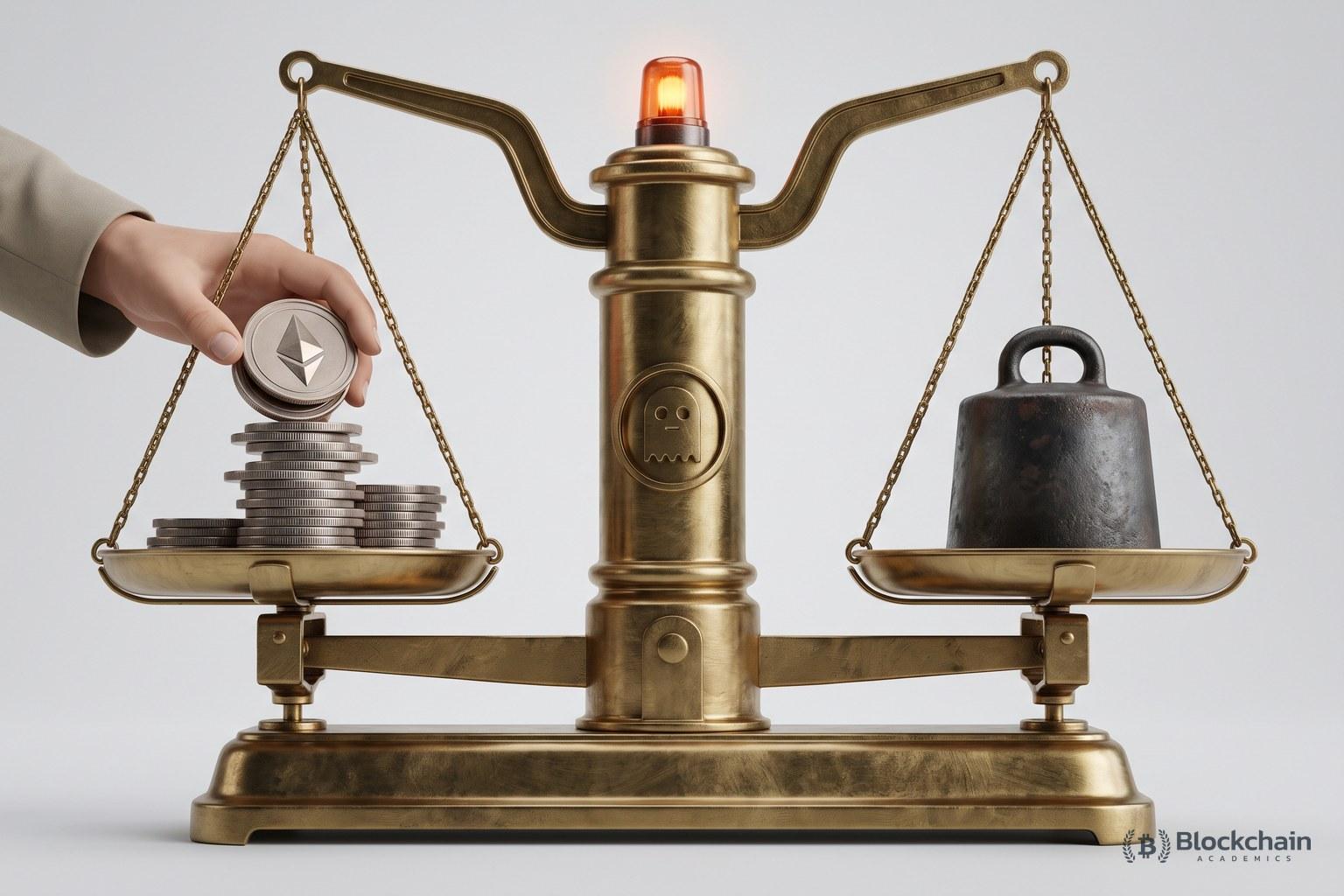
Aster's explanation runs through its insurance fund, the backstop on a perp exchange when forced closes go wrong. The team says leveraged positions were deliberately liquidated against that fund, and it ruled out market-making activity as a cause. That is a pointed call: when a token moves this violently, market makers are usually the first suspects.
"likely malicious"
Leonard, Aster CEO
Leung committed to sharing more findings in future reports, a response to community concerns about the token's performance and economics.
What is still missing
The claim is clear. The evidence is not public yet.
The market-maker denial will need data behind it in those promised reports. Aster also has not said how much the insurance fund lost or how it will be replenished. For anyone trading ASTER perps, those are the numbers that matter: if the fund took a real hit, the next liquidation cascade has less cushion underneath it.
Background on Aster
Aster is a decentralized perpetual exchange. Its token generation event took place in September 2025, and its layer-1 chain, Aster Chain, launched in March 2026. Total ASTER supply is 8 billion. Automated buyback-and-burn programs use up to 99% of protocol fees, and monthly unlocks were cut by about 97% after a 2026 update. The project has ties to Changpeng Zhao and YZi Labs but positions itself as independent.
With buybacks eating up to 99% of fees and unlocks slashed, a 23% to 32% air pocket stands out. Aster has also leaned on incentives to drive activity, such as its perpetual grid trading campaign with a 140,000 ASTER mining pool. Whether the liquidations were an attack or ordinary leverage unwinding is the open question. Until the data lands, treat the "malicious" label as the team's read, not a verified finding.