Moody's Rates Ripple RLUSD A2 in What Ripple Calls a Stablecoin First
Moody's Ratings assigned RLUSD A2 long-term and P-1 short-term deposit ratings on Oct. 27. Ripple calls it the first investment-grade Moody's rating for a stablecoin, though the agency flagged that holders lack direct reserve ownership and the issuer is not bankruptcy-remote.
Ripple's RLUSD now carries an investment-grade credit rating from one of the major agencies. Moody's Ratings assigned the stablecoin an A2 long-term and a P-1 short-term deposit rating on Oct. 27. Ripple says that makes RLUSD the first stablecoin to receive an investment-grade Moody's rating.
Jack McDonald, Ripple's SVP of stablecoins, announced the rating in an Oct. 27 post on X. He said the assessment validates the "quality, transparency, and institutional-grade infrastructure" behind the token.
"RLUSD is the first stablecoin to have ever received an investment-grade Moody's rating."
Jack McDonald, Ripple SVP of stablecoins
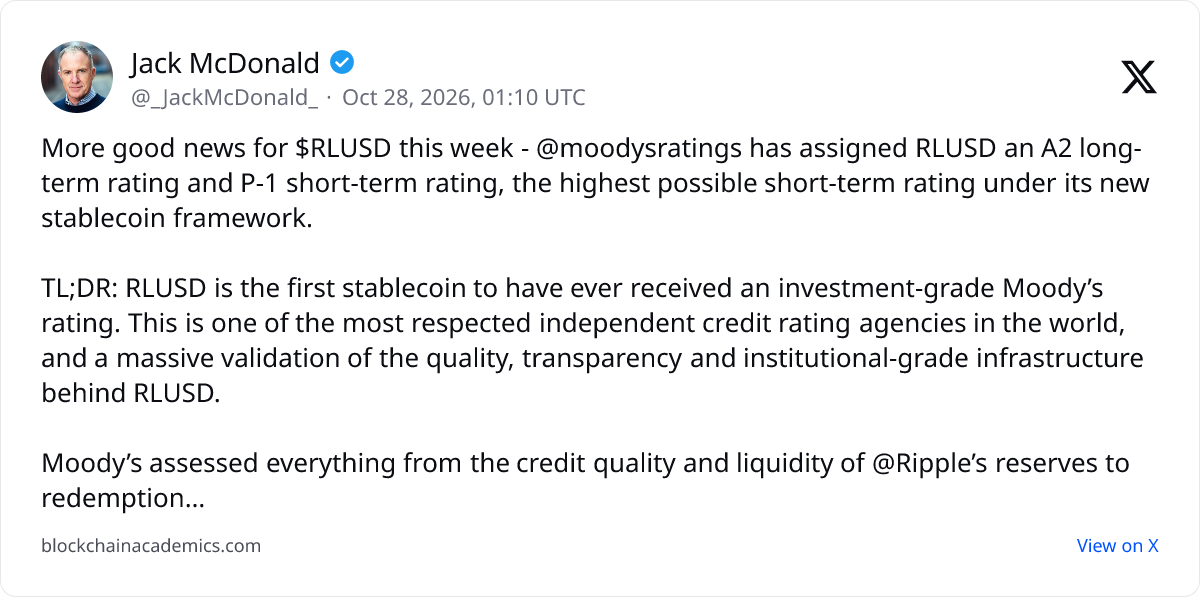
P-1 is Moody's highest short-term rating. A2 sits in the upper-medium-grade category, which indicates low credit risk. The ratings cover RLUSD issued natively on the XRP Ledger and Ethereum by Standard Custody & Trust Company (SCTC), Ripple's New York-regulated trust company. The "first" designation is Ripple's own claim and has not been independently confirmed.
What Moody's assessed
The Moody's rating announcement examined RLUSD's backing and redemption framework. SCTC targets reserves of 103% of RLUSD obligations, held mainly in short-duration U.S. government assets and in cash held mainly at BNY Mellon. Cash at a separate depository institution is capped at $50 million, backed by another $50 million in T-bills held at BNY.
Eligible, onboarded institutions can redeem at par within two full business days of a compliant order. Safeguards include daily reserve monitoring or reconciliation, weekly liquidity stress tests and monthly independent CPA attestations.
The limits Moody's flagged
The agency was explicit about weaknesses. Holders have no direct ownership of the reserve assets, and SCTC is not a bankruptcy-remote entity. An issuer bankruptcy and automatic stay could delay redemptions beyond two business days, though reserve segregation mitigates that risk.
Moody's expects the GENIUS Act, which takes effect Jan. 18, 2027, to strengthen holder protections, including by excluding required reserves from an issuer's bankruptcy estate. Stronger legal protections could support an upgrade. Weaker reserves, liquidity, redemption capacity or operational controls could lead to a downgrade.
Context
The rating came a day after final OCC approval for Ripple National Trust Bank, disclosed Oct. 26, and arrives as distribution widens. RLUSD went live on Coinbase Prime, Exchange and the retail app on Oct. 28. Other expansions include a Robinhood integration, Cross River Bank and Standard Chartered custody via Dubai.
Other ratings exist but differ in kind. Bluechip, an independent rater, gave RLUSD an A on July 18, 2025 under a different methodology. Earlier this month Moody's assigned Sky Protocol a B3 counterparty risk rating, its first rating of a stablecoin protocol, though that grade covers the entity rather than USDS or DAI.
For institutions bound by credit-quality mandates, a rating from a major agency gives compliance teams something concrete to cite. The bankruptcy caveats, however, mean the current grade was assigned without the legal protections the GENIUS Act is expected to add.