
Hacker Using AI Agents Accessed Chainalysis Customer Names, Emails
Chainalysis says an unidentified hacker using offensive agentic techniques broke into its systems this month and accessed customer user IDs, names, emails and role labels. The firm says no investigation content, passwords or MFA secrets were accessed and the breach is unrelated to the Binance hack.
User IDs. Full names. Email addresses. Role labels. Chainalysis says an unidentified hacker using "offensive agentic techniques" broke into its systems and internal tools this month and walked out with that customer data. The blockchain analytics firm calls it "non-sensitive."
Chainalysis published the text of the notice it sent to affected customers in a blog post on Friday evening, Oct. 30. International Cyber Digest first flagged the breach on X.
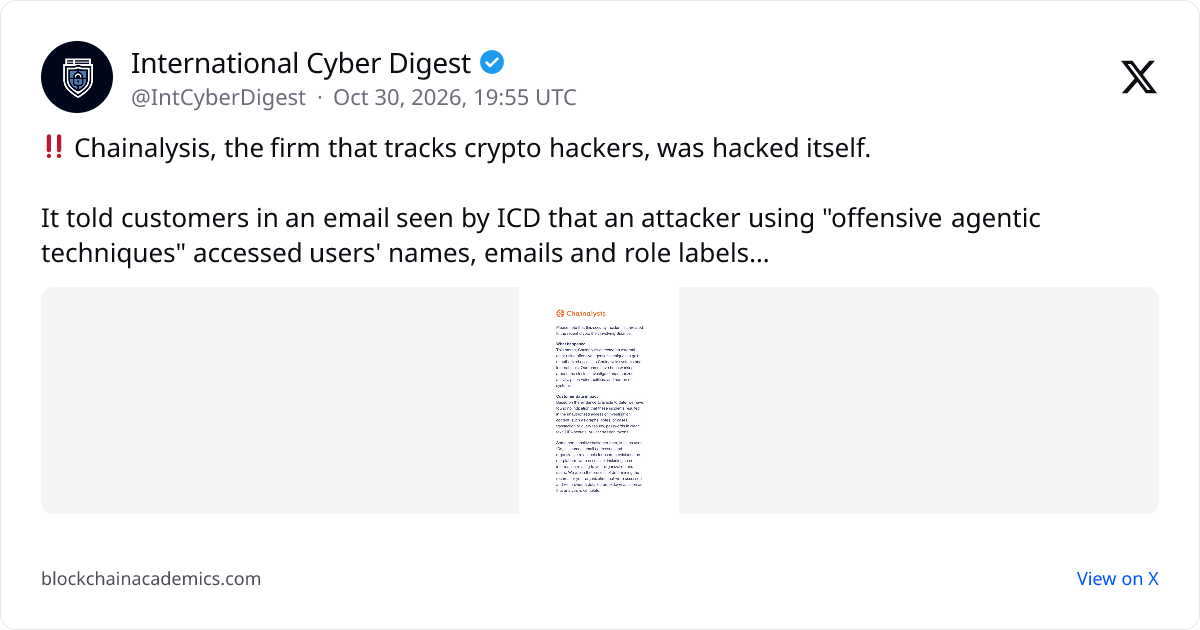
What was taken
Per the notice, the attacker accessed "some non-sensitive customer data, such as user IDs, full names, email addresses, and organization role labels for users provisioned on our platform." Chainalysis pledged a follow-up to each client detailing exactly what was accessed.
What Chainalysis says was not
The firm says its review so far points to a limited footprint:
"Based on the evidence available to date, we have found no indication that these incidents resulted in the unauthorized access of investigation content (such as graphs, notes, or cases), transaction or query results, passwords in clear text, MFA secrets, or user session tokens."
Chainalysis also said the incident is "not related to the recent crypto theft at Binance." That theft is the one behind Chainalysis's attribution of the Binance hack to North Korea.
Gaps in the disclosure
Key numbers are missing. No detection date. No count of affected customers. No word on which vulnerabilities were exploited or how AI agents figured in the attack.
Without those, the scale of the breach cannot be verified.
Response
Chainalysis contracted third-party cybersecurity experts and is using large language models to support a broad security review. It told affected firms to enable two-factor authentication and to watch for unexpected password reset requests or authentication prompts.
That advice fits the data taken: names, emails and role labels are what a targeted phishing attempt needs.
The disclosure lands while Chainalysis leads analysis of the Binance theft, which it puts at $6.4B, including the automated laundering patterns it says it has never seen before. The company says the two matters are unconnected.