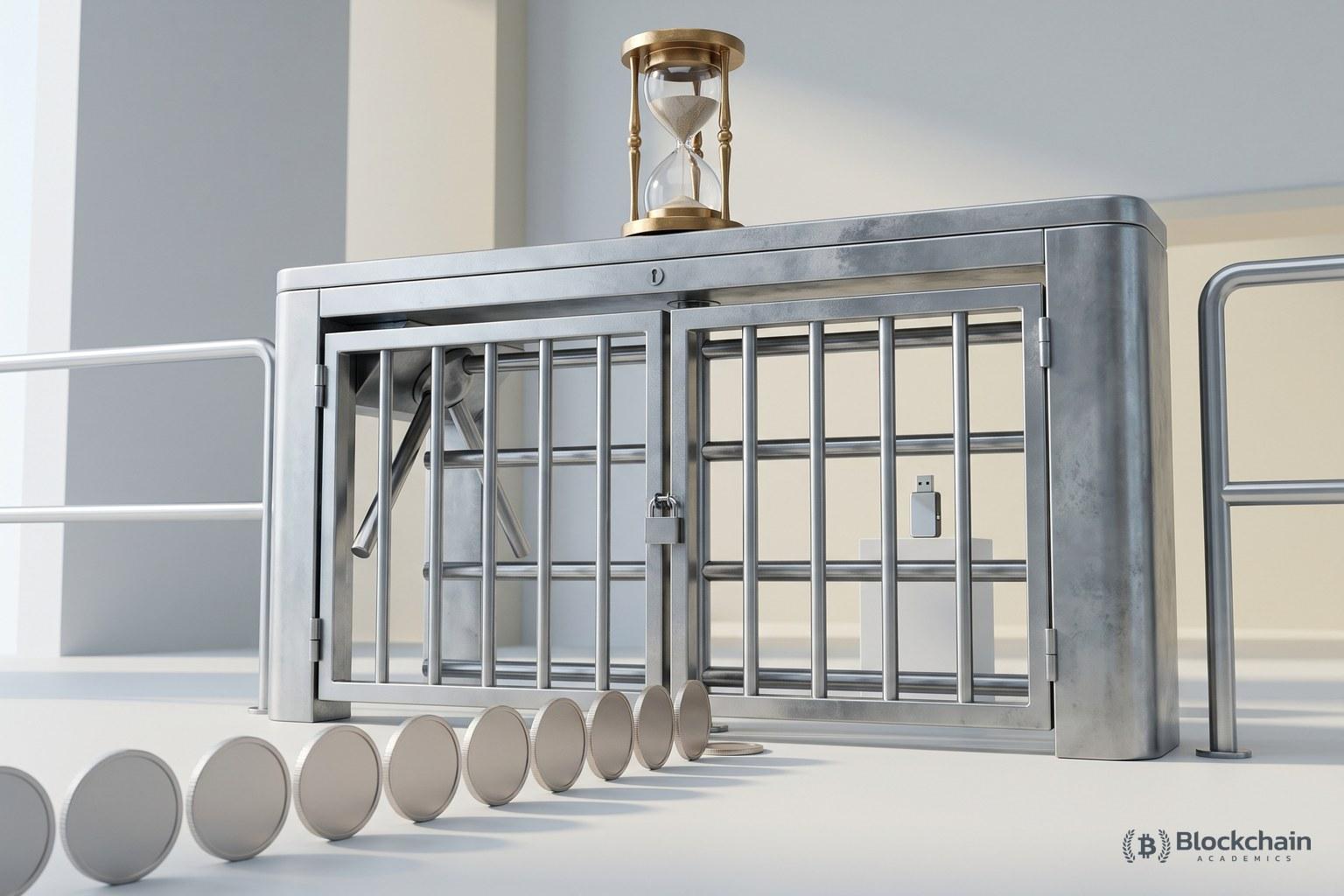
Japan FSA Paper Weighs DeFi Access Limits and Wallet Transfer Delays
Japan's FSA released a discussion paper on November 26, 2026 floating limits on access to DeFi services without adequate AML/CFT controls and cooling-off periods for transfers from new exchange accounts to self-custodial wallets. Public comment comes next.
Japan's Financial Services Agency (FSA) is weighing whether to discourage users from accessing DeFi services that lack adequate anti-money-laundering and counter-terrorist-financing (AML/CFT) controls, and whether to impose cooling-off periods on transfers to self-custodial wallets. The options appear in a discussion paper the regulator released on November 26, 2026.
The paper is not a final rule. The next step is a public comment process, in which the FSA seeks input on whether exchanges should enforce transfer delays or only show warnings.
DeFi access and responsibility
The FSA asked whether regulated businesses that interact with DeFi should help mitigate illicit finance risks when no party responsible for compliance can be identified. It named stablecoin issuers, on- and off-ramp providers and financial institutions as examples.
The regulator also questioned how to identify responsible parties for services that claim to be decentralized but retain centralized elements. It asked whether front-end providers for decentralized exchanges should be subject to financial regulation.
Self-custody and cooling-off periods
The paper noted that direct regulation of self-custodial wallet use, and of providers that solely develop or sell software or hardware, remains uncommon internationally. It asked whether more measures are needed anyway.
Among the options is a cooling-off period for transfers from newly created exchange accounts to users' own wallets. Open design questions include the length of the delay, the transfer size that triggers it, and how new an account must be.
Japan already requires domestic virtual asset service providers to collect information and keep records on transactions involving self-custodial wallets.
Industry moves already under way
Some of the industry has moved ahead of regulators. bitFlyer introduced its own 48-hour cooling-off period on October 15, 2026, for external sends above ¥100,000 from new customers. In August 2026, the JVCEA asked the industry for enhanced scam-prevention measures, including limits on withdrawals following deposits.
Trade-offs
Cooling-off periods could slow transactions and affect new users. A warnings-only approach would be lighter on users and exchanges but easier to ignore under pressure from a scammer. Enforced delays are sturdier but more disruptive.
Established users would see limited immediate impact, because the proposal focuses on newly created accounts.
Wider context
The discussions form part of an onchain finance strategy the FSA announced in July, with interim findings targeted for early 2027. Other major markets treat DeFi differently: the EU excludes fully decentralized crypto services without intermediaries from MiCA, and US regulators have focused on the nature of activities and the degree of developer or operator control. The stalled US CLARITY Act seeks to clarify which DeFi participants face financial regulation.
Japan has also been active on other crypto fronts, including its decision to add Garantex to its Russia sanctions list.