

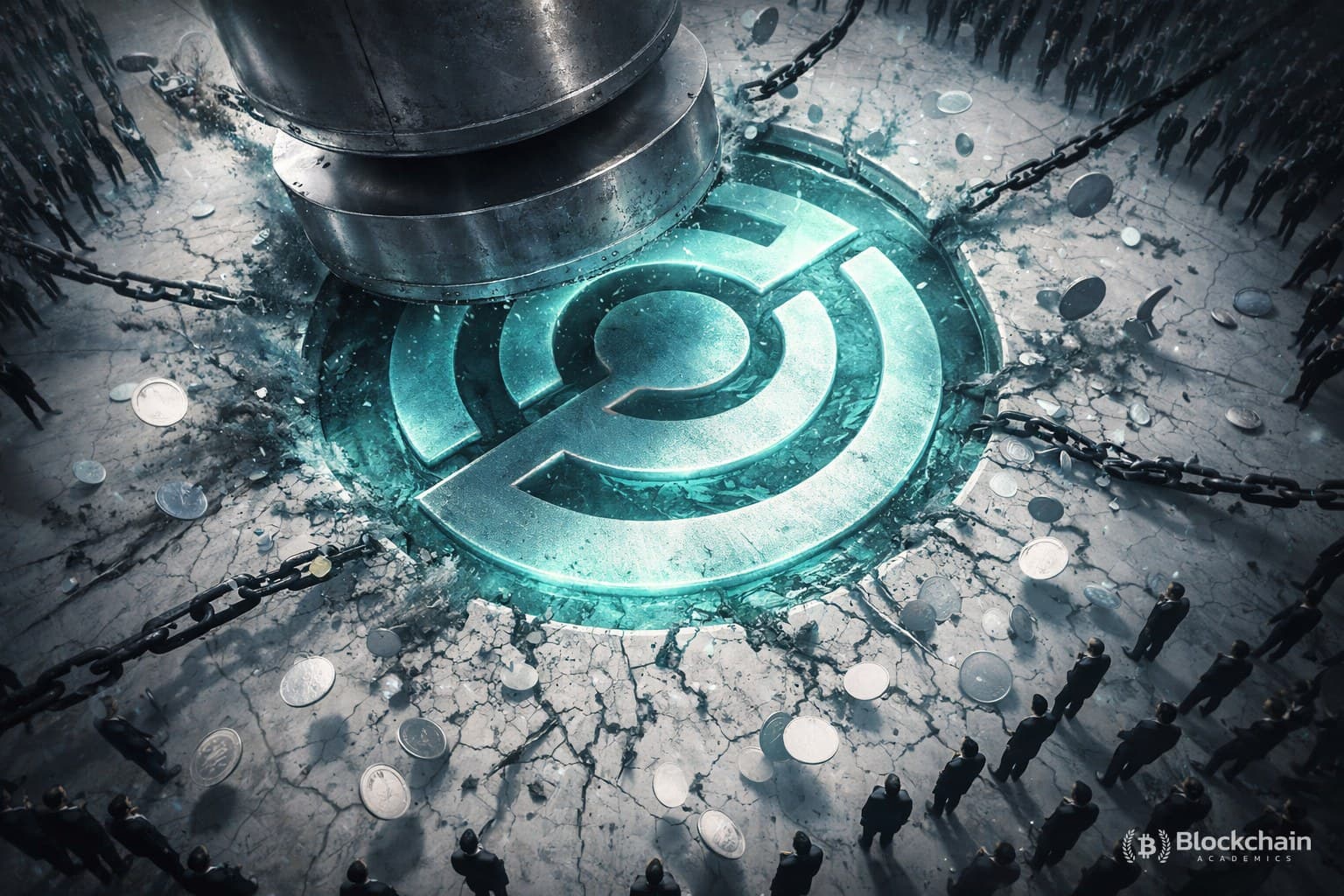
Circle Secures Limited-Purpose New York Trust Charter, Adding a State Layer to USDC Oversight
Circle received a limited-purpose trust charter from NYDFS for Circle Internet Trust Company LLC (doing business as Circle New York Trust). It is not a full-scope charter, and the sources do not call USDC the first major stablecoin under state trust oversight. Paxos, for example, already has a NY trust charter, as the brief itself says. The NY charter adds a state-regulated layer alongside the OCC national trust bank approval of July 10. The Block reports that management of the USDC reserve is deferred to a later stage, so reliance on banks is not eliminated.
NEW YORK, July 31, 2026. Circle received a limited-purpose trust charter from NYDFS for Circle Internet Trust Company LLC (doing business as Circle New York Trust). It is not a full-scope charter, and the sources do not call USDC the first major stablecoin under state trust oversight. Paxos, for example, already has a NY trust charter, as the brief itself says. The NY charter adds a state-regulated layer alongside the OCC national trust bank approval of July 10. The Block reports that management of the USDC reserve is deferred to a later stage, so reliance on banks is not eliminated.
The charter represents the culmination of Circle's compliance-first strategy, pursued consistently since USDC's launch in September 2018. To qualify, Circle met stringent NYDFS capital requirements, governance standards, and consumer protection frameworks comparable to those governing traditional banks.
Operational Implications
The charter adds a state-regulated layer to Circle's operational foundation. Previously, USDC issuance depended on banking intermediaries, introducing counterparty risk that institutional investors cited as a primary adoption constraint. Because management of the USDC reserve is deferred to a later stage, reliance on banks is not eliminated. The company has confirmed plans to launch custody services in Q3 2026, followed by yield-bearing USDC products in Q4 2026, expanding its addressable market beyond stablecoin issuance into institutional asset management.
USDC currently holds $42.3 billion in total supply, a 340% increase since January 2024, deployed across 15 blockchain networks including Ethereum, Solana, and Base. Daily transaction volume reached $18.7 billion in July 2026, with institutional activity accounting for 62% of that figure. Reserves remain 100% backed by USD cash and short-term US Treasuries, audited by Grant Thornton and published through monthly attestation reports.
Institutional Momentum
The charter arrives as institutional appetite for regulated blockchain infrastructure accelerates. Circle's compliance score of 98 out of 100 in Q2 2026 institutional investor surveys ranked highest among all stablecoin issuers.
"This charter validates what we have built over the past eight years," said Jeremy Allaire, Circle's co-founder and CEO. "Regulated financial infrastructure is not a constraint on innovation. It is the foundation that makes institutional-scale adoption possible."
Competitive Positioning
The charter widens the compliance gap between USDC and its primary competitors. Tether's USDT holds $89.4 billion in market capitalization but operates without equivalent regulatory standing, maintaining opaque reserve disclosures and navigating recurring banking relationship disruptions. PayPal's PYUSD ($12.1 billion) offers full reserve transparency but remains limited to Ethereum deployment with constrained institutional reach. The NYDFS approval process requires years of documented operational compliance, presenting a significant barrier to replication.
Paxos, which operates under its own trust charter, remains the closest structural analog, but its $1.8 billion USDP supply and limited ecosystem integration represent a different scale of market presence.
Regulatory Outlook
Federal stablecoin legislation, expected to advance through Congress in 2026 and 2027, represents the next significant regulatory variable. Circle's existing state-level charter positions the company as an established operational model in federal rulemaking discussions. International recognition of the NY Trust Charter, particularly within EU and UK frameworks, could further expand USDC's utility as cross-border payment infrastructure.
Circle has indicated it is pursuing interoperability frameworks that position USDC as complementary to central bank digital currency infrastructure.
About Circle Internet Financial
Circle Internet Financial is a global financial technology company and the issuer of USDC, the world's second-largest stablecoin by market capitalization. Founded in 2015 by Jeremy Allaire and Sean Neville, Circle operates regulated payment and stablecoin infrastructure serving financial institutions, enterprises, and developers across more than 180 countries. USDC maintains $42.3 billion in circulating supply across 15 blockchain networks, with reserves fully backed by USD cash and short-term US Treasuries and attested monthly by Grant Thornton. Circle holds licenses and regulatory approvals across multiple jurisdictions, including its newly granted limited-purpose trust charter from the NYDFS. For more information, visit circle.com.
This press release contains forward-looking statements subject to risks and uncertainties. Actual results may differ materially from those projected. This release does not constitute financial or investment advice.