U.S. Government Brings Economic Data On-Chain Through Chainlink and Pyth Partnerships
U.S. partners with Chainlink and Pyth to publish official economic data on blockchain, boosting transparency and accessibility.
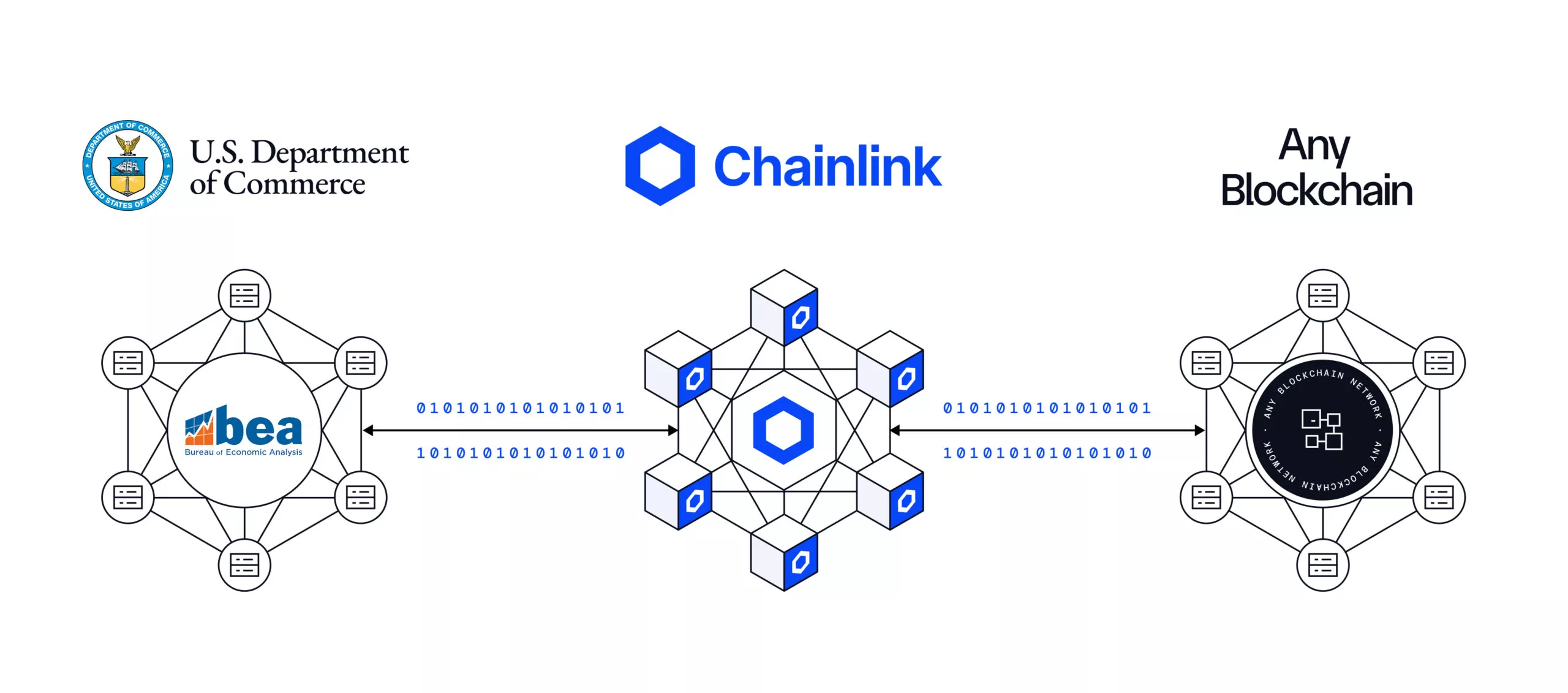
In a landmark move for blockchain adoption, the U.S. Department of Commerce has partnered with two leading oracle providers, Chainlink and Pyth Network, to publish official macroeconomic data on decentralized networks. The initiative, which began rolling out this month, aims to make key economic indicators tamper-proof, transparent, and globally accessible.
According to the Department of Commerce, the collaboration will initially distribute data across ten blockchain networks, including Ethereum, Avalanche, Base, Optimism, Arbitrum, and ZKsync. Chainlink has already launched live feeds for six major indicators from the Bureau of Economic Analysis (BEA), covering metrics such as Gross Domestic Product (GDP), the Personal Consumption Expenditures (PCE) Price Index, and measures of domestic demand. Updates will occur in sync with BEA’s official monthly and quarterly releases.
Commerce Secretary Howard Lutnick described the effort as a turning point for government transparency: “We are making America’s economic truth immutable and globally accessible like never before, cementing our role as the blockchain capital of the world.” He also highlighted the political symbolism of integrating blockchain with public data, linking it to President Donald Trump’s broader vision of increasing accountability in federal spending.
Pyth Network will serve as an official publisher of GDP data, with its feeds complementing Chainlink’s broader set of indicators. The initiative, according to Pyth contributors, represents the culmination of months of coordination with federal agencies. Mike Cahill, founder of Douro Labs and core contributor to Pyth, noted: “Secretary Lutnick and his team are pushing the boundaries of innovation as they modernize and position the United States to be the worldwide blockchain leader. We’ve entered a new era.”
The deployment of economic data on-chain is widely seen as a step toward merging decentralized infrastructure with public governance. Proponents argue that publishing official statistics on blockchain networks not only guarantees integrity but also enhances accessibility for investors, researchers, and policymakers worldwide.
Critics, however, caution that blockchain integration introduces questions about standardization, interoperability, and security across networks. the politicization of the initiative—framed by Lutnick as part of Trump’s identity as the “Crypto-President”—may fuel partisan debates around the role of blockchain in public institutions.
Nevertheless, the move is already attracting global attention. By placing official U.S. economic data on-chain, the Commerce Department signals its intention to lead not only in economic reporting but also in technological innovation. As blockchain adoption accelerates across finance, trade, and supply chains, the U.S. is positioning itself at the center of a new digital economic order.