Solana Faces 50% Crash Warning as Firedancer Launches and DeFi Surges
Veteran trader Peter Brandt has flagged a bearish pattern pointing to a 50% SOL drop, even as Jump Crypto's Firedancer validator client launches on mainnet and Ethena's USDe surges $560M on Solana in five days.
Solana Faces 50% Crash Warning as Firedancer Launches and DeFi Surges
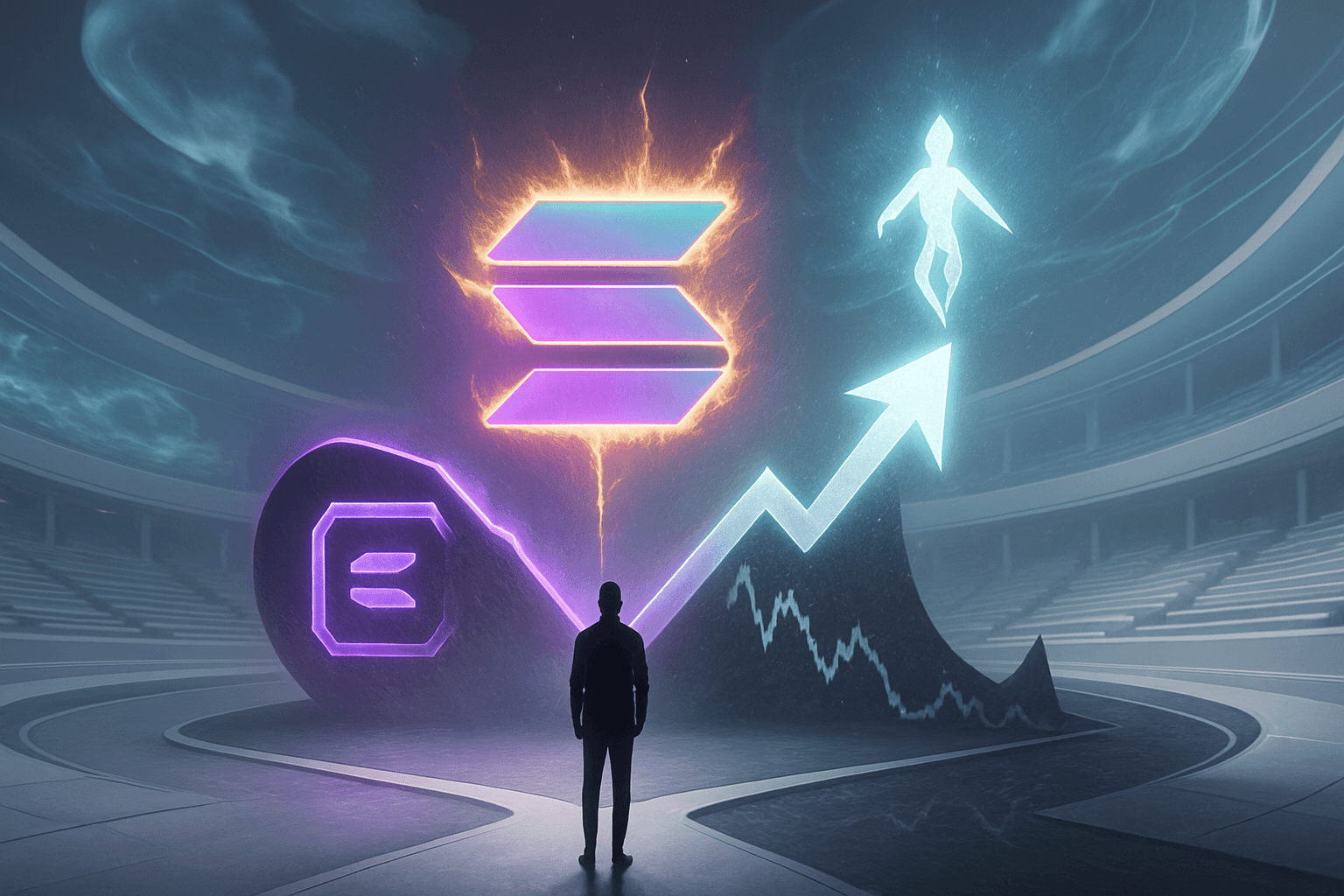
Solana is caught between two competing narratives this week: a veteran trader's technical warning of a catastrophic price drop and a string of fundamental developments suggesting the network is maturing faster than its critics expected.
Peter Brandt, the commodities and crypto trader known for decades of chart-pattern analysis, has identified what he calls an ominous formation on SOL's price chart, predicting a possible 50% decline from current levels. The warning arrived just as Jump Crypto's Firedancer validator client went live on Solana's mainnet and Ethena's USDe stablecoin added more than $560 million in supply on the network in five days.
The Technical Warning
Brandt's call carries weight in pattern-recognition circles. He has correctly flagged major reversals in Bitcoin and commodities markets over his career, and his bearish SOL read is not casual. The specific pattern he identified points to a structural breakdown in SOL's price structure, with a projected move that would cut the token's value roughly in half. For a token that has delivered 108% growth in fully converted SOL per share over the past year, according to Nasdaq-listed treasury company DeFi Development Corp.'s May 2026 shareholder letter, that kind of drawdown would be painful but not historically unprecedented for Solana.
What makes Brandt's warning harder to dismiss is that it arrives during a period of elevated leverage across DeFi. Ethena's USDe is a synthetic dollar backed by delta-neutral derivatives positions rather than fiat reserves, and its rapid expansion on Solana introduces leverage risk at the protocol level. When $560 million enters a DeFi network in five days, the question is not just whether the capital is productive, but what happens when it unwinds. Rapid stablecoin inflows have historically preceded volatility in both directions.
Infrastructure Catching Up
The Firedancer launch cuts against the bearish case in a meaningful way. Firedancer is an independent validator client built by Jump Crypto, and its arrival on mainnet is significant because Solana has historically run on a single client implementation. A network where all validators run identical software is brittle: one critical bug can halt the entire chain. Firedancer provides client diversity, a fundamental resilience upgrade. According to Jump Crypto's announcement, the client has already processed tens of millions of transactions in production, suggesting the rollout is a genuine production deployment rather than a staged demo.
Client diversity is something Ethereum spent years building out, and Solana now has a credible second implementation running live. That is a structural improvement that does not show up in price charts but matters considerably for institutional validators and developers who have been wary of single-client risk.
DeFi Security Holds Surprisingly Well
One data point that deserves more attention: DeFi lending hacks across both EVM-compatible chains and Solana cost users just $30.9 million over the past year, drawn from a base of nearly $100 billion in total value locked. That works out to roughly 3 basis points in losses, or 0.03%. Traditional finance accepts far higher loss rates from fraud and operational failures as a cost of doing business.
The number suggests that DeFi security practices have improved substantially from the exploit-heavy years of 2021 and 2022, when nine-figure hacks were routine. It also undercuts the narrative that Solana's DeFi growth is reckless. A network absorbing hundreds of millions in new stablecoin deposits while keeping hack losses at 3 basis points is not obviously fragile, even as leverage risks rise.
Meme Coins as Infrastructure Stress Tests
The Solana Foundation president's framing of meme coins as a "production test net" for the network is worth taking seriously rather than dismissing as spin. Meme coin trading seasons have driven Solana's transaction throughput to levels that stress every component of the stack: the mempool, validator scheduling, fee markets, and RPC infrastructure. Networks that survive those stress periods come out with better-calibrated performance characteristics than networks that only ever process orderly institutional transactions.
That framing does paper over a real tension. Meme coin activity attracts retail users who bear the most risk during drawdowns and who often have the least understanding of the leverage embedded in the DeFi protocols they use alongside speculative tokens. If Brandt's predicted correction materializes, meme coin holders and overleveraged DeFi positions will be the first to liquidate, and those liquidations can cascade.
What the Divergence Means
The gap between Solana's technical chart and its fundamental metrics is wider right now than at most points in the network's history. DeFi Development Corp.'s 108% SOL-per-share growth figure reflects a year of genuine adoption, not just price appreciation. Firedancer's mainnet launch resolves a long-standing architectural concern. DeFi hack losses at 3 basis points suggest the security layer is holding. And $560 million in new USDe supply in five days indicates that sophisticated DeFi participants are treating Solana as a serious venue.
Brandt's technical pattern, if it plays out, would not invalidate any of those fundamentals. Price and value diverge constantly in crypto markets, and a 50% drawdown in SOL would not shut down Firedancer or drain Ethena's positions overnight. What it would do is reset leverage, shake out weaker holders, and potentially slow the pace of DeFi capital inflows.
Both things can be true simultaneously: the network is building real infrastructure and attracting real capital, and the token price may be running ahead of what the near-term technical structure can support. Traders watching Brandt's pattern and developers building on Firedancer are not necessarily watching the same asset on the same time horizon.