Shadows and Spotlights: How Privacy Coins Are Challenging the New Era of Financial Oversight
An in-depth look at the global clash between privacy coins and regulators, and how financial anonymity is reshaping digital-asset policy.
Overview
The global debate over financial privacy has intensified as governments adopt increasingly strict oversight of digital assets. Privacy-focused cryptocurrencies have emerged as critical tools for individuals seeking anonymity in an era defined by financial surveillance and rapid regulatory expansion. To policymakers, however, these technologies raise deep concerns surrounding compliance, national security and the traceability of funds. At the center of the debate lies one fundamental question: How much privacy should modern finance permit?
Explication
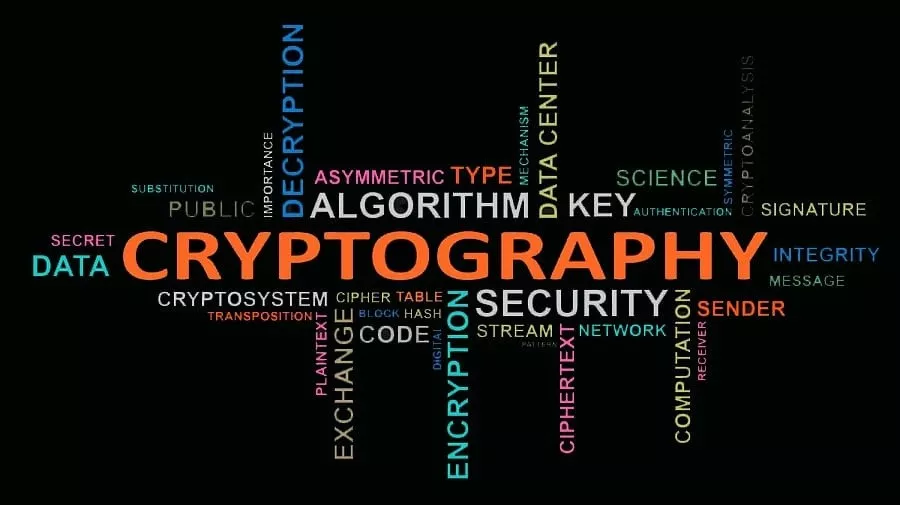
Privacy coins function by concealing transaction details that are typically visible on public blockchains. While Bitcoin and Ethereum allow anyone to trace wallet activity, privacy networks use advanced cryptography to hide identities, transaction flows and transfer amounts. Monero employs ring signatures, stealth addresses and confidential transactions to blend each payment with decoys, making sender attribution nearly impossible. Zcash relies on zero-knowledge proofs (zk-SNARKS) to validate hidden transactions without revealing any underlying data. Dash introduced a mixing mechanism through PrivateSend, enabling users to combine funds and break clear transaction paths. Meanwhile, chains like Firo and Pirate Chain default to fully shielded transactions using zk-based systems, offering complete obfuscation at the protocol level. These designs strengthen user anonymity but complicate regulatory monitoring, creating a persistent tension between privacy rights and enforcement needs.
Examples of Key Privacy Coins
–Monero (XMR):The leading privacy coin, known for full default anonymity using ring signatures and stealth addresses.br>–Zcash (ZEC):Offers optional privacy via zk-SNARKS, allowing either transparent or fully shielded transactions.br>–Dash (DASH):Integrates a coin-mixing feature called PrivateSend to obscure transaction trails.br>–Firo (FIRO):Uses Lelantus Spark technology to enhance anonymity while enabling auditability when required.br>–Pirate Chain (ARRR):A fully shielded chain that applies zero-knowledge proofs to all transactions by default.
Advantages
– Strong protection of identity and transaction data.br>– Resistance to mass surveillance and invasive financial tracking.br>– Increased personal security through anonymity and reduced exposure.br>– Greater fungibility compared to transparent cryptocurrencies.br>– Valuable for journalists, activists and individuals in high-risk regions.
Disadvantages
– Heightened regulatory pressure and delisting risks.br>– Lingering associations with illicit activity in public discourse.br>– Reduced liquidity and limited institutional adoption.br>– Compliance challenges under strict financial regulations.br>– More complex user experience for newcomers.
History Time Evolution
Privacy coins emerged from cypherpunk ideals that championed financial autonomy and resistance to centralized oversight. As Bitcoin introduced transparent public ledgers, early developers recognized the need for anonymity-focused alternatives. Monero launched in 2014, followed by Zcash in 2016 with groundbreaking zero-knowledge cryptography. Over time, regulatory bodies such as FATF, FinCEN and the European Union imposed stricter rules including the Travel Rule, prompting major exchanges to delist privacy assets. Despite these obstacles, the sector continued innovating, leading to more advanced privacy protocols and renewed debate about digital rights in financial systems.
Market Sentiment
Market sentiment toward privacy coins remains sharply divided. Privacy advocates and digital-rights groups see these assets as essential tools against expansive surveillance, particularly as governments explore CBDCs and tighten financial monitoring. Institutional investors, however, approach them cautiously due to regulatory uncertainty and compliance hurdles. As a result, market performance often reacts to political developments and enforcement actions rather than purely crypto-native trends.
Conclusion
The standoff between privacy coins and government regulation reflects a broader struggle over individual autonomy in digital finance. Regulators argue that transparency is necessary to combat crime and protect the financial system, while privacy supporters contend that anonymous transactions safeguard civil liberties in an era of constant data exposure. The ultimate resolution will influence not only the future of privacy cryptocurrencies but also the boundaries of financial freedom in a rapidly digitizing world.