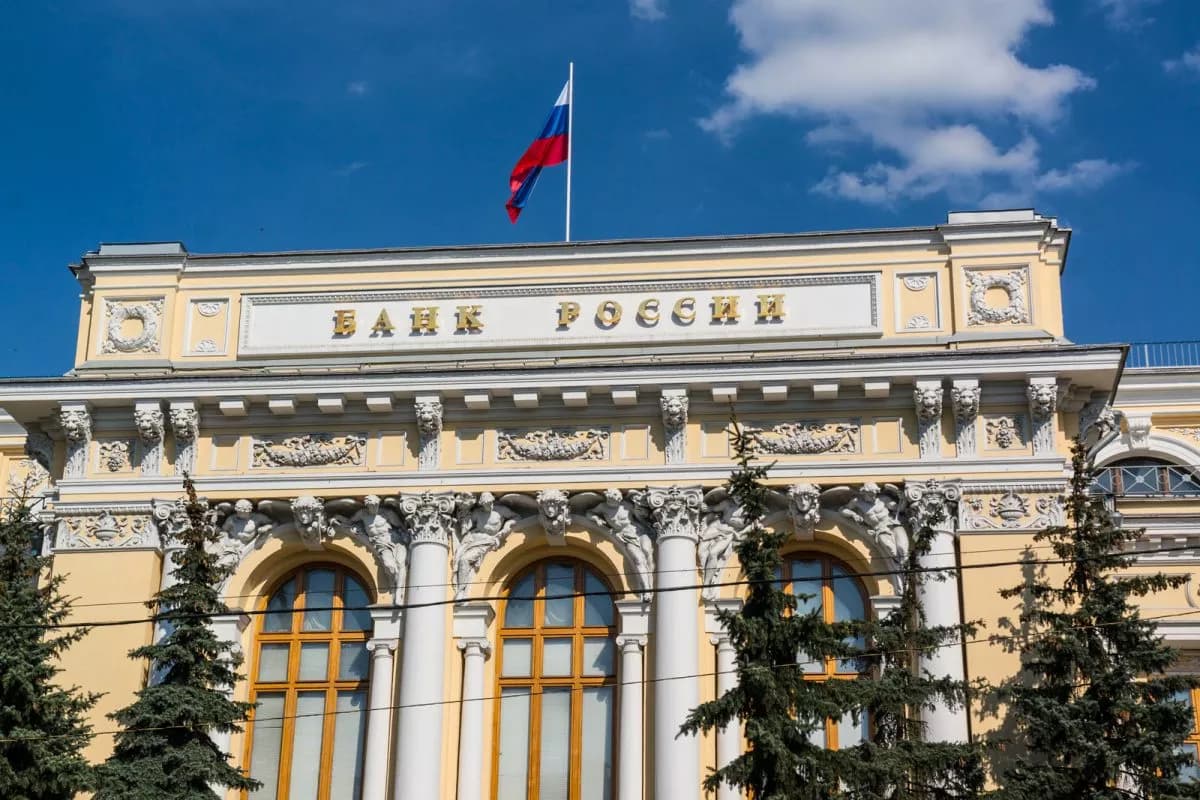
Russia Moves Toward Regulated Crypto Exposure via Mutual Funds
Russia's central bank considers crypto mutual funds for qualified investors while maintaining a ban on direct crypto investments.
Russia's financial regulators are preparing to take a cautious but meaningful step toward integrating cryptocurrency into the nation's financial system by allowing mutual funds to invest in crypto assets—albeit under tight conditions.
The Central Bank of Russia (CBR), long known for its skepticism toward cryptocurrencies, is now considering proposals to permit mutual investment funds for "qualified investors" to gain indirect exposure to digital assets. Olga Shishlyannikova, director of the Department of Investment Financial Intermediaries at the CBR, confirmed the initiative during the National Association of Securities Market Participants (NAUFOR) conference.
"We have heard exactly the same ideas from the brokerage community ... and they have received this opportunity," she said, referencing earlier permissions granted to financial firms to offer crypto derivatives.
This shift in stance follows incremental regulatory changes over the past year. In March, the central bank floated the idea of an "experimental legal regime" (ELR) for coin trading, followed by a May circular that allowed crypto derivatives to be marketed to highly qualified investors. However, the bank has maintained its prohibition on direct investments in cryptocurrencies, citing volatility and investor risk.
Despite these concerns, there is clear institutional interest. A recent report revealed that Russian bitcoin futures trading reached $16 million between June 4 and June 27. Still, Shishlyannikova downplayed the scale, noting, "Investors have not reacted strongly yet, and this hype is greater among financial institutions than among the investors you are counting on."
The proposed mutual funds would provide a legal and supervised framework for institutional crypto exposure, but the path to implementation is complex. Shishlyannikova clarified that simply issuing a circular would not suffice. Formal regulatory amendments are necessary, a process unlikely to be completed before 2026. "We will return to this discussion with the market next year," she added.
Parallel to these developments, the CBR is preparing to launch its central bank digital currency (CBDC), the digital ruble, starting in September 2026. This rollout, along with a universal QR code payment system, underscores the government’s effort to modernize its financial infrastructure while keeping unregulated crypto use at bay.
At the same time, the authorities are cracking down on unauthorized crypto transactions, with new fines targeting the use of digital currencies like Bitcoin for domestic payments outside the ELR framework.
In sum, Russia’s evolving crypto policy seeks to balance innovation with control—opening the door to regulated exposure while reinforcing its stance against unfettered crypto speculation.