Russia and Iran Forge a Digital Alliance Aiming to Redraw the Geopolitics of Blockchain and AI
Russia and Iran deepen cooperation on blockchain, AI, and fintech to pursue digital sovereignty.
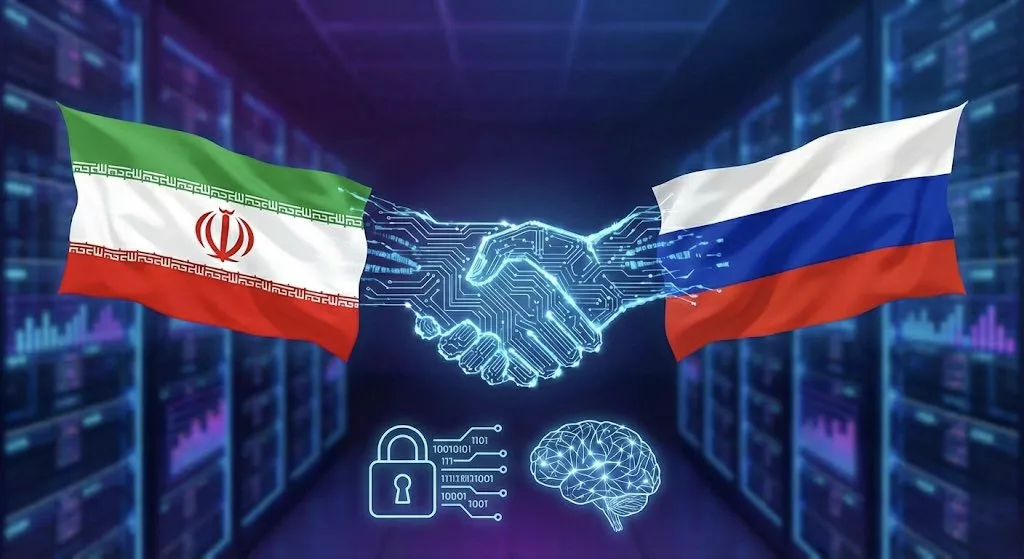
Russia and Iran have formalized a strategic technology pact that places blockchain, artificial intelligence, and digital finance at the heart of their long-term economic and geopolitical ambitions. The memorandum, signed in Moscow by senior officials from both nations, underscores a shared goal: building technological sovereignty as global sanctions and cyber pressures reshape the international digital landscape.
The agreement spans a wide set of priorities. Both governments intend to develop blockchain-based financial systems, reinforce cybersecurity protocols, expand AI capabilities, and roll out smart infrastructure suited to national needs. Russian and Iranian media reported that the pact also encourages business cooperation through tech parks and cross-border innovation hubs. For officials in both capitals, the collaboration marks a decisive shift toward reducing dependency on Western-controlled financial channels and digital networks.
The timing reflects broader national strategies. Russia is preparing to launch its digital ruble in 2026, anchoring state-backed payments to a blockchain framework designed for faster and more secure transactions. Iran, meanwhile, has publicly embraced the potential of cryptocurrencies as tools for economic diversification, a stance shaped by years of navigating international restrictions. Recent blockchain conferences in Tehran highlighted the government’s intention to build a regulatory environment robust enough to attract new digital asset projects while managing systemic risks.
Cybersecurity sits at the core of the partnership. Russian Deputy Minister Alexander Shoitov indicated that joint expertise will be essential to counter increasingly complex cyber threats. Analysts note that coordinated intelligence sharing between states can sharply reduce breach incidents, making these bilateral alliances an important defensive mechanism. Both nations view digital infrastructure as a strategic asset, and the memorandum commits them to harmonizing standards for data transfer, encrypted communication, and digital asset protection.
On the AI front, Iranian Deputy Minister Meysam Abedi emphasized ambitions to expand into autonomous systems, predictive analytics, and smart city design. These efforts align with global trends that project the combined AI-blockchain market to grow substantially in the coming decade. Russia, for its part, has signaled its intent to pursue a network of regional partnerships. President Vladimir Putin recently extended overtures to India, arguing that industrial cooperation in robotics, digitalization, and advanced computing will define the next era of strategic competition. His pledge to send a high-level delegation to India’s 2026 AI summit reinforces the Kremlin’s belief that technological alliances can balance geopolitical constraints.
The agreement also interfaces with multilateral ambitions. Iran has floated the idea of a shared cryptocurrency within the Shanghai Cooperation Organization, whose members include Russia, India, and China. Economists suggest such an instrument could streamline trade settlement and reduce reliance on traditional banking corridors that remain vulnerable to external pressure. Preliminary regional models estimate that intra-SCO trade could rise substantially if a unified digital currency were adopted.
While implementation will depend on regulatory clarity and technological execution, the Russia–Iran pact represents a deliberate step toward a parallel digital order. Both governments hope that joint advancement in blockchain and AI can mitigate economic vulnerabilities, strengthen autonomy, and attract partners seeking alternatives to existing global systems. As political tensions continue to shape access to technology and finance, this partnership signals how digital cooperation is becoming a core instrument of statecraft.