Reddit Crypto Community Divided on AI Tools and DeFi Governance
Bitcoin pushes toward $80,000 amid institutional ETF inflows, yet Reddit's crypto community is fractured. Microsoft-backed AI tools and DoorDash stablecoin expansion signal infrastructure progress, but governance disputes and market fragmentation fuel skepticism about crypto's fundamental direction.
Reddit Crypto Community Divided on AI Tools and DeFi Governance
Bitcoin is pushing toward $80,000 as institutional money flows through ETF channels, yet the crypto community on Reddit is fractured between optimism about infrastructure breakthroughs and deep skepticism about market stability, governance legitimacy, and whether the industry has fundamentally misunderstood its own purpose.
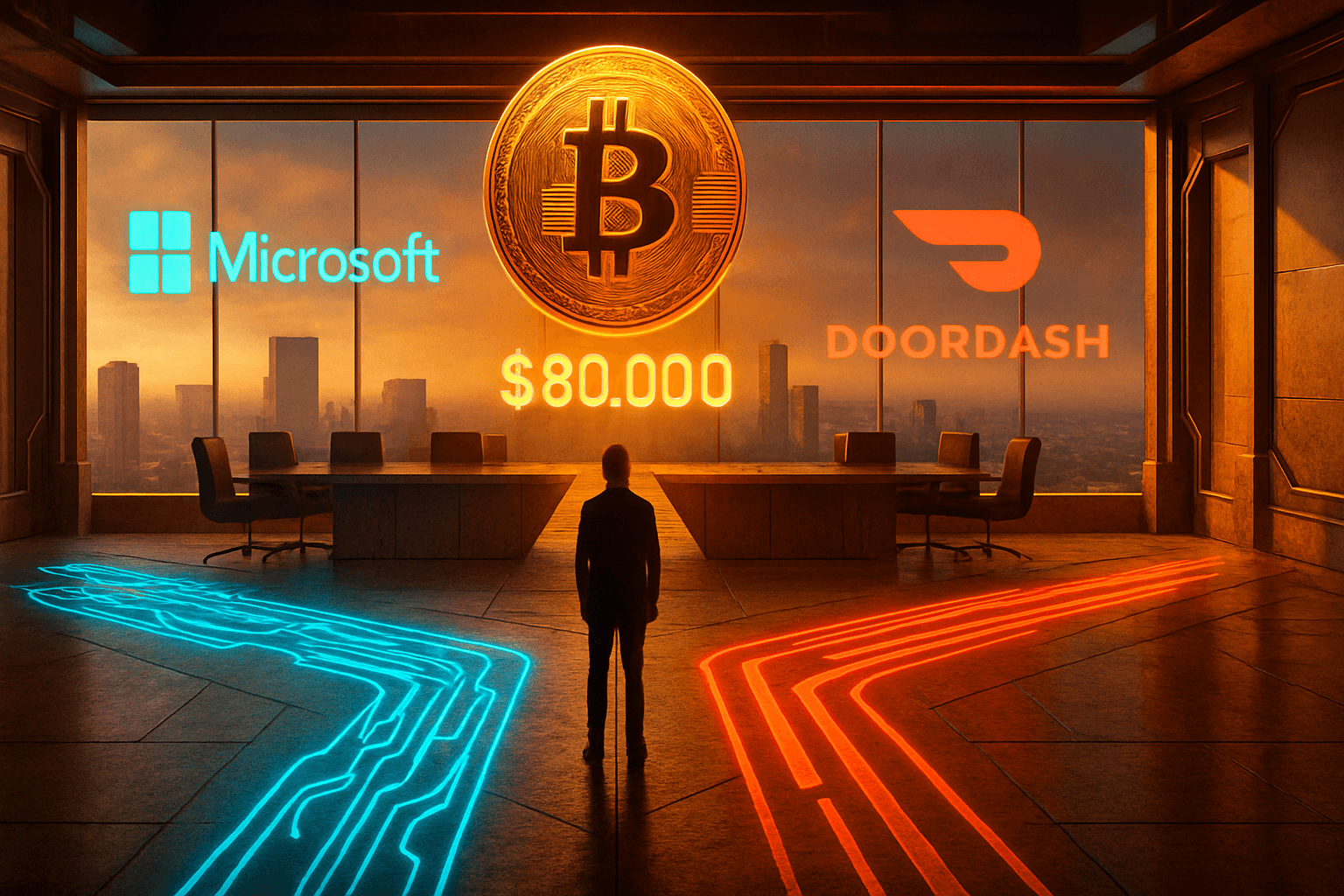
April 24 discussion threads across major crypto subreddits reveal a market in transition. Microsoft's venture unit M12 is backing Dreamspace, a no-code AI app builder launching on Coinbase's Base Layer 2 network. DoorDash is expanding stablecoin payouts to 40 countries. These institutional moves signal confidence in crypto infrastructure, yet they're overshadowed by governance disputes, regulatory pressure, and a community increasingly questioning whether staking yields, trading fees, and hodl strategies actually make sense.
Institutional Adoption Meets Skepticism
The Dreamspace announcement generated genuine interest in r/cryptocurrency. The tool lets users describe applications they want to build and deploy them directly on Base, lowering the barrier to entry for developers without deep blockchain experience. This infrastructure play typically excites the crypto community: real tooling, reduced friction, major backing.
Enthusiasm was muted. Commenters questioned whether another app builder solves meaningful problems or simply adds another layer of abstraction to an already fragmented ecosystem. DoorDash's stablecoin expansion showed similar ambivalence. Payouts to 40 countries is objectively significant for adoption, yet conversation quickly pivoted to whether stablecoins actually solve payment problems or just move the problem around.
Institutional adoption is happening, but the community no longer automatically interprets it as bullish. Bitcoin's approach to $80,000 and solid ETF inflows are real. One trader summed up the prevailing mood: "BTC pushing back towards 80k, ETF inflows look solid but at the same time, every move still feels news-driven. One headline and everything flips."
Governance Blowup: Justin Sun vs. World Liberty Financial
The Justin Sun lawsuit against World Liberty Financial (WLFI) exploded across multiple threads. Sun alleges the project froze his holdings, stripped his voting rights, and threatened to burn tokens. The dispute reveals something deeper: DeFi governance remains a political arena where large token holders can be silenced or punished.
One r/defi user captured the frustration: "Half of DeFi is still just political theater with better branding, and that's facts." Another added that the WLFI situation "is exposing how fake decentralization really is when one project can just freeze accounts and strip voting rights."
Governance legitimacy has been a foundational claim of DeFi since inception. If major projects can unilaterally revoke voting power and freeze holdings, the decentralization narrative collapses. The BitGrail hack settlement discussions reinforced this message. Francesco Firano regained 85% ownership of BG Services Srl and offered 4.2 million NANO to drop legal claims, rejected. Exchange hacks and custody disputes never really get resolved; they drag on for years.
Market Fragmentation and Retail Confusion
Bitcoin and Ethereum discussions revealed another tension: price movements no longer move the market in unison. One trader observed: "The market isn't trending like before. It's not moving together anymore. Only a few coins pump at a time, the rest just chop sideways."
This fragmentation creates real problems for retail traders. Ethereum was discussed around $1,900, with one user attempting to average down from a $3,900 cost basis. XRP holders debated entry points after recent moves to $1.20. Solana discussions focused on staking yields (6% APY on the Seeker phone) and whether it was worth the custody risk.
Retail traders are losing conviction in their own strategies. One thread titled "If You Could Delete One Piece of Crypto Advice" sparked debate over whether "never sell, just HODL forever" is conviction or "lazy thinking dressed up as conviction." Another questioned why so many people obsess over staking yields that require surrendering custody for minimal returns.
Regulatory Pressure and the CLARITY Act
The CLARITY Act received significant discussion, with over 100 crypto companies now lobbying for faster Senate passage. The time pressure is real: the bill faces a narrowing legislative window. Community sentiment was mixed. Some saw it as necessary regulation to clarify crypto's legal status. Others viewed it as the industry trying to negotiate its way into legitimacy rather than building something that doesn't need permission.
This reflects a deeper identity crisis. One widely shared post titled "Crypto Isn't Dying, It's Having an Identity Crisis" resonated across multiple threads. The community is asking: Is crypto a technology platform, a financial system, a speculative asset class, or a political statement? The answer determines whether Microsoft backing AI builders, DoorDash accepting stablecoins, and the Senate considering regulatory clarity are wins or distractions.
Technical Developments: Speed Without Excitement
Polkadot's upgrade to v2.2.2, enabling two-second blocktimes on the People Chain, generated technical discussion but limited excitement. The upgrade is objectively meaningful for transaction throughput, yet the community's response suggests that speed improvements alone no longer drive adoption or price appreciation. Developers care. Traders mostly don't.
Lightning Network discussions on r/bitcoin showed similar patterns. Technical improvements are appreciated but treated as table stakes rather than catalysts.
The Fractured Moment
The April 24 Reddit discussion captures a crypto market that has matured past simple narratives. Institutional money is flowing in through ETF inflows, Microsoft backing, and DoorDash integration. Prices are moving higher toward $80,000. Yet the community is asking harder questions about whether the infrastructure being built actually solves problems, whether governance claims hold up under pressure, and whether individual participation strategies make sense.
Bearish counter-narratives are also present. Community members predict Bitcoin could drop to $60,000 by October 2026. Others question whether current price levels represent genuine strength or just momentum driven by headlines. The obsession with minor fee differences masks larger strategic confusion about what crypto is actually for.
This isn't "crypto is dead" energy. It's something more significant: "we've been doing this all wrong" energy. The market may continue higher, but the community's conviction is fractured. That gap between price momentum and sentiment consensus is worth watching closely.