India’s Fintech Summit Sidelines Crypto as Government Tightens Control Over Digital Finance
India’s Fintech Fest 2025 excludes crypto and stablecoins, signaling a state-driven shift toward regulated digital finance.
India’s Global Fintech Fest 2025 (GFF), the country’s premier financial innovation event, made a deliberate and politically charged choice this year: private cryptocurrencies and stablecoins were nowhere to be found on the official agenda. The omission reflects a calculated effort by New Delhi to steer digital innovation firmly under state supervision, even as it accelerates adoption of central bank digital currency (CBDC) and public digital infrastructure.
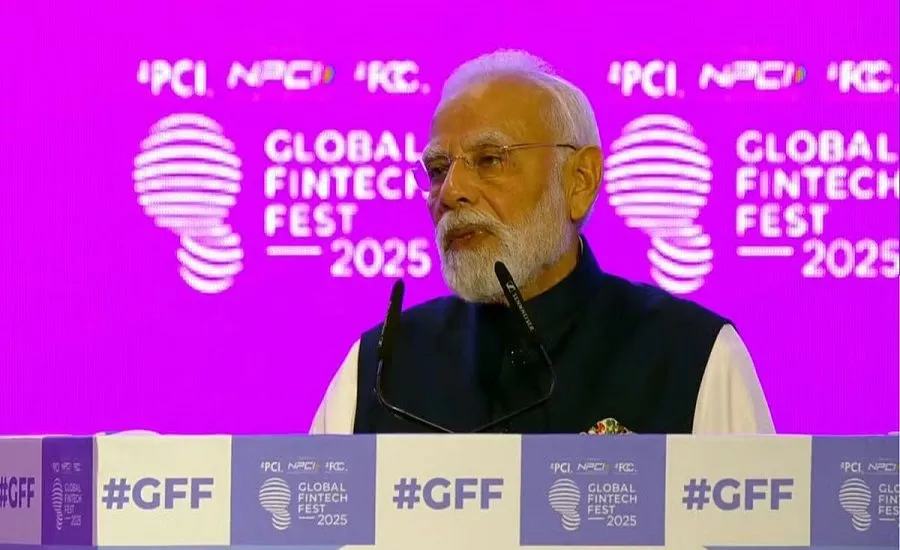
The three-day summit, held in Mumbai from October 7 to 9, gathered top government and regulatory officials, including Finance Minister Nirmala Sitharaman and representatives from the Reserve Bank of India (RBI) and the Ministry of Electronics and Information Technology. Yet, amid hundreds of sessions on AI-driven finance, national data infrastructure, and digital identity platforms like DigiLocker, there was no space for discussion on private crypto assets. The message was unmistakable: India’s fintech future belongs to government-led, regulated innovation.
Behind the summit’s polished optimism, the state’s enforcement arm was acting decisively. Just days before the event, the Financial Intelligence Unit (FIU-IND) ordered internet service providers to block access to 25 offshore crypto exchanges that had failed to register under the Prevention of Money-Laundering Act (PMLA). The targeted platforms reportedly ignored anti-money-laundering (AML) and know-your-customer (KYC) requirements. The measure effectively excluded them from India’s domestic market and reaffirmed the government’s zero-tolerance policy toward non-compliant digital operators.
This simultaneous policy and enforcement choreography shows a consistent narrative: financial innovation is welcome—but only within a tightly monitored regulatory perimeter. The RBI has long held that cryptocurrencies have no legal tender status in India. The government’s decision to focus on AI, sustainable finance, and CBDC development while silencing crypto conversations demonstrates how seriously it intends to preserve control over monetary evolution.
Finance Minister Sitharaman’s recent remarks on October 3 underscore this duality. She acknowledged that while speculative “Virtual Digital Assets” (VDAs) pose financial stability risks, stablecoins deserve closer engagement due to their potential to enhance cross-border payments and remittance efficiency. This stance reflects India’s dilemma: fostering technological progress while avoiding market disruptions driven by unregulated tokens.
The exclusion of crypto from the GFF agenda is therefore less a coincidence than a signal. India is sending a clear message to global fintech players—access to its rapidly expanding digital economy depends on full alignment with domestic rules. The government’s emphasis on sovereign digital tools, including the CBDC and public data infrastructure, suggests that only regulated innovation will find a seat at the table.
As global financial hubs such as Singapore, the UAE, and the EU embrace Web3 frameworks, India’s approach stands apart: slow, deliberate, and state-directed. The result may be a more stable ecosystem—but one where private crypto innovation remains firmly outside the national conversation.