Fitch Calls Bitcoin 6% Drop After $6.3B Binance Hack a Maturity Sign
Bitcoin fell only about 6% after the $6.3B Binance hack, versus 35% in March 2020 and 14% after FTX. Fitch Ratings calls it a sign of deeper markets, while Lorenzo Valente and Omid Malekan fight over whether chains should get an emergency rollback.
The largest crypto heist on record knocked bitcoin down about 6%. Fitch Ratings says that shallow dip points to a sturdier market. Meanwhile, a separate fight has opened over whether major chains should ever be able to roll back a theft like this.
As our earlier coverage reported, the October 29, 2026 drain hit Binance hot wallets. Blockchain analytics firms tracing the funds attribute it to TraderTraitor, a North Korea-linked group. The exploit went after Binance's signing infrastructure instead of stealing private keys, and it touched hot wallets on Ethereum, Bitcoin, Tron, XRP Ledger and Solana. Roughly 18,270 BTC, worth $1.5 billion at the time, was among the stolen assets.
Fitch: the dip was shallow
Fitch says bitcoin fell only about 6% in the 10 hours after the first reports. Compare that with 35% at the COVID-19 onset in March 2020, 14% after FTX in 2022 and 21% during the Bitstamp hack in 2015. Daily trading volume jumped 67% to $40.9 billion.
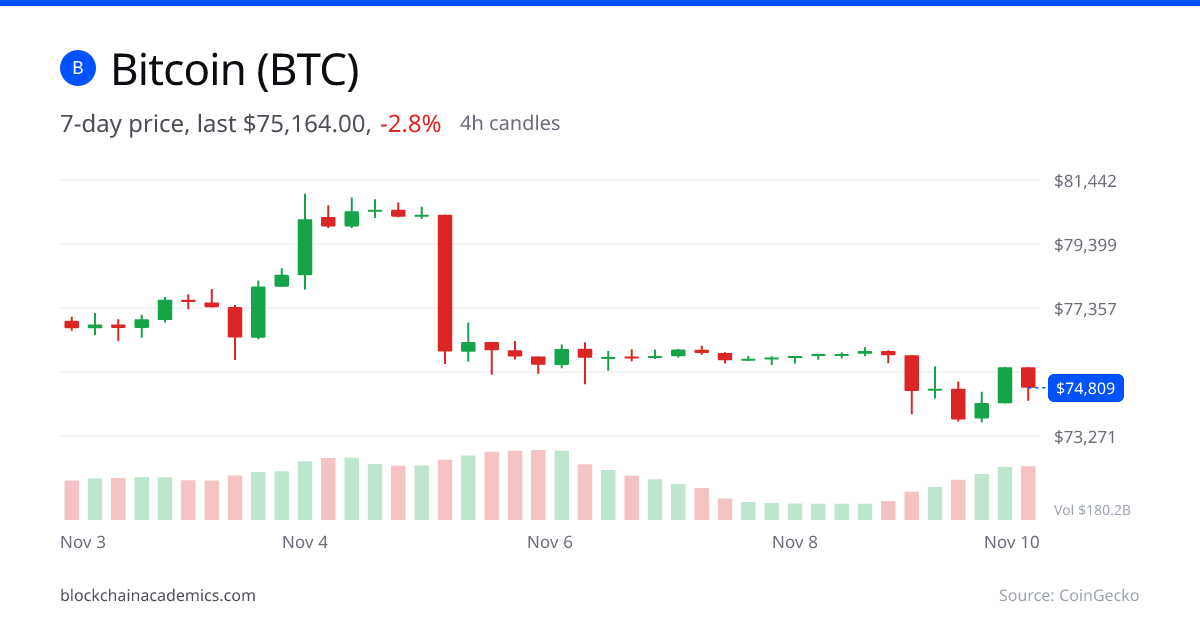
Fitch read that as evidence of deeper, more diversified market structure:
"The lower level of disruption is probably due to crypto trading market structures having become deeper and more diversified."
Fitch Ratings
The agency added that a spread-out trading base "reduces dependence on any single exchange and can support liquidity when individual venues are disrupted, even when it involves Binance."
It was not a clean bill of health. Fitch cautioned that cybersecurity vulnerabilities and operational disruptions remain significant risks. For traders, a 6% wick on the biggest heist ever says something about liquidity depth. It says nothing about safety.
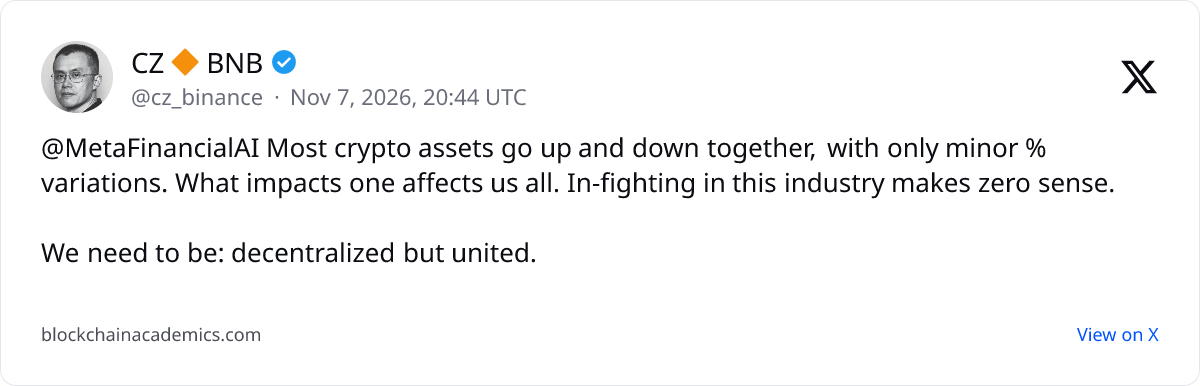
Binance said it covered $6 billion of the loss from its reserves and reopened withdrawals by November 1. Stablecoin issuers reportedly froze about $3 billion. Binance founder Changpeng "CZ" Zhao used the moment to urge industry unity.
The rollback argument
The harder question is what, if anything, protocols should do differently. Lorenzo Valente proposes a two-to-three-year "hardening period" in which Bitcoin, Ethereum and Solana could coordinate validator-level rollbacks for catastrophic events. His case: AI-driven and quantum threats justify a temporary emergency capability.
Omid Malekan isn't buying it. He says a rollback power would compromise the neutrality of permissionless blockchains, risk systemic failures and invite political fights over who controls the lever. He points to Mt. Gox as a parallel.
So far, the hack has produced no immediate governance changes on major networks.
What it means
The two threads pull in opposite directions. Fitch's numbers suggest the market can absorb a record exchange breach without an FTX-style rout, which undercuts the argument that such events demand protocol-level intervention. The attack also targeted Binance's signing infrastructure, not a flaw in any of the five chains involved. A validator rollback would be a blunt tool for that kind of problem.
The shock absorbers clearly work better than they did in 2015, 2020 or 2022. Whether they keep working depends on the operational risks Fitch itself flags.