Data Availability Sampling (DAS): The Missing Link in Blockchain Scalability
Data Availability Sampling enables scalable, secure blockchain verification without full data downloads—key to the modular blockchain era.
Overview
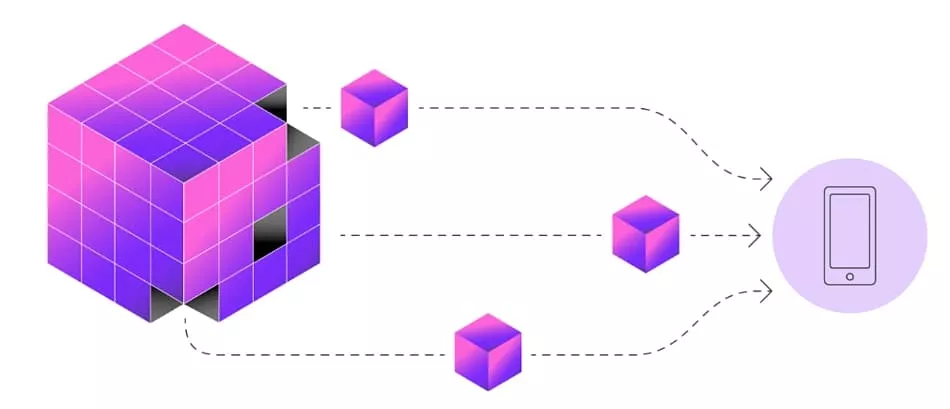
Data Availability Sampling (DAS) is a method that allows blockchain nodes to verify that all the data in a block is available, without needing to download the entire block. This technique is crucial for scaling blockchains efficiently while maintaining decentralization. In simpler terms, DAS lets smaller or "light" nodes check the integrity of blockchain data by examining random samples, rather than the full content.
DAS supports the evolution of modular blockchain architectures, where tasks like execution and data availability are split across specialized layers. As rollups become the dominant scalability solution, DAS is emerging as a key enabler by ensuring rollup data is accessible and verifiable.
/p>p>
Evolution
Initially, blockchain scalability focused on increasing transaction throughput. However, as rollups matured, the bottleneck shifted to how data is made available to the network. Ethereum research on Proto-Danksharding (EIP-4844) and Celestia's launch as a modular blockchain put DAS at the center of scaling conversations. Since then, multiple DA layers have emerged across ecosystems.
/p>p>
/p>h4>Examples/h4>ul>li>Celestia: Pioneered DAS as a core feature. It separates consensus from data availability, allowing rollups to post data cheaply and securely without building their own full blockchain infrastructure./li>li>Ethereum (Proto-Danksharding): Introduces data blobs for rollups to post off-chain data efficiently. A precursor to full Danksharding, it integrates DAS gradually into Ethereum’s base layer./li>li>Avail (by Polygon Labs): Offers a standalone data availability layer for rollups, sidechains, and appchains. Built to support a multichain future with robust sampling guarantees./li>li>EigenDA: A service built on EigenLayer that uses Ethereum restaking to provide decentralized data availability. It supports various rollups looking for customizable DA support./li>/ul>p>strong>/strong>
strong>/strong>
strong>/strong>
Key Features & Use Cases
strong>/strong>
strong>/strong>
Pros & Cons
Pros:
Cons:
strong>/strong>
strong>/strong>
strong>/strong>
Market Sentiment
The market views DAS as a foundational pillar for the future of Web3 infrastructure. Celestia’s adoption and Ethereum’s EIP-4844 support have added legitimacy. DA-focused solutions attract developer attention and investor interest, although some concerns linger around interoperability, latency, and real-world deployment.
strong>/strong>
strong>/strong>
strong>/strong>
Conclusion
Data Availability Sampling solves a critical piece of the blockchain scalability puzzle. By enabling efficient, secure verification of block data, DAS makes it possible to scale without compromising decentralization. As modular blockchain designs mature and rollups become dominant, DAS is set to become a standard component of next-generation blockchain architecture.
/p>p>
/p>p>By Alejandro Silva Ramírez, Crypto Analyst & Columnist
- Celestia: Pioneered DAS as a core feature. It separates consensus from data availability, allowing rollups to post data cheaply and securely without building their own full blockchain infrastructure.
- Ethereum (Proto-Danksharding): Introduces data blobs for rollups to post off-chain data efficiently. A precursor to full Danksharding, it integrates DAS gradually into Ethereum’s base layer.
- Avail (by Polygon Labs): Offers a standalone data availability layer for rollups, sidechains, and appchains. Built to support a multichain future with robust sampling guarantees.
- EigenDA: A service built on EigenLayer that uses Ethereum restaking to provide decentralized data availability. It supports various rollups looking for customizable DA support.
- Light Client Verification: Makes it possible for users to run secure clients on mobile devices.
- Scalability: Permits larger block sizes and higher transaction throughput.
- Modular Blockchain Design: Enables chains to outsource data availability to dedicated layers.
- Rollups & Layer 2s: Supports zk-rollups and optimistic rollups by ensuring their posted data is verifiable and retrievable.
- Scales blockchains without sacrificing decentralization.
- Empowers users with low-resource devices.
- Reduces validator costs by offloading data duties.
- Relies on complex math (e.g., erasure codes, sampling proofs).
- Still early in adoption and testing at scale.
- Inter-layer dependencies may complicate UX and integration.