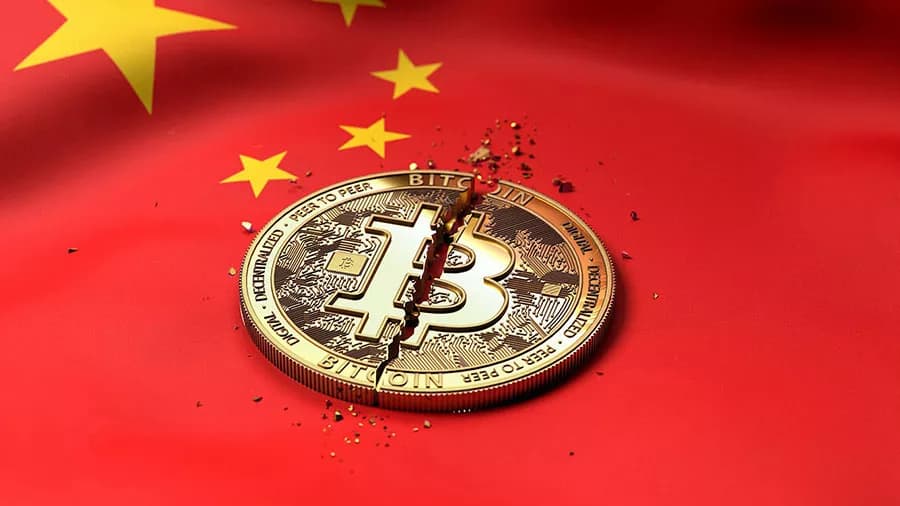
China Outlaws Crypto Storage in Latest Crackdown, Spooking Global Markets
China bans private cryptocurrency holdings, triggering price drops and renewed debate over state control versus decentralization.
In a fresh escalation of its long-running war against decentralized finance, the Chinese government has officially banned the private storage of cryptocurrencies, further cementing its stance as one of the most hostile regulatory environments for digital assets. The decision expands on previous restrictions that outlawed crypto trading and mining, and it sent shockwaves through the global crypto market.
The ban was revealed just days after Chinese authorities began liquidating portions of their substantial Bitcoin holdings—194,000 BTC worth over $20 billion—raising speculation about broader state strategies to consolidate financial control and promote the adoption of its central bank digital currency (CBDC), the digital yuan.
Bitcoin reacted immediately to the announcement, dropping to a low of $104,684 before stabilizing around $104,541. Altcoins followed suit, with Cardano registering the steepest 24-hour drop among the top ten cryptos, declining by 5.55%. The news triggered mass liquidations among traders, including a high-profile case involving 949 BTC ($99.3 million) from crypto influencer James Wynn.
This move appears strategically aligned with China’s broader push for monetary centralization. By outlawing private crypto storage, the government aims to eliminate competitors to the digital yuan and bring full control of digital assets under state regulation. Analysts believe this development could accelerate decentralization trends in Asia, pushing users toward crypto-friendly jurisdictions.
Despite the immediate market turbulence, historical patterns suggest that such bans are unlikely to cause lasting damage. China's regulatory actions in 2017 and 2021—banning ICOs, trading, and mining—each triggered short-term crashes, but Bitcoin eventually rebounded to new highs. The latest restriction may add to market volatility, but it's unlikely to derail the crypto industry’s global trajectory.
Critics have already begun mocking the Chinese government's attempts to suppress crypto usage, arguing that technological workarounds and offshore exchanges will continue to enable access. With China’s massive crypto holdings still partially intact, questions remain about whether the state will further offload its BTC or preserve it as a strategic asset.
As the global crypto community digests this new development, one thing is clear: the tension between centralized state control and decentralized digital finance is only intensifying.