Astroport Ends Tokenholder Governance on Neutron and Terra After Security Incident
Astroport has ended tokenholder governance on Neutron and Terra, replacing token-weighted voting with contributor-led control through DAO DAO organizations. ASTRO emissions have been cut to zero, removing both governance utility and yield incentives.
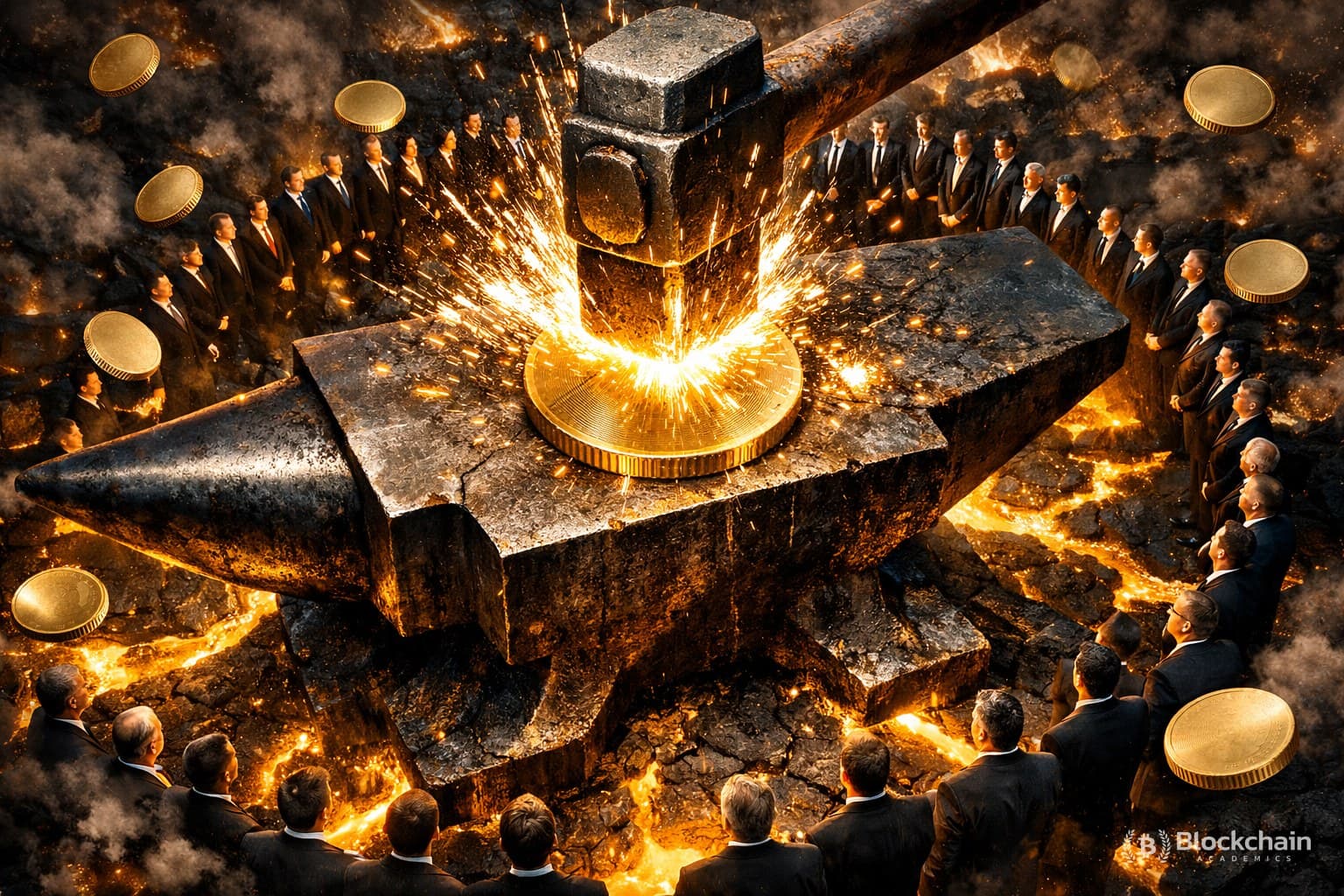
Astroport has stripped ASTRO tokenholders of governance rights on both the Neutron and Terra chains, handing protocol control to a small group of contributors operating through DAO DAO organizations. The move, announced this week, follows a security incident that the project cited as the catalyst for restructuring how decisions get made.
Under the new model, contributor groups replace the token-weighted voting system that previously governed the protocol. vxASTRO holders, those who have locked ASTRO for voting power, retain their normal unlock process and will not be forced out of their positions. However, ASTRO emissions have been cut to zero, eliminating the incentive layer that rewarded participation and liquidity provision across the protocol.
Contributors will run the protocol through DAO DAO organizations, while vxASTRO holders retain the normal unlock process and ASTRO emissions go to zero.
The framing from the project positions the restructuring as a security upgrade. Token-based governance has become a well-documented attack surface in DeFi. Flash loan exploits, where an attacker borrows a large sum within a single transaction block to temporarily acquire majority voting power, have compromised multiple protocols. The 2023 Curve Finance governance episode illustrated how sophisticated actors can manipulate on-chain voting to push through malicious proposals. Astroport's pivot to contributor-led governance closes that specific attack vector, but it does so by concentrating authority rather than distributing it differently.
That tradeoff is not trivial. Tokenholder disenfranchisement removes the primary mechanism through which ASTRO holders could influence protocol direction, fee structures, or treasury allocations. With emissions simultaneously reduced to zero, the token loses both its governance utility and its yield-generating function in a single announcement. Holders who acquired ASTRO specifically for those rights now hold an asset with a materially different value proposition than when they bought in. Selling pressure is a reasonable expectation in the near term, though the depth of any drawdown will depend on how much of the circulating supply is held by participants who weighted governance access heavily.
Astroport's governance shift may enhance security but centralizes control, potentially impacting tokenholder influence and market dynamics.
The broader DeFi sector has watched contributor-led governance experiments with mixed results. Protocols that have moved away from pure token voting often justify it as a temporary measure during a vulnerability window, with promises to restore community control once safeguards are in place. Whether Astroport intends a similar path back toward decentralization is not clear from the current announcement. The precedent is worth watching: if a security incident is sufficient grounds to permanently reassign governance from tokenholders to contributors, other protocols facing similar pressure may cite Astroport as justification for analogous moves.
The tension between decentralization as a design ideal and security as an operational necessity has never been fully resolved in DeFi. Similar governance debates are playing out across the sector, as protocols from Lido's upcoming Lido Lend launch to newly merged entities continue to weigh community control against protocol resilience.
For Neutron and Terra ecosystems specifically, the change removes one of the more active governance venues that had operated on Cosmos-based infrastructure. Astroport has historically been a significant automated market maker on both chains, and its governance forums attracted meaningful participation. That community layer does not disappear overnight, but its formal power does. Contributors now hold unilateral authority over protocol upgrades, parameter changes, and treasury decisions, with no on-chain mechanism for tokenholders to override them.
The security rationale is legitimate. The centralization cost is real. What the project has not yet made clear is what conditions, if any, would trigger a return to decentralized governance, or whether this restructuring is meant to be permanent.