Brazil’s Largest Private Bank Sees Bitcoin as a Modest Hedge in an Uncertain 2026
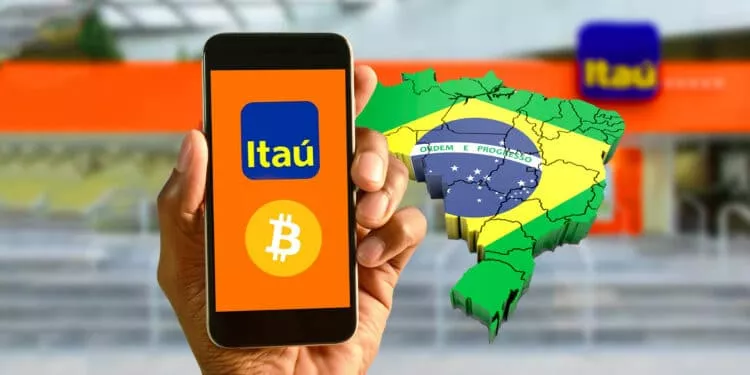
Itaú recommends a cautious 1%–3% Bitcoin allocation from 2026, citing diversification benefits and currency-risk considerations for investors.
Brazil’s biggest private lender is not urging investors to chase Bitcoin’s volatility, but it is no longer treating the asset as a financial curiosity either. In a recent research note, Itaú outlined a cautious yet deliberate case for including Bitcoin in diversified portfolios from 2026, recommending an allocation of between 1% and 3% as a tool for diversification and currency-risk management rather than short-term speculation.
The guidance reflects a broader shift in how traditional financial institutions are framing digital assets. According to the report, Bitcoin’s decentralized and global nature gives it a behavioral profile that differs from equities, bonds, and domestic markets. That distinction, Itaú argues, can add resilience to portfolios during periods of geopolitical stress, monetary instability, or sharp currency moves. As the bank put it, Bitcoin has “evolved into a functional portfolio component,” even if its role remains limited by design.
The analysis, authored by strategist Renato Eid, also pushes back against a common narrative around Bitcoin’s recent performance in Brazil. While global price swings were evident throughout 2025, the report stresses that local investor losses were driven as much by currency dynamics as by Bitcoin’s own volatility. Bitcoin started the year near $93,500 and traded through a wide range, dipping toward $80,000 at its lows and briefly surpassing $125,000 at its highs. For Brazilian investors, however, the story looked different once exchange rates were factored in.
Itaú notes that while the U.S. dollar weakened by roughly 3.5% over the year, Bitcoin’s value measured in reais fell more than 16%. Eid highlighted that shifts in the dollar–real exchange rate can materially alter outcomes for local holders, recalling that in late 2024, when the dollar approached R$6.30, Bitcoin positions strengthened significantly in local terms. The implication is clear: for Brazilian portfolios, Bitcoin exposure is inseparable from currency risk, for better or worse.
Short-term market turbulence has only reinforced the bank’s conservative stance. Over the past day, Bitcoin slid around 2.5%, hovering near $90,000 after trading sideways above $92,000 for much of the session. A late sell-off briefly pushed prices below a key psychological level as trading volume surged to roughly $83 billion, underscoring the asset’s continued sensitivity to shifts in sentiment.
Rather than attempting to time such moves, Itaú’s report emphasizes disciplined portfolio construction. The bank advises gradual position-building and regular rebalancing, warning that forecasts for highly volatile assets are notoriously unreliable. For investors seeking exposure, the bank points to practical access routes, including its Íon investment platform and the BITI11 exchange-traded fund listed on Brazil’s B3 exchange.
Looking ahead, Itaú also flagged structural developments that could further normalize digital assets within Brazil’s financial system. Preparations by B3 to expand tokenization initiatives from 2026 signal a growing institutional framework around blockchain-based instruments, even as Bitcoin itself remains a small slice of recommended allocations.
The message from Itaú is measured but unmistakable: Bitcoin may not belong at the center of portfolios, but in a world defined by currency swings and market uncertainty, ignoring it altogether is no longer the default position.