Barcelona Faces Branding Backlash After Crypto Partner Launches Token Without Club’s Consent
Barcelona distances itself from a token launched by its blockchain partner, raising questions over crypto sponsorship risks.
FC Barcelona has entered an uncomfortable spotlight after its newly minted blockchain partner unveiled a cryptocurrency that many fans initially assumed was linked to the club. The episode has forced Barcelona into a rapid defensive posture, highlighting the increasingly complex risks that arise when major sports brands venture into the still-opaque world of digital assets.
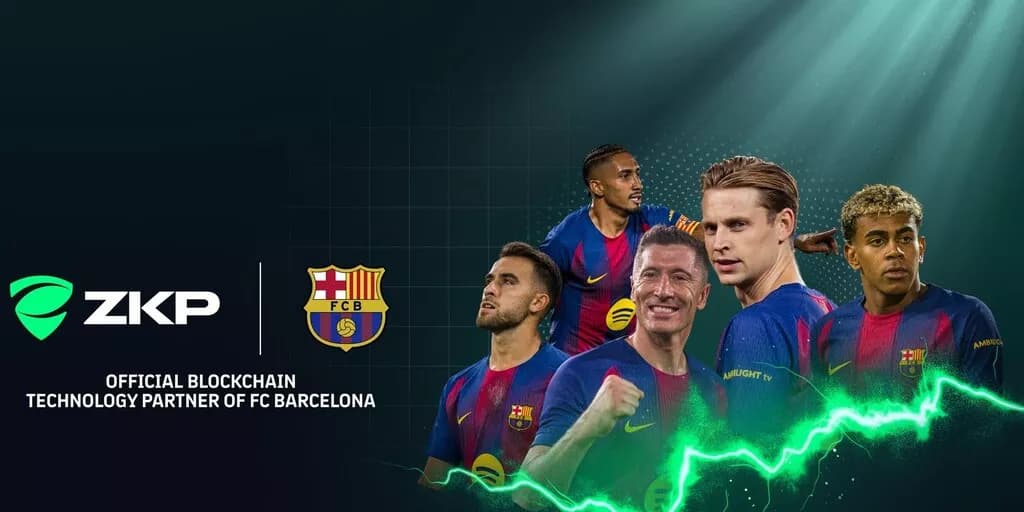
The three-year agreement with Zero Knowledge Proof, signed in mid-November and positioned as a strategic partnership for blockchain technology, was expected to bolster the club’s commercial portfolio at a time of persistent financial strain. Instead, it has triggered confusion after ZKP introduced its own token shortly after the deal became public. Concern grew that supporters might view the coin as carrying Barcelona’s endorsement, especially given the visibility that comes with attaching a project to one of the world’s most recognisable clubs.
Barcelona moved quickly to distance itself, issuing a firm statement stressing that it had no involvement whatsoever in creating, promoting or governing the digital asset. The club emphasized that it neither uses ZKP’s token nor oversees the technology attached to it, underscoring the separation between the sponsorship arrangement and any financial product offered by the company.
The controversy is made sharper by the nature of ZKP itself. The entity describes its operation as a “pseudonymous collective” working across multiple jurisdictions—a phrase that, in practical terms, means that the individuals behind it remain unidentified. It has recently aligned with other sports organisations, including Australia’s newly formed Dolphins rugby league team, but has offered limited public information about its structure, governance or safeguards.
For experts, this lack of clarity is precisely the danger. Carol Alexander, a professor at the University of Sussex, notes that partnerships with famous sports institutions can instantly lend legitimacy to crypto ventures whose origins or accountability mechanisms remain largely obscure. She warns that fans should ask fundamental questions before engaging with any asset tied to such projects, including who controls it, where documentation is held and what recourse exists if something fails. In ZKP’s case, she argues, the answers remain elusive.
Barcelona’s financial backdrop adds another dimension. The club has spent several seasons navigating a difficult economic reset, which has often pushed it toward opportunistic commercial strategies. Football finance analyst Kieran Maguire suggests this episode reflects a broader trend of clubs prioritising short-term cash over reputational caution, while crypto companies benefit from the credibility conferred by association with iconic teams.
Internal voices have echoed this concern. Former Barça youth player Xavier Vilajoana, who is reportedly preparing a presidential run, publicly demanded clarity on how the agreement was vetted and why the partnership was approved despite the anonymity surrounding ZKP. He also questioned the company’s online behaviour, noting its limited social media footprint and the controversial personalities it follows.
The incident underscores the growing tension between sport’s pursuit of new revenue streams and the regulatory and reputational pitfalls that accompany crypto sponsorships. As digital asset companies seek mainstream validation, clubs like Barcelona face mounting pressure to balance financial necessity with due diligence and transparency.