Arthur Hayes Calls for Zcash Exodus from Exchanges as Privacy Risks Escalate
Arthur Hayes urges Zcash investors to withdraw from exchanges, warning of privacy risks amid renewed market volatility.
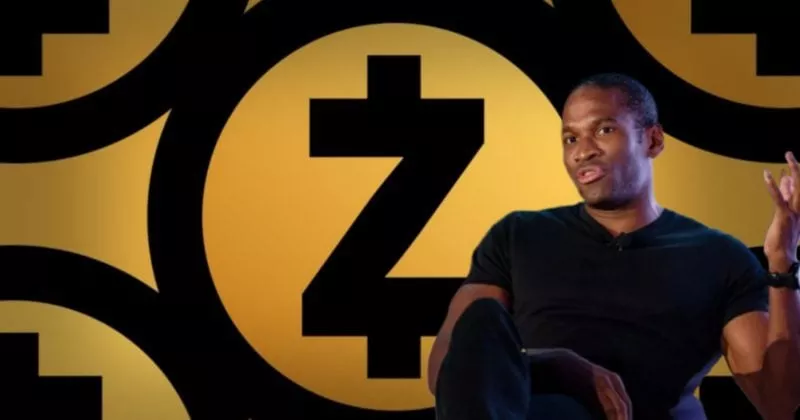
Arthur Hayes, the outspoken co-founder of BitMEX and one of crypto’s most recognizable voices, has urged investors in Zcash to remove their holdings from centralized exchanges, warning that the privacy-focused asset faces growing exposure in a volatile and increasingly regulated market. His remarks, shared this week, have reignited debate around self-custody and digital privacy in the age of state-level surveillance and data tracking.
Zcash, a cryptocurrency built on zero-knowledge proof technology, allows users to verify transactions without revealing personal information—an innovation that distinguishes it from transparent blockchains like Bitcoin. Yet that same privacy has become a double-edged sword. Centralized exchanges, required by law to collect customer data, undermine Zcash’s fundamental purpose by linking identities to wallet activity. Hayes’ call to action was blunt: holders should “get their coins off exchanges” and reclaim control of their privacy.
The timing of his warning coincides with sharp price swings. Zcash briefly plunged to $430 before rebounding above $530 within hours, reflecting the broader turbulence across digital assets. Despite that volatility, CoinGecko data shows the token climbing about 10% over the last 24 hours, making it the 24th-largest cryptocurrency by market capitalization. Analysts attribute the movement partly to traders repositioning amid speculation about new privacy-focused regulations.
Hayes, recently pardoned by former U.S. President Donald Trump for earlier legal violations related to BitMEX’s compliance failures, has maintained his reputation for unapologetically direct commentary. His stance echoes the sentiment of other industry figures, including AngelList founder Naval Ravikant, who once described Zcash as “insurance against Bitcoin”—a tool for those seeking transactional discretion in a world increasingly intolerant of financial anonymity.
The warning also taps into a broader trend in crypto’s cultural and technical shift toward self-custody. In 2025, privacy coins such as Zcash and Monero are once again under scrutiny as governments intensify their focus on blockchain traceability. Cybersecurity firms like Chainalysis have documented billions in losses from exchange hacks, reinforcing the argument that digital privacy must begin with personal responsibility.
For many investors, Hayes’ statement is less a market call than a philosophical one. It highlights the growing tension between convenience and autonomy—between the frictionless access of centralized platforms and the uncompromising privacy that Zcash was built to provide. In a market still haunted by exchange collapses and regulatory crackdowns, his advice resonates: the safest vault may be the one you control yourself.
Whether Zcash’s resurgence becomes sustainable remains uncertain, but its renewed relevance is unmistakable. In an era when transparency has become a default setting, Zcash’s promise of selective invisibility looks less like an experiment—and more like a necessity.