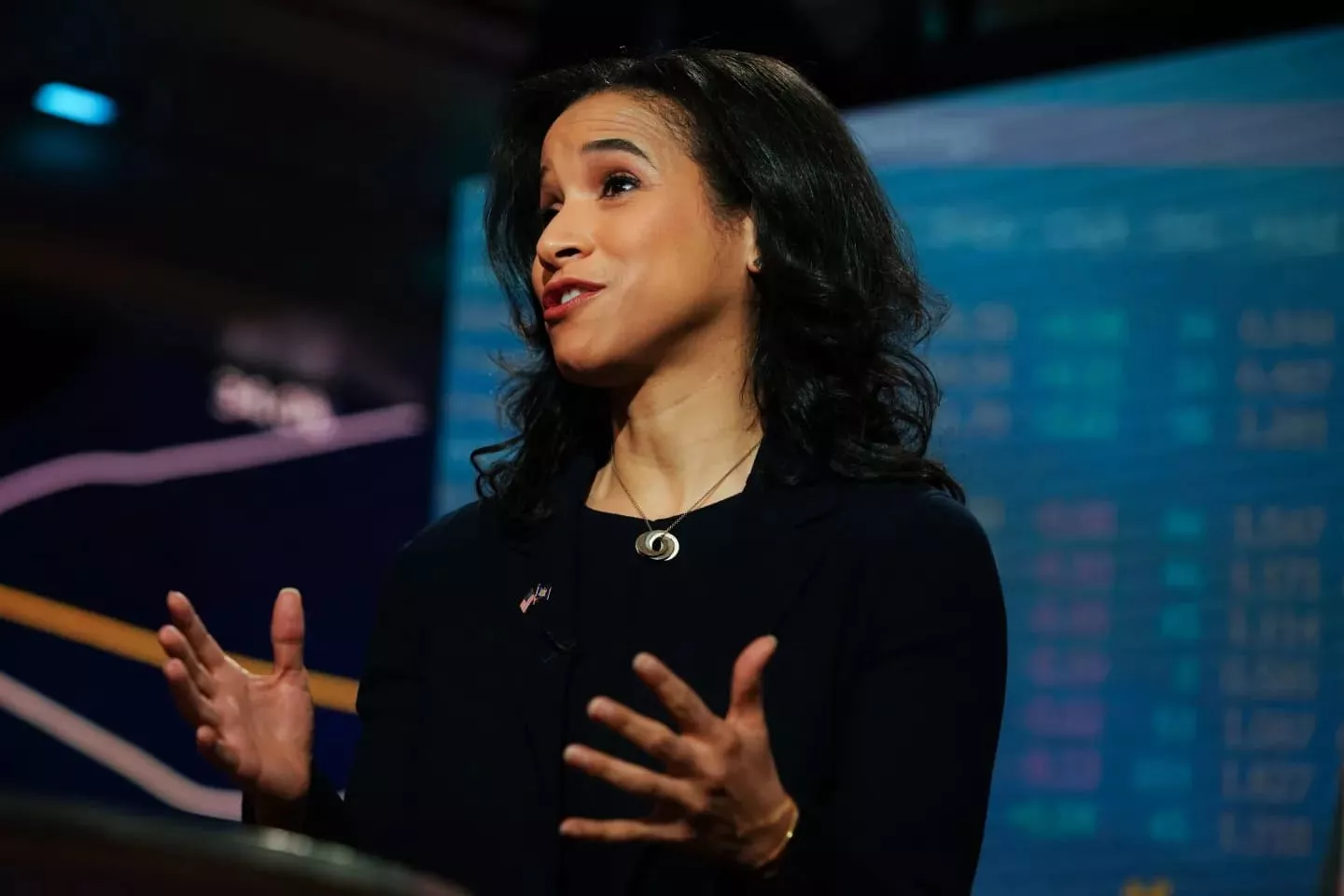
Adrienne Harris’s Exit Marks a Turning Point in New York’s Crypto Oversight
Adrienne Harris resigns as New York’s top financial regulator, leaving a legacy of proactive crypto oversight.
As Adrienne Harris steps down as superintendent of the New York Department of Financial Services (DFS), she leaves behind a legacy that reshaped the role of state regulators in the turbulent world of digital finance. Appointed in 2021 by Governor Kathy Hochul, Harris transformed what was once viewed as a niche state office into a national authority at the intersection of banking, blockchain, and emerging technologies.
Governor Hochul praised Harris for “rebuilding the Department into a regulator fit for the financial capital of the world.” Her tenure coincided with an unprecedented wave of crises: bankruptcies that wiped out billions in investor wealth, the collapse of key banks like Silvergate and Signature, and a cascade of legal disputes involving industry giants such as Coinbase and Genesis.
Unlike many of her federal counterparts, Harris embraced proactive regulation. While the Securities and Exchange Commission under Gary Gensler leaned heavily on litigation, Harris sought to establish frameworks—particularly in the volatile realm of stablecoins. Under her leadership, New York became the only jurisdiction in the United States with a functioning licensing system for crypto businesses, the much-debated BitLicense program. Though entrepreneurs often criticized its complexity, Harris’s insistence on guardrails set a precedent that lawmakers in Washington later referenced when drafting the Genius Act, the first comprehensive U.S. stablecoin legislation.
Her willingness to testify before Congress and to confront blockchain’s risks directly won her begrudging respect across the industry. Yet, her national profile waned after Donald Trump’s return to the White House in January. The administration’s sweeping initiatives in blockchain regulation and artificial intelligence overshadowed the DFS’s more incremental approach, limiting the influence Harris once wielded.
In a farewell interview, Harris displayed characteristic humor, remarking that her “checking account will tell me how much time I get” before moving on to her next role. For now, Kaitlin Asrow, the DFS’s executive deputy superintendent of research and innovation, will take the helm as interim leader. Asrow, who oversaw a 60% expansion of the department’s blockchain unit, emphasized consumer protection while pledging to sustain New York’s reputation as a hub for “responsible financial innovation.”
Harris’s departure raises broader questions about the balance of state and federal oversight in the crypto sector. New York’s experiment with licensing and its early embrace of blockchain regulation may continue to serve as a template—but without Harris at the helm, its role in shaping national policy remains uncertain.