A Privacy-Driven AI Frontier Emerges on TON as Cocoon Mobilizes Global GPU Power
Decentralized AI gains momentum as Cocoon launches on TON, offering private GPU rentals and Toncoin rewards.
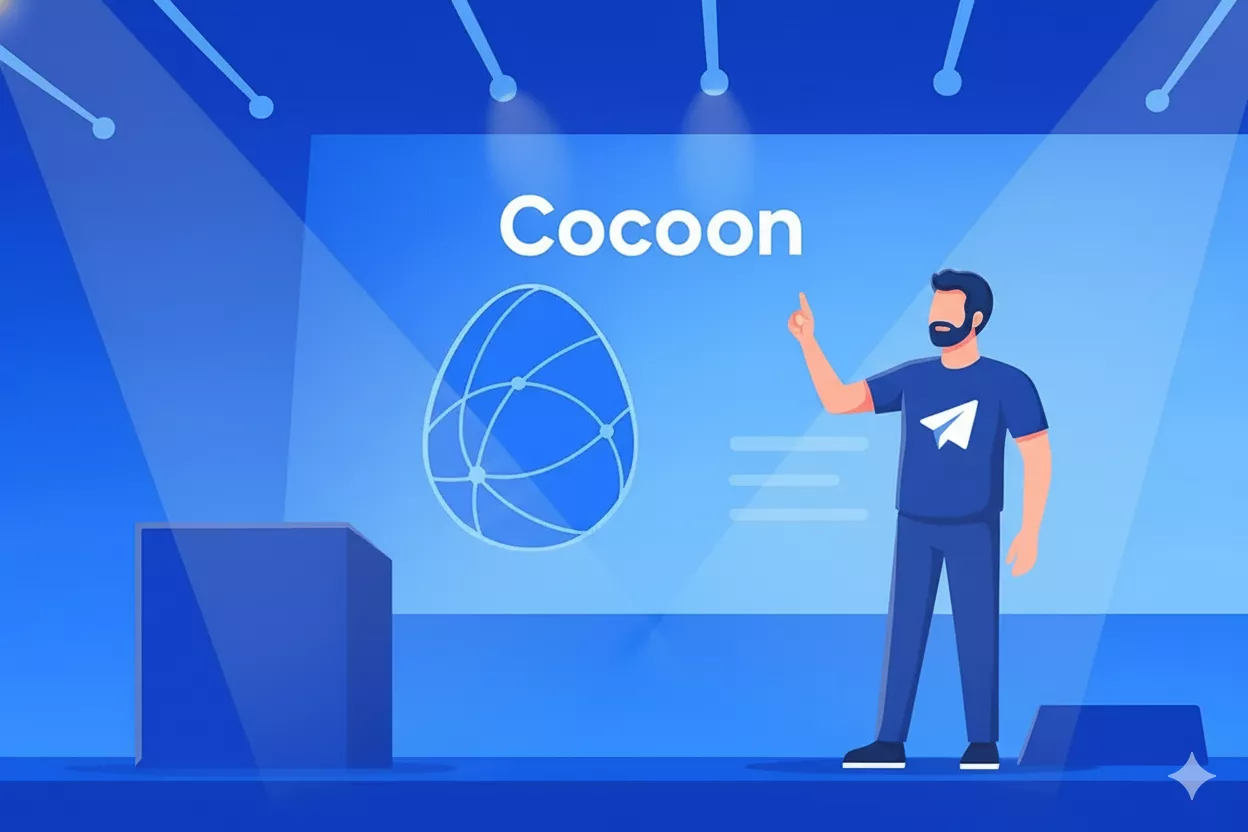
The launch of Cocoon on The Open Network introduces an ambitious attempt to redefine how artificial intelligence systems are powered, secured and distributed. Instead of relying on the familiar architecture dominated by cloud giants such as Amazon or Microsoft, Cocoon proposes a decentralized marketplace where idle GPUs can be transformed into valuable infrastructure. Participants contribute computing power, process AI queries and earn Toncoin in return, forming a system that merges blockchain incentives with privacy-first machine intelligence.
The enthusiasm surrounding its debut owes much to its promise of confidentiality. For years, privacy advocates and developers in the crypto ecosystem have argued that centralized AI carries inherent risks, from opaque data handling to the concentration of computational resources in the hands of a few corporations. Cocoon directly addresses these concerns by anchoring its operations on TON’s blockchain, allowing requests to be routed, computed and settled without exposing sensitive information. Pavel Durov, who publicly introduced the project at the Blockchain Life 2025 conference in Dubai, framed the initiative as an answer to escalating costs and diminishing user protections in mainstream AI services. His message was clear: expensive intermediaries restrict innovation, while decentralized tools expand it.
Public sentiment appears to reflect that shift. A survey conducted by the Digital Currency Group earlier this year found that 77% of respondents believed decentralized AI would serve society better than traditional corporate models. Their reasoning centered on transparency and the redistribution of power in emerging digital economies. Cocoon’s approach mirrors these priorities by enabling open participation and allowing contributors to maintain control over their hardware rather than handing it over to centralized platforms.
Those early principles are reinforced by the technical direction championed by researchers from the Dfinity Foundation and Onicai, who advocate for running AI processes on permissionless blockchains to guarantee integrity and traceability. Their ethical guidelines highlight the need for verifiable data practices, something Cocoon attempts to implement from its inception. Early adopters have already begun earning Toncoin through routine compute tasks, providing a small but meaningful glimpse into how decentralized AI could evolve as more users join.
Cocoon’s debut also arrives at a moment when interest in TON is expanding, partly boosted by its connection to Telegram’s massive global audience. That visibility could accelerate adoption, giving the platform an advantage in the crowded landscape of emerging decentralized AI solutions. Its model offers a practical alternative for anyone looking to monetize unused GPUs without surrendering control or compromising privacy.
Although still in its early days, Cocoon suggests a future in which advanced AI workloads no longer depend on a handful of centralized providers. By merging cryptographic security with incentive-driven participation, it illustrates how blockchain networks can reshape the economics of machine intelligence. Whether this decentralized architecture can scale remains to be seen, but its arrival marks a notable milestone in the pursuit of more equitable, transparent and privacy-aligned technological infrastructure.