Zcash Community Backs Faster Blocks and Bitcoin-Style Halvings in NU7 Vote
Zcash holders have voted overwhelmingly in favor of two structural changes: shorter block times and a Bitcoin-style halving schedule in the NU7 protocol upgrade. The changes would introduce a predictable, disinflationary supply curve and reduce confirmation latency, though they carry engineering...
Zcash Community Backs Faster Blocks and Bitcoin-Style Halvings in NU7 Vote
Zcash holders have voted overwhelmingly in favor of two structural changes to the network: shorter block times and a Bitcoin-style halving schedule, according to sentiment polls tied to the NU7 protocol upgrade process.
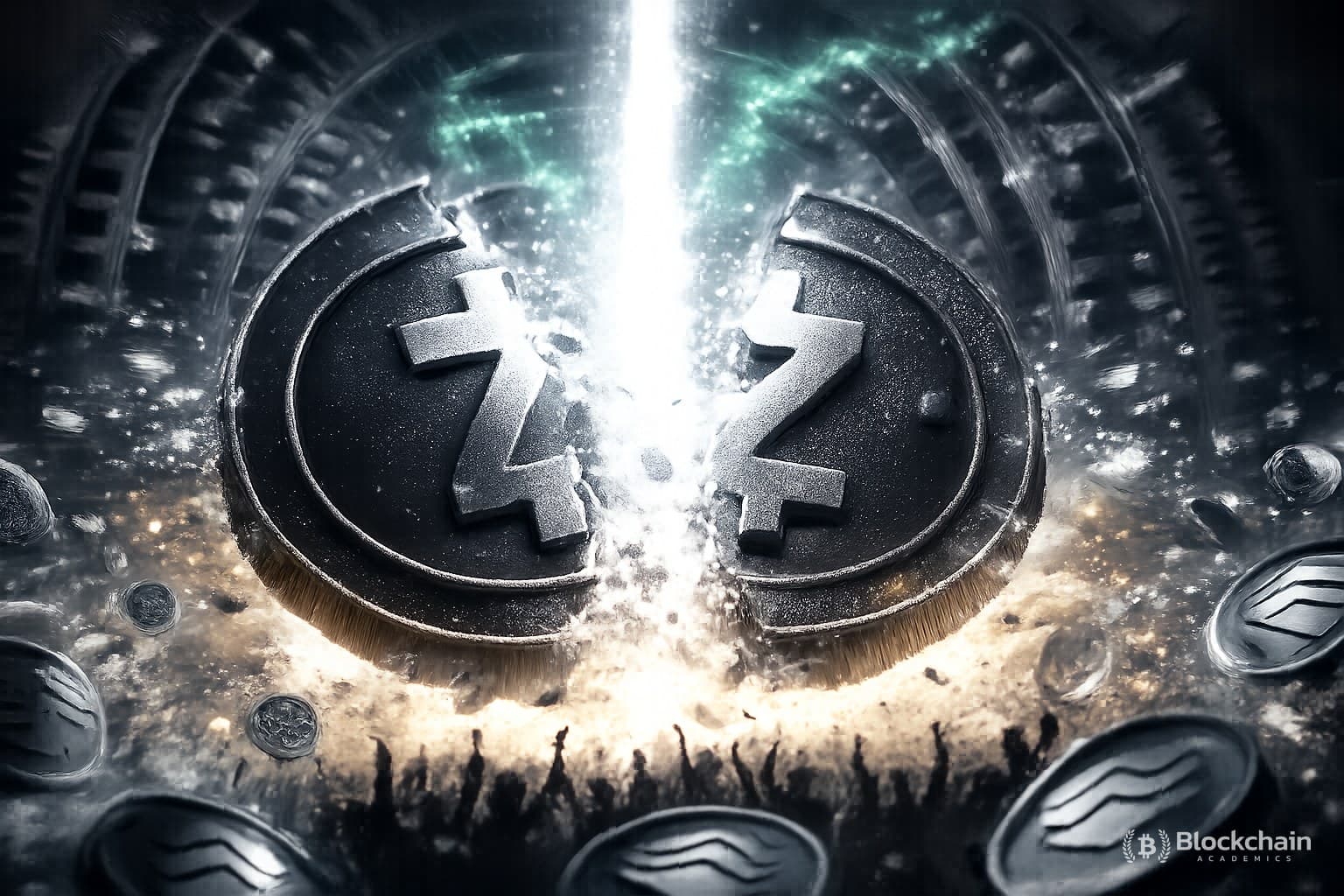
The dual proposal marks one of the more consequential governance moments in Zcash's history. Faster block times would reduce confirmation latency for users, while adopting a halving mechanism modeled on Bitcoin's four-year emission cycle would introduce a predictable, disinflationary supply curve that Zcash has never had in its current form. Both changes, if implemented, would reshape how the network operates at a fundamental level.
Zcash currently issues block rewards on a fixed schedule rather than through periodic halvings. Bitcoin's halving model, which cuts miner rewards by 50% at roughly four-year intervals, has become a defining feature of that network's monetary policy and a major driver of its market cycles. Zcash's previous upgrades, including Canopy in 2020 and Heartwood in 2021, addressed privacy infrastructure and miner reward splits, but none proposed borrowing Bitcoin's core emission structure. The NU7 community vote represents the first time holders have formally endorsed that direction.
The case for faster blocks is intuitive: shorter confirmation times improve user experience and bring Zcash closer to the throughput profile of networks like Litecoin, which uses 2.5-minute blocks compared to Bitcoin's 10-minute target. Zcash currently runs on Bitcoin's 10-minute block target, but the NU7 proposal would push that lower still. The tradeoff is not trivial. Faster blocks increase the rate at which competing blocks are found before propagating fully across the network, a phenomenon known as orphan rate. A higher orphan rate can erode effective hash rate and, in adversarial conditions, lower the cost of certain attack vectors. Getting the calibration right matters.
The halving question carries its own set of tensions. Predictable supply reduction is widely credited with supporting Bitcoin's long-term value proposition, and Zcash holders appear to want that same narrative gravity attached to ZEC. The risk is on the miner side. Halving events compress block rewards, and if ZEC's price does not appreciate proportionally, miners face a direct hit to profitability. A significant hash rate decline following a halving could temporarily weaken network security and accelerate consolidation among larger mining pools, reducing the decentralization the community presumably wants to protect. Faster blocks compound this: more blocks per day means more storage burden for full nodes, which raises the operational cost of participating in the network and can quietly push smaller operators out.
None of these risks are hypothetical. They are the standard engineering tradeoffs that every proof-of-work network navigates, and the Zcash developer community has historically been technically rigorous in its upgrade design. The sentiment poll is not a binding governance vote in the way an on-chain proposal would be, but it gives the Electric Coin Company and the Zcash Foundation a clear directional mandate to build toward. The harder work, translating community sentiment into a technically sound implementation that preserves security while delivering the efficiency gains holders are asking for, begins now.
For the broader Layer 1 landscape, the NU7 direction signals something worth watching. Privacy-focused chains have often struggled to articulate a monetary policy narrative as clean as Bitcoin's. If Zcash successfully grafts a halving schedule onto a faster, more responsive network, it could sharpen ZEC's identity at a time when privacy coins face sustained regulatory scrutiny. Whether that narrative resonates beyond the existing holder base depends entirely on execution.