U.S. Seeks Harsh Sentence for Do Kwon as Terra’s Collapse Becomes a Defining Crypto Reckoning
U.S. prosecutors seek a 12-year sentence for Do Kwon, calling Terra’s $40B collapse a “colossal fraud” ahead of his December 11 ruling.
Federal prosecutors in the United States are pushing for a 12-year prison sentence for Do-hyung Kwon, arguing that the implosion of TerraUSD constituted one of the most damaging episodes in the history of digital finance. The request, delivered to Judge Paul Engelmayer in a New York court filing, casts the 2022 crash not as an isolated failure but as a catalyst that destabilized the broader crypto ecosystem and helped expose vulnerabilities that later reverberated through companies like FTX.
Kwon, the co-founder of Terraform Labs, has already pleaded guilty to conspiracy and wire fraud. His plea deal caps the maximum sentence at 12 years and requires him to forfeit $19.3 million as well as several properties. While he has urged the court to consider a five-year prison term, prosecutors say this significantly understates the scale of the damage. In their filing, they described the collapse—responsible for roughly $40 billion in evaporated value—as a “colossal fraud,” arguing that Kwon deceived users and engineered a system that was far more fragile than publicly acknowledged.
The sentencing hearing, scheduled for December 11, is expected to draw widespread attention across both legal and crypto circles. For federal authorities, the TerraUSD meltdown stands as a dramatic example of how algorithmic stablecoins, marketed as innovative financial instruments, can fail with devastating consequences for ordinary investors. Prosecutors contend that Kwon’s misrepresentations triggered a cascading crisis that reached far beyond Terra itself, helping unsettle exchanges, hedge funds and retail users in a market already strained by speculative excess.
Restitution, however, will not be part of the court’s judgment. The government told the court that identifying and calculating precise losses for the millions affected would be nearly impossible. Instead, prosecutors are framing the prison term as the primary vehicle for accountability, especially given the international dimensions of Kwon’s conduct and flight.
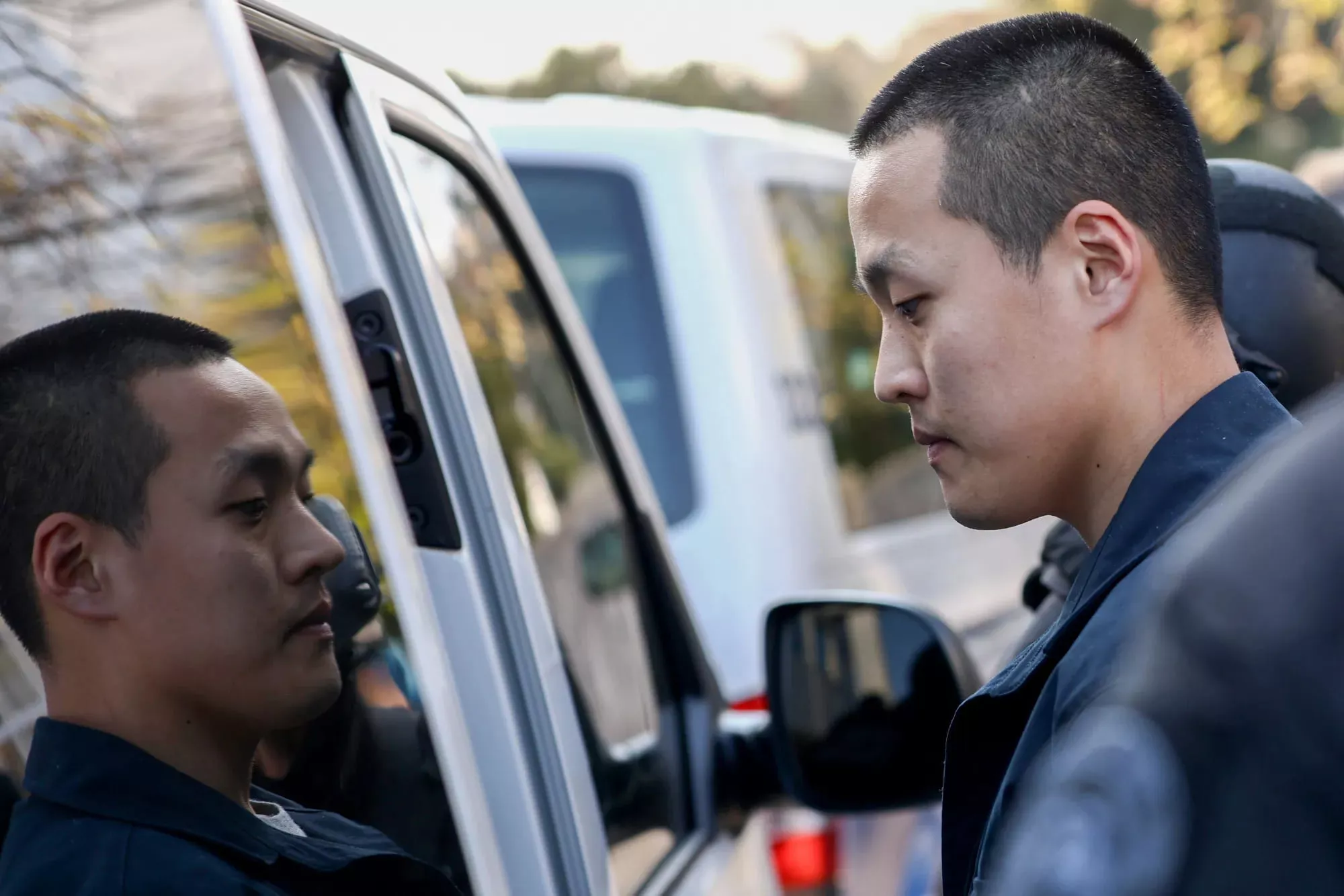
His legal saga has already spanned several jurisdictions. After being caught using a fake passport in Montenegro in 2023, authorities in both South Korea and the United States sought his extradition. He spent nearly two years in Montenegro before being transferred to the U.S. in January. American officials have said they would support sending Kwon to South Korea to serve the latter portion of his sentence, provided he meets the terms of his plea agreement and qualifies under an international inmate-transfer program.
The timing of the case adds an additional layer of complexity. While prosecutors are advocating a firm penalty for Kwon, some high-profile enforcement actions appear to be losing momentum. The crypto industry took note when former President Donald Trump pardoned Changpeng Zhao in October, despite Zhao’s conviction for operating Binance without adequate anti-money-laundering controls. The contrasting treatment has sparked debate over consistency in federal oversight and political influence in high-stakes financial cases.
For now, Kwon faces the prospect of spending more than a decade in prison. With billions lost and no restitution planned, the judge’s decision is poised to shape expectations about how aggressively the U.S. intends to pursue accountability for failed crypto founders whose projects leave systemic damage in their wake.