US Military Escalation in Strait of Hormuz Adds Geopolitical Risk Premium
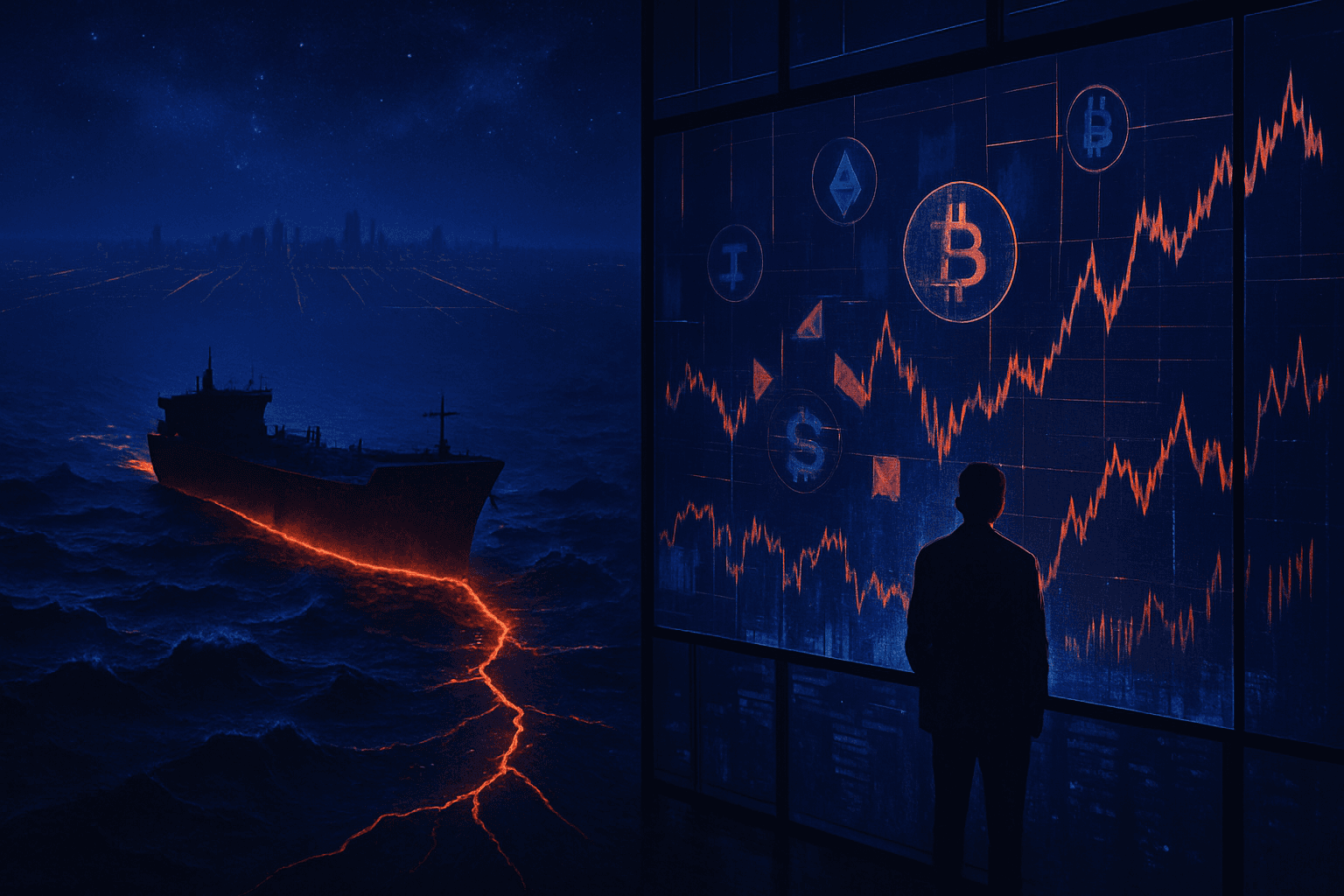
US forces boarded and seized Iranian vessel TOUSKA in the Strait of Hormuz on April 19, 2026. The escalation adds geopolitical risk premium to global markets, with potential knock-on effects for crypto sentiment if oil disruptions materialize.
US Military Escalation in Strait of Hormuz Adds Geopolitical Risk Premium
US Navy and Marine forces conducted multiple interception and boarding operations against Iranian vessels in the Strait of Hormuz on April 19, 2026, including the seizure of the Iranian ship TOUSKA, marking a direct physical confrontation between American and Iranian forces in one of the world's most strategically sensitive waterways.
What Happened
The operations formed part of ongoing blockade enforcement efforts in the Strait of Hormuz, the narrow passage between Iran and Oman through which roughly 20% of the world's oil supply flows. The boarding of the TOUSKA by US Marines follows a pattern of naval friction that has persisted across multiple US administrations.
Crypto Briefing reported that "the boarding escalates U.S.-Iran tensions, impacting market expectations and signaling potential for prolonged geopolitical standoff." The same outlet noted that while the interception "underscores persistent geopolitical tensions, potentially prolonging economic disruptions and impacting global maritime trade," market reactions so far suggest investors are treating these incidents as enforcement actions rather than the opening moves of a broader conflict.
Historical Parallels and What They Tell Us
Context matters. The 2019 tanker crisis in the same waterway sent oil prices surging more than 15% and triggered a measurable spike in crypto volatility as investors hedged against geopolitical uncertainty. The January 2020 assassination of Iranian General Qasem Soleimani produced a brief but sharp flight-to-safety rotation across asset classes, with Bitcoin briefly trading as a perceived safe haven before correlation with risk assets reasserted itself.
The current situation shares structural similarities with 2019: a hardened US military posture, Iranian vessels being directly interdicted, and an underlying diplomatic stalemate with no obvious off-ramp. Global energy markets have diversified supply routes since then, and major importers have built strategic reserves specifically to reduce exposure to Hormuz disruptions. That diversification may explain why the immediate market reaction has been comparatively muted.
Muted is not the same as zero. Geopolitical risk premiums tend to build gradually rather than spike cleanly, and sustained enforcement operations that restrict Iranian maritime activity could compound existing economic pressure on Tehran, raising the probability of retaliatory action that markets would be forced to price more aggressively.
Crypto's Relationship With Geopolitical Risk
Whether crypto markets are genuinely decoupled from traditional geopolitical risk is not settled. Bitcoin and Ethereum have traded as risk-off assets during geopolitical shocks at various points, and at other points moved in tight correlation with equities, behaving like high-beta risk-on instruments. The 24/7 nature of crypto trading means these markets often serve as the first visible barometer of sentiment shifts, particularly when traditional markets are closed.
No significant directional move in Bitcoin or Ethereum was directly attributed to the April 19 operations in available reporting, which is itself informative. Investors appear to be discounting the probability of rapid escalation. If US-Iran tensions in the Strait produce a sustained disruption to oil flows, the downstream effects on inflation expectations, Federal Reserve policy, and global growth outlooks would almost certainly reach crypto markets through the same macro transmission channels that have dominated crypto price action since 2022.
The Broader Picture
What makes this moment worth watching is the combination of factors: a US military posture that shows no signs of de-escalating, an Iranian government under sustained economic pressure, and a global macro environment where investors are already navigating elevated uncertainty. Each individual interception may look routine in isolation. Cumulatively, they represent a hardening of the confrontation.
The Strait of Hormuz has absorbed similar tensions before without triggering systemic market disruption. The baseline level of geopolitical noise across multiple theaters simultaneously, from Eastern Europe to the South China Sea to the Persian Gulf, means the marginal impact of each new flashpoint on investor psychology is harder to dismiss. For crypto markets specifically, any development that accelerates a risk-off rotation in traditional finance will test whether Bitcoin's narrative as a non-correlated store of value holds under genuine pressure.