US-Iran Peace Talks in Pakistan Could Shift Crypto's Geopolitical Risk Premium
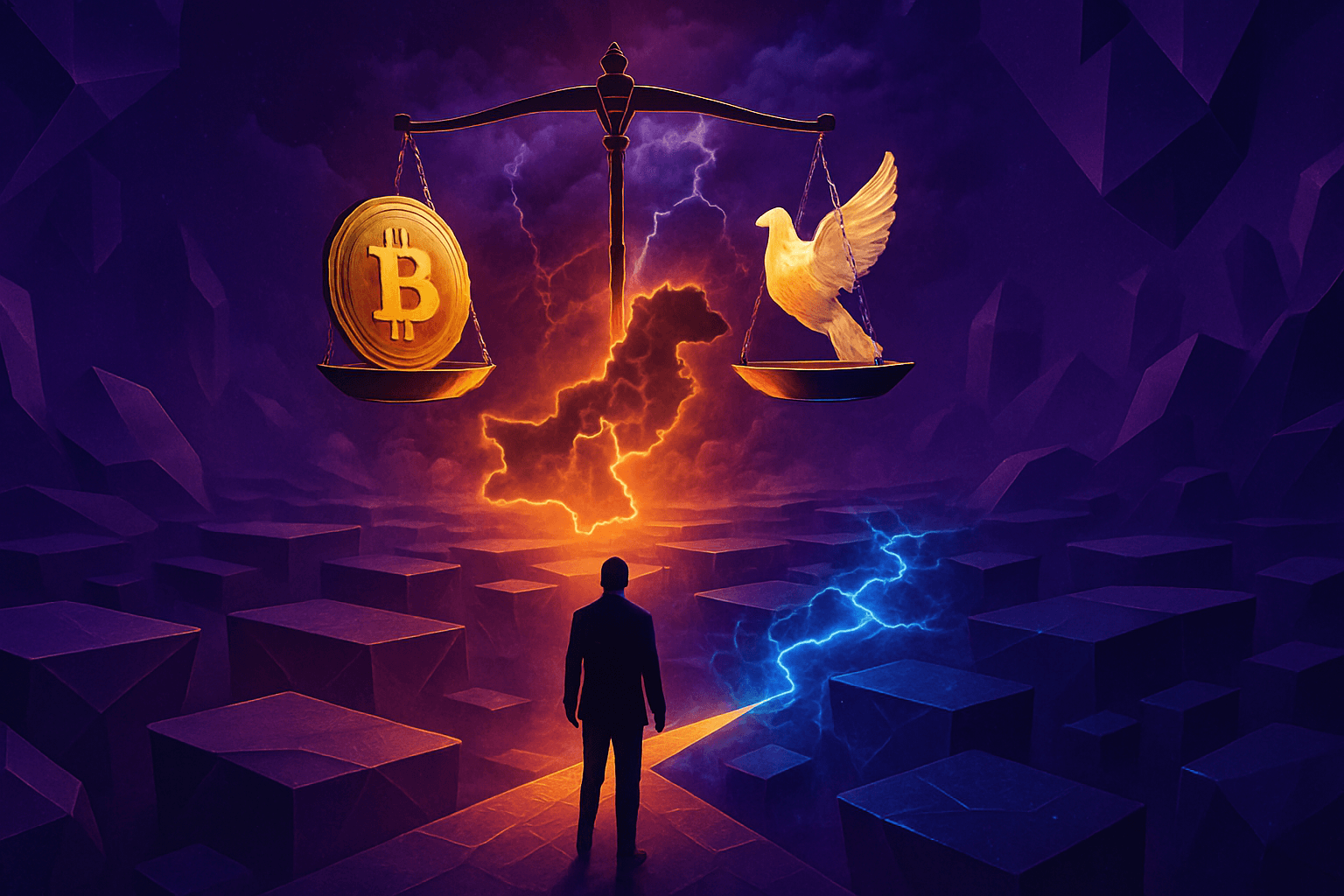
VP JD Vance is leading a US delegation to Pakistan for US-Iran peace talks this week. The outcome could compress Bitcoin's geopolitical risk premium or reinforce its safe-haven appeal, depending on whether diplomacy produces substance or symbolism.
US-Iran Peace Talks in Pakistan Could Shift Crypto's Geopolitical Risk Premium
VP JD Vance is leading a US delegation to Pakistan this week for diplomatic negotiations with Iran, the most significant engagement between Washington and Tehran in years. An Iranian delegation is expected to arrive Tuesday, with Pakistan serving as neutral ground for talks that could meaningfully reshape the geopolitical risk environment underpinning crypto markets through mid-2026.
The diplomatic effort is framed as a potential mechanism to stabilize US-Iran relations, two countries whose tensions have historically injected volatility across risk assets, including Bitcoin and broader crypto markets. Whether the talks produce substantive outcomes or stall at symbolism will determine how much, if any, of the current geopolitical risk premium gets priced out of digital assets.
The Risk Premium Equation
Geopolitical risk premiums are baked into asset prices as compensation for uncertainty. When tensions escalate, investors typically rotate into perceived safe havens. Bitcoin has increasingly occupied that role during geopolitical shocks, a pattern that played out in January 2020 when the US assassination of Iranian General Qasem Soleimani triggered a flight-to-safety move that briefly pushed Bitcoin above $8,000 from a base near $7,200, a gain of roughly 11% in 48 hours.
The inverse matters equally: de-escalation reduces safe-haven demand. The 2015 JCPOA negotiations, which produced a temporary nuclear framework agreement between Iran and world powers, initially compressed geopolitical risk premiums across risk assets. Equities rallied. Oil volatility declined. Bitcoin, still a nascent asset at the time, showed limited sensitivity, but the macro dynamic was clear. Reduced geopolitical uncertainty pulls capital toward risk-on positions rather than hedges.
If the Pakistan talks produce a credible framework, even a preliminary one, the same dynamic could play out today. A reduction in US-Iran tension removes one layer of geopolitical uncertainty that currently supports Bitcoin's hedge narrative. That is not straightforwardly bullish for crypto.
Two Scenarios, Two Outcomes
The market impact of these talks hinges on outcome, not process. In the first scenario, talks yield a concrete framework or roadmap toward normalized relations. Geopolitical risk premiums compress across oil markets, regional equities, and risk assets broadly. Capital parked in defensive positions, including Bitcoin as a geopolitical hedge, could rotate into higher-beta risk assets. Altcoins and growth-oriented crypto projects would likely outperform Bitcoin in relative terms under this scenario.
In the second scenario, talks collapse, stall, or produce only vague commitments with no enforcement mechanism. This is the historically more common outcome in US-Iran diplomacy. The JCPOA itself was unilaterally abandoned by the US in 2018. Skepticism is warranted. If the Pakistan talks yield nothing substantive, markets are unlikely to reprice meaningfully in either direction. The geopolitical risk premium stays embedded, Bitcoin retains its hedge appeal, and crypto sentiment remains tethered to broader macro conditions.
A third, less-discussed scenario deserves attention: talks begin constructively but drag on without resolution, creating a prolonged period of diplomatic ambiguity. This is arguably the most common diplomatic outcome and the hardest for markets to price. Sustained uncertainty, even uncertainty about whether uncertainty is ending, tends to suppress volatility without providing directional clarity.
What Crypto Markets Should Watch
For traders and allocators tracking this story, the key signals are not the diplomatic communiques themselves but the secondary market reactions in oil and regional currencies. Brent crude stability and Iranian rial stabilization would be the first indicators that markets believe a deal is forming. Sustained compression in oil price volatility would then flow through to broader risk sentiment, benefiting crypto's risk-on positioning.
Bitcoin's dual identity as both a risk asset and a geopolitical hedge creates an unusual dynamic here. Successful de-escalation is net positive for risk-on sentiment broadly, which supports crypto inflows. It simultaneously weakens the specific narrative that Bitcoin is a non-correlated safe haven during Middle East instability. Both things can be true, and the net effect on price depends heavily on which narrative dominates at the time.
Regional instability in the broader Middle East, including ongoing conflicts that extend well beyond US-Iran bilateral relations, is unlikely to disappear even if these talks succeed. That persistent backdrop means the complete elimination of a geopolitical risk premium in crypto is not a realistic near-term scenario regardless of what happens in Islamabad this week.
The talks matter. Crypto markets should wait for concrete outcomes before pricing in a structural shift in geopolitical risk. Diplomatic process is not the same as diplomatic progress.