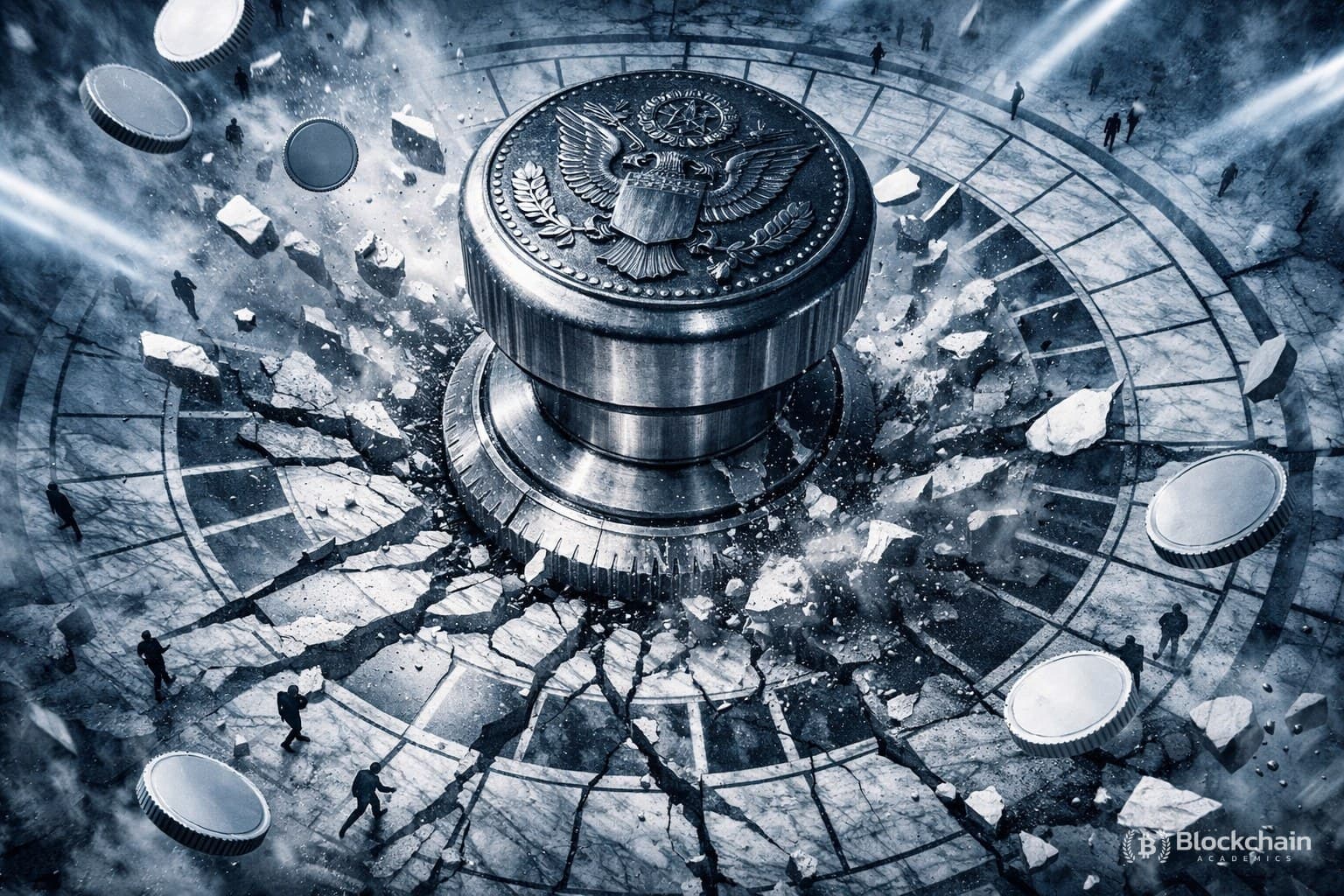
Trump Blocks Housing Bill Over Unrelated Voting Rights Demand
President Trump blocked the bipartisan 21st Century ROAD to Housing Act, which would have barred the Federal Reserve from issuing a CBDC until 2030. Trump conditioned his signature on Congress passing a separate voting rights bill, signaling CBDC policy is not a priority.
Trump Blocks Housing Bill Over Unrelated Voting Rights Demand
President Trump announced on Wednesday that he will not sign the bipartisan 21st Century ROAD to Housing Act, effectively blocking legislation that would have barred the Federal Reserve from issuing a central bank digital currency (CBDC) until 2030. Trump conditioned his signature on Congress passing a separate, controversial voting rights bill instead, signaling that CBDC policy remains a lower priority despite his administration's previous crypto-friendly positioning.
The housing bill had secured bipartisan support and included a provision explicitly prohibiting the Federal Reserve from developing or issuing a CBDC for five years. The legislation also exempted certain stablecoins from the CBDC restrictions, reflecting Congressional acknowledgment that privately-issued digital assets operate differently from government-controlled digital currencies. For crypto advocates who have pushed for legislative guardrails against federal CBDC development, the bill's passage would have marked a significant legislative victory.
Trump dismissed the housing bill as being of "minor importance," a characterization that drew criticism from housing policy advocates who view the legislation as addressing critical affordability challenges. The move suggests Trump views the CBDC restriction as a secondary concern rather than a core policy objective, despite months of rhetoric positioning his administration as crypto-aligned.
By carving out private digital assets from CBDC restrictions, Congress signaled bipartisan recognition that the regulatory treatment of stablecoins should differ from that of government-issued digital currencies. That distinction will now remain absent from law, at least until new legislation emerges. Stablecoin issuers including Circle and Paxos have advocated for clearer regulatory frameworks that distinguish their products from CBDCs, and the housing bill's provisions would have codified that separation.
The timing of Trump's announcement creates uncertainty about the timeline for any future CBDC restrictions. While the Federal Reserve has not formally begun CBDC development, the central bank has conducted research into potential designs and use cases. Without legislative barriers, the Fed retains discretion to pursue CBDC projects under its existing authority.
For the crypto industry, today's decision underscores a broader reality: crypto-friendly policy wins depend on alignment with broader political objectives. Trump's willingness to sacrifice CBDC restrictions in pursuit of unrelated voting rights legislation suggests that cryptocurrency remains a tactical rather than strategic priority for the administration.