Solana Hits Record 112.6M Daily Transactions in Q1 Even as SOL Drops 33%
Solana's network hit a record 112.6M daily transactions in Q1 2026 even as SOL dropped 33%. App revenue held at $342M, RWA market cap crossed $2B, but launchpads account for 42% of revenue.
Solana Hits Record 112.6M Daily Transactions in Q1 Even as SOL Drops 33%
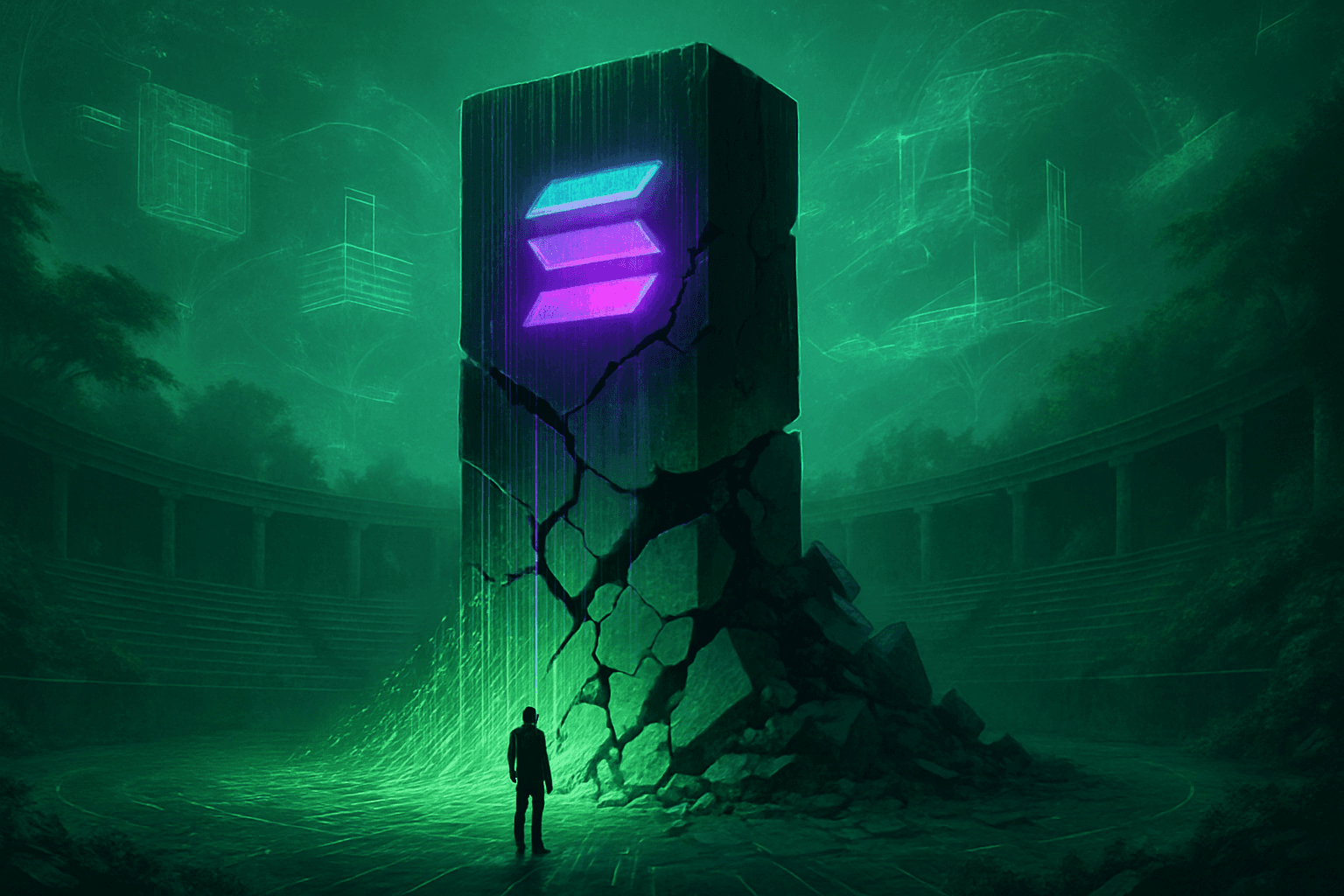
Solana's network posted its busiest quarter on record in Q1 2026, averaging 112.6 million non-vote transactions per day, even as the SOL token shed a third of its value and broader crypto markets remained under pressure. The divergence between on-chain activity and token price is sharp enough to demand a closer look at what is actually driving the network.
Application revenue held above $342 million for the quarter, remaining remarkably stable against the backdrop of a 33% SOL price decline. For a network critics have repeatedly dismissed as a speculative vehicle, those numbers present a more complicated picture. The question is whether the activity reflects genuine, diversified demand or a narrower base of use cases propping up headline metrics.
Launchpads Carry a Heavy Load
The revenue breakdown is where the narrative gets more nuanced. Launchpad platforms, the infrastructure used to launch new tokens and meme coins, accounted for $144 million of the $342 million total, representing 42% of all Solana application revenue in Q1. That concentration matters. When nearly half of a network's app revenue flows from a single vertical tied to speculative token launches, the stability of that revenue becomes contingent on continued appetite for new token issuance rather than broad-based utility.
The remaining 58% of revenue spread across other application categories still represents roughly $198 million in a single quarter, a figure that is not trivial for any layer-1 blockchain. Solana's throughput advantages, including sub-second finality and transaction fees that remain a fraction of a cent, continue to attract developers building applications where cost and speed are non-negotiable.
RWA Growth Adds an Institutional Layer
One of the more significant data points from Q1 is Solana's real world asset (RWA) market cap growing 43% quarter-over-quarter to reach $2.01 billion. RWAs are tokenized representations of off-chain assets such as treasury bills, private credit, real estate, and commodities, brought onto a blockchain to enable programmable settlement and broader access.
The 43% quarterly growth suggests institutional interest in Solana as an RWA settlement layer is accelerating. BlackRock's broader push into tokenized assets has provided a legitimizing signal for the sector, and Solana's technical architecture makes it a competitive venue for high-frequency, low-cost settlement of tokenized instruments. Crossing the $2 billion threshold in RWA market cap puts Solana firmly in the conversation alongside Ethereum for institutional tokenization workloads.
SOL's Price Tells a Different Story
None of the on-chain strength has translated into price performance. SOL trades near $82 as of May 24, down 33% from its Q1 open and roughly 70% below its all-time high. Key technical support sits in the $78 to $83 range, with resistance clustered around $95. A breakdown below $78 would likely invite additional selling pressure, and the current price action offers little technical comfort to holders.
The disconnect between network activity and token price is not unprecedented. Ethereum experienced similar divergences during the 2022 bear market, when gas usage and developer activity remained robust while ETH prices fell more than 75% from peak. In Solana's case, the gap may reflect a market still processing the reputational damage from the FTX collapse in 2022, combined with a broader rotation away from high-beta altcoins as macro uncertainty persists.
Meme Coin Noise Adds Speculative Texture
Last week's viral hoax claiming Binance founder Changpeng Zhao had suffered a surfing accident in Dubai illustrated just how reactive Solana's token launch infrastructure has become. Within hours of the rumor spreading across social media, traders launched SEAZ and RIPCZ meme coins on both Solana and BNB Chain, capitalizing on the narrative before CZ publicly debunked the accident claim on X. The tokens surged and collapsed in the typical meme coin lifecycle, leaving late buyers with losses.
The episode is a minor story on its own, but it underscores a structural reality: Solana's launchpad infrastructure is fast enough and cheap enough that opportunistic actors can spin up tokens, generate volume, and exit within the same news cycle that prompted the launch. That speed is a technical achievement. Whether it represents genuine network value or speculative noise is a legitimate debate.
A Crowded Bull Case, With Caveats
Crypto analyst Michael van de Poppe publicly shifted his entire portfolio into altcoins this week, describing the current moment as the "final cyclical window for explosive altcoin returns before a major global financial crisis." Van de Poppe specifically named ETH, XRP, BNB, SOL, and ADA as his primary positions, framing the trade as a high-conviction bet on one final altcoin rally before conditions deteriorate.
Van de Poppe's call carries obvious timing risk. Predicting both a final altcoin surge and a subsequent global financial crisis requires a precise sequence of events that markets rarely deliver on schedule. His portfolio shift is worth noting as a sentiment indicator, but it should not be mistaken for a fundamental analysis of Solana's valuation.
What the Divergence Actually Means
The gap between Solana's record transaction volumes and its depressed token price reflects a market that has not yet decided how to price network utility in a cycle defined by macro headwinds and sector-specific skepticism. The RWA growth trajectory and application revenue stability are legitimate positives. The launchpad revenue concentration and meme coin dependency are legitimate risks. Both are true simultaneously.
For investors, the $78 to $83 support band is the near-term line in the sand. A hold there, combined with continued RWA expansion and developer retention, would strengthen the case that SOL is undervalued relative to its network fundamentals. A break below that range would suggest the market is pricing in risks that on-chain metrics are not yet capturing, including potential regulatory headwinds from geopolitical developments such as a possible US-Iran agreement that could reshape crypto sanctions regimes.
Solana's Q1 data confirms the network is being used. Whether that usage justifies a higher token price at this point in the cycle is the question the next two quarters will answer.