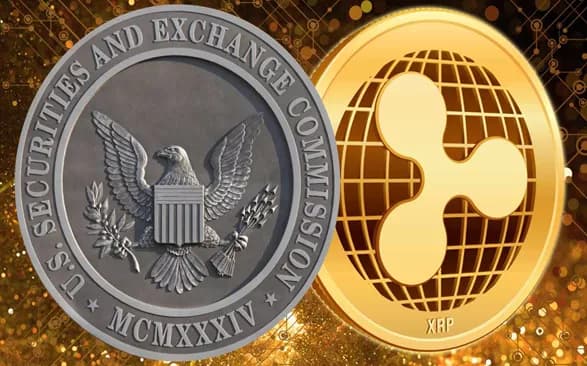
Ripple Challenges SEC With Legal Framework Redefining XRP’s Security Status
Ripple urges SEC to clarify when crypto assets like XRP cease to be securities, proposing a maturity-based regulatory model.
Ripple Labs has reignited its legal confrontation with the U.S. Securities and Exchange Commission (SEC), asking a pivotal question that could reshape crypto regulation: when does a digital asset distributed under an investment contract stop being a security?
In a formal letter submitted on May 27, 2025, Ripple responded to ongoing discussions with the SEC’s Crypto Task Force, following a meeting held earlier in the month. The submission aligns closely with Commissioner Hester Peirce’s recent “New Paradigm” speech and seeks to establish a structured legal and policy framework to clarify the evolving nature of digital assets like XRP.
Central to Ripple’s argument is the assertion that the legal basis for treating fungible crypto tokens as securities becomes untenable once these tokens are actively traded in secondary markets. The company references the widely cited 2022 legal paper "The Ineluctable Modality of Securities Law" by Lewis Cohen and colleagues, which contends that many tokens do not meet the legal definition of a security absent an investment contract or ongoing issuer involvement.
Ripple also reasserts the significance of Judge Analisa Torres’s July 2023 ruling. Torres concluded that Ripple’s institutional sales of XRP qualified as investment contracts but explicitly determined that programmatic sales and other secondary market transactions did not. The court ruled that XRP itself does not constitute a security, drawing a critical distinction that Ripple believes should inform future regulatory approaches.
Rather than using the often ambiguous term “decentralization,” Ripple proposes a new regulatory lens: “maturity.” The maturity-based framework assesses a digital asset’s status based on observable market behaviors and operational metrics. Key indicators include market capitalization, the longevity and functionality of the network, and the absence of unilateral control by the issuer.
Ripple contends that this framework provides a more objective and administrable standard than current SEC interpretations. the company warns against imposing mandatory disclosures on assets no longer under issuer control, arguing that such requirements could mislead the public into believing these projects remain centralized.
Ripple’s proposal comes amid a protracted legal standoff with the SEC, which has resisted attempts to settle the case. By formally presenting a robust legal argument grounded in case law and policy principles, Ripple hopes to shape a more pragmatic and transparent regulatory environment for crypto assets.
As the industry awaits further action from the SEC, Ripple’s latest filing underscores the urgent need for updated regulatory definitions that reflect the operational realities of decentralized networks. The outcome of this legal debate may not only determine XRP’s status, but also establish a precedent for how digital assets are classified across the broader crypto landscape.