Ripple CEO Projects XRP Could Handle 14% of SWIFT Transactions Within Five Years
Ripple CEO predicts XRP could process 14% of SWIFT transactions in five years, raising debate over its future valuation.
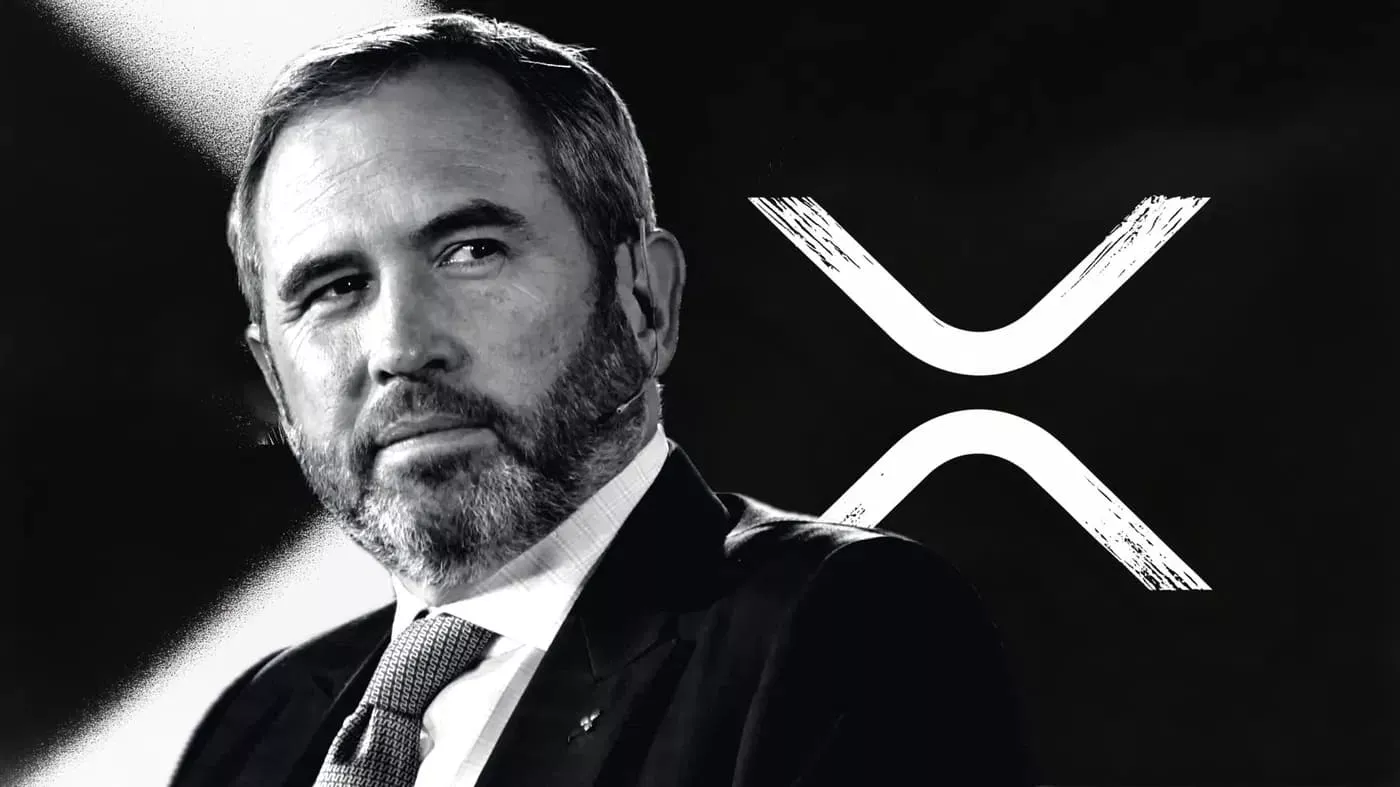
Ripple CEO Brad Garlinghouse has made one of his boldest predictions to date, suggesting that XRP could capture 14 percent of the global transactions currently routed through the SWIFT network within the next five years. The statement, delivered at the XRP APEX event in Singapore, has sparked fresh debate over the digital asset’s role in the future of cross-border payments.
In remarks shared on social media, Garlinghouse distinguished between two components of SWIFT’s operations: its role as a messaging network and the liquidity provided by banks. He argued that true innovation lies in addressing liquidity rather than messaging. “Driving liquidity flow is what can benefit XRP,” he said, before forecasting that XRP could account for “14 percent in five years.”
SWIFT processes the majority of the world’s cross-border financial transactions, handling tens of trillions annually. Applying Garlinghouse’s projection, XRP could be responsible for settling as much as $21 trillion in yearly transaction volume by 2030. This figure, while hypothetical, underscores the magnitude of Ripple’s ambitions in positioning its token as a backbone of global finance.
The prospect has fueled speculation among XRP supporters, some of whom argue such adoption could dramatically increase the token’s valuation. One viral post even suggested that XRP could surpass $1,000 if it captured 14 percent of SWIFT’s flow. However, analysts caution that settlement volume does not directly equate to market capitalization or price appreciation.
The key factor, experts note, is liquidity velocity—the rate at which the same pool of XRP is reused to facilitate transactions. If XRP were deployed with very high velocity, circulating daily through settlement systems, only about $57.5 billion worth of liquidity would be required to sustain $21 trillion in annual settlements. Under current supply conditions, that would place XRP’s value below $1 per coin.
On the other hand, if turnover slowed to every three to seven days, the liquidity required could rise to between $210 billion and $420 billion. That range would imply a token value between $3.50 and $7. With even lower velocity—closer to biweekly—the value could increase toward $14.
The suggestion that XRP might one day trade above $1,000 remains highly speculative. For such valuations to materialize, either the circulating supply of XRP would need to shrink dramatically or global settlement volumes would have to expand far beyond $21 trillion.
Still, Garlinghouse’s projection illustrates his conviction that Ripple’s technology can play a significant role in reshaping international payments. By focusing on liquidity solutions, Ripple seeks to position XRP as an essential tool for banks and institutions navigating the inefficiencies of traditional financial rails.
The broader implication is that even modest adoption of XRP within the SWIFT ecosystem could exert upward pressure on the token’s market value. While the timeline and scale remain uncertain, Ripple’s vision reflects a future where blockchain and digital assets stand at the center of global financial infrastructure.