Reddit Crypto Community Debates Scams, Pump.fun, and Security Amid Market Tensions
Reddit's crypto communities reveal a market caught between institutional momentum and persistent infrastructure problems. Users report unsolicited token airdrops, debate Pump.fun's role in enabling scams, and question whether market growth reflects real adoption or speculation.
Reddit Crypto Community Debates Scams, Pump.fun, and Security Amid Market Tensions
Reddit's crypto communities reveal a market caught between institutional momentum and persistent infrastructure problems. Users report unsolicited token airdrops that cannot be moved or deleted, debate whether Pump.fun's $1 billion revenue justifies enabling scammers, and question whether market growth reflects real adoption or speculation. Regulatory pressure intensifies globally, and quantum computing research raises theoretical security concerns.
Phantom Tokens Lock Wallets
Solana users face an immediate problem: phantom tokens appearing in wallets without permission. One user described it bluntly: "Suddenly I have this token within my Solflare Wallet. I cannot move, sell or swap it. I can't even delete this shit." These spam tokens lock funds and cannot be transacted, representing a growing attack vector. The tokens serve no clear economic purpose for scammers, leaving victims confused about motivation. Security researchers attribute the phenomenon to wallet vulnerabilities and Solana's low barriers to token creation, where launching a token costs minimal SOL.
Pump.fun's Profitable Paradox
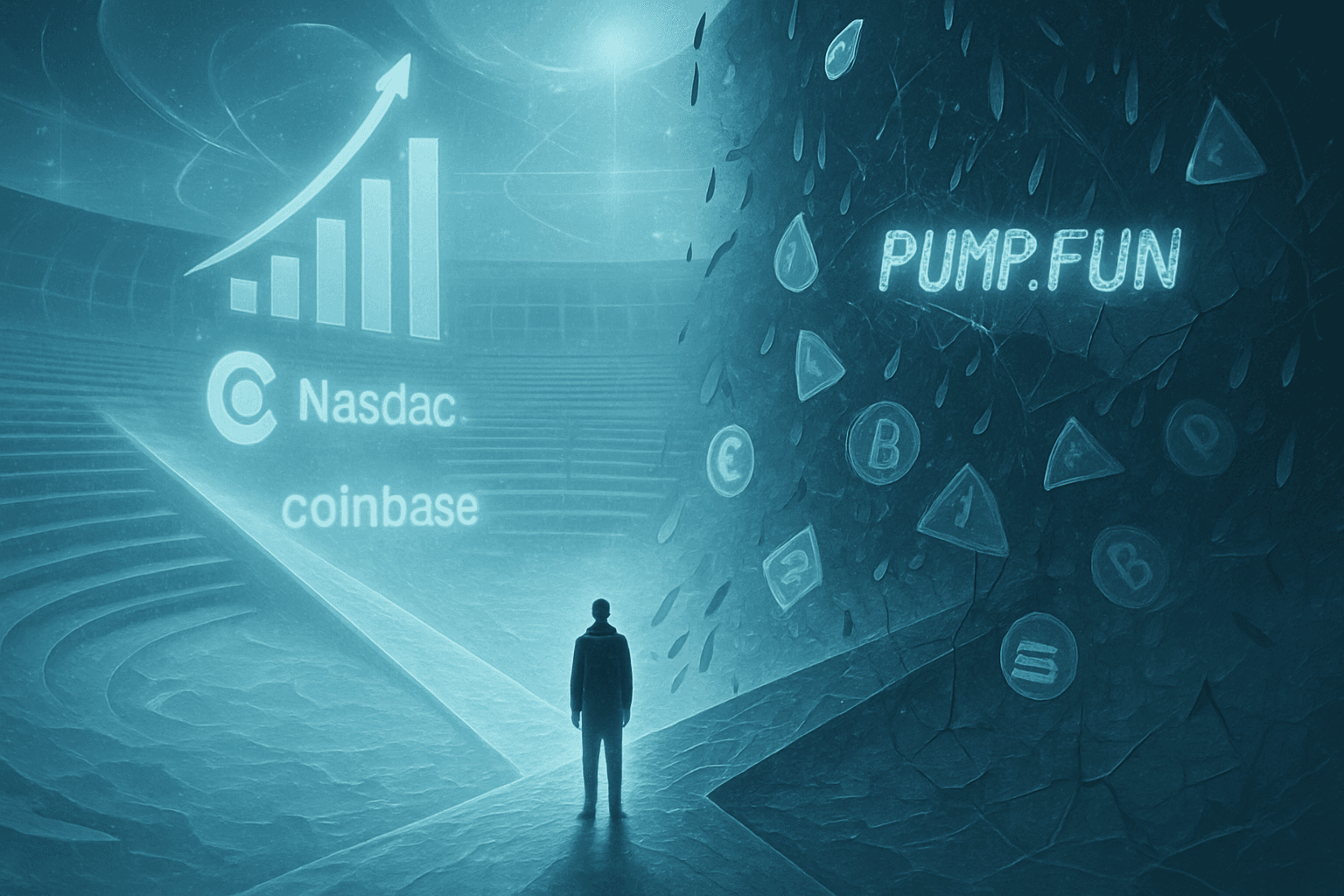
Pump.fun, the Solana-based token launch platform, has become a focal point for community debate. The protocol generated $1 billion in revenue by April 2026, making it one of crypto's most profitable platforms. Yet its own token trades below its initial coin offering valuation. One user captured the contradiction: "Pumpfun has been one of the most profitable protocols in the cryptomarket and has made $1b already, BUT the token is right now sitting at below its ICO marketcap. All pumpfun has done is make extracting easier for scammer/bundlers."
The platform's low friction for token launches has democratized fundraising but also created infrastructure for low-effort scams. Defenders argue that token launch platforms serve legitimate purposes and that user due diligence remains paramount. The volume of complaints, however, suggests the platform's risk tolerance exceeds community comfort.
CEX Dominance Persists
Volume data underscores the tension between centralized and decentralized infrastructure. Decentralized exchanges processed 10 percent of total crypto trading volume in 2026 year-to-date, while centralized exchanges handled $3.85 trillion. DEX growth is real but remains marginal compared to CEX dominance.
Users acknowledge that centralized platforms, despite security risks, provide the regulated on-ramps and institutional infrastructure that DEXs cannot yet replicate. This creates a structural catch-22: traders need CEXs for liquidity and fiat conversion but accept exchange risk as the cost of market access.
Security Incidents Multiply
Security breaches have accelerated across major platforms. Users report attempted password changes on Coinbase and Bybit without authorization, wallet restoration errors, and account restrictions. These incidents reflect both user error and platform vulnerabilities. The pattern suggests that as institutional capital enters crypto, security infrastructure has not scaled proportionally.
Cold storage and self-custody remain secure for users with proper operational security, but most retail traders use exchange wallets, accepting custodial risk for convenience.
Regulatory Crackdowns Accelerate
Regulatory pressure is intensifying globally. France reported 41 crypto-related kidnappings in 2026, with Pavel Durov attributing the surge to a data leak. South Africa proposed regulations requiring travelers to declare crypto holdings or face up to five years imprisonment, with officials granted invasive search powers over devices and cold wallets.
These proposals represent an outlier compared to balanced regulatory approaches in developed markets, but they signal the direction of state scrutiny. The EU's Markets in Crypto Assets (MiCA) regulation and ongoing US regulatory debates suggest that crypto's regulatory environment will only tighten.
Quantum Computing: Theoretical Threat
Quantum computing research has added a long-term concern to the conversation. Researchers achieved a new record by breaking a 15-bit elliptic curve cryptography (ECC) key, prompting discussions about Bitcoin's security. The threat remains theoretical. Bitcoin uses 256-bit ECDSA, and breaking that would require quantum computers orders of magnitude more powerful than current systems.
Experts generally agree the industry has time to implement quantum-resistant solutions, but the research has revived debates about crypto's cryptographic durability.
Utility vs. Speculation
Community discussions reveal deeper uncertainty about crypto's utility. One user captured the sentiment: "The market seems excited every time there's ETF momentum, political attention, exchange news, or institutional adoption. But I keep wondering if that is the same thing as real usage."
This question echoes 2017-2018 debates about whether crypto serves economic function beyond speculation. Institutional adoption has increased liquidity and reduced volatility, enabling corporate treasury management and hedging. Yet transaction volumes on major blockchains remain modest relative to market capitalization, suggesting that price discovery has outpaced utility development.
Trading Reality Check
Trading discussions dominate Reddit's crypto forums, with users seeking edges in algo trading and futures strategies. Many acknowledge the difficulty of consistent profitability. One trader asked directly: "What are truth or reality about algo trading?" Honest responses emphasize that consistent alpha requires edge, capital, and risk discipline that most retail traders lack.
The Transition Ahead
The broader picture shows a market in transition. Institutional capital and regulatory frameworks are professionalizing crypto infrastructure, yet scams, security gaps, and low-quality token launches remain endemic. DEX adoption is growing but remains marginal. Regulatory crackdowns are accelerating globally. Fundamental questions about crypto's real-world utility remain unresolved.
Reddit's communities reflect this tension: optimistic about long-term potential, frustrated by present-day friction, and skeptical that market growth reflects genuine adoption rather than speculative cycles repeating.