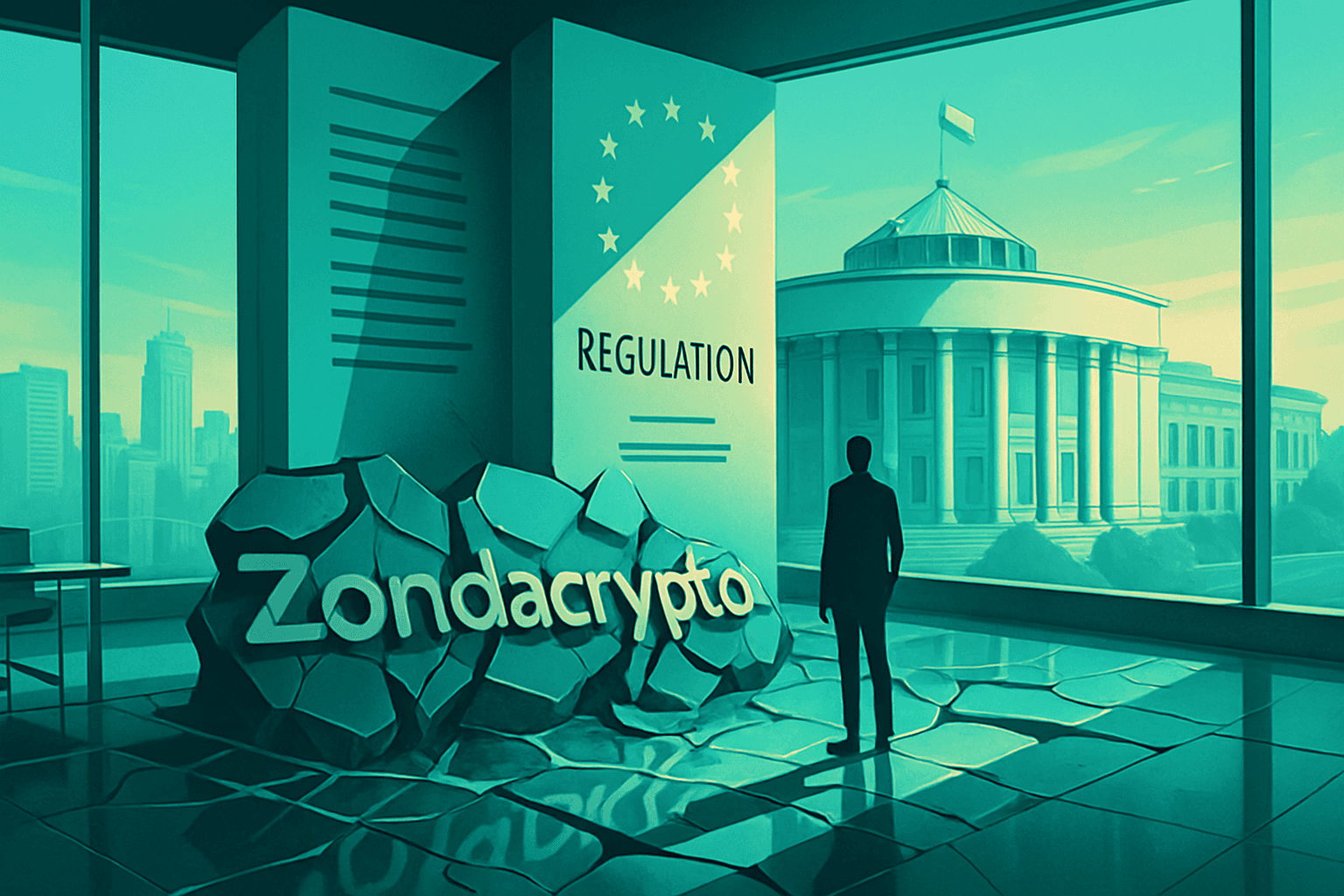
Poland Passes MiCA Bill Amid $96M Zondacrypto Fraud Probe
Poland's parliament approved legislation to implement the EU's Markets in Crypto-Assets Regulation (MiCA) on May 15, meeting Brussels' July 2026 deadline. The passage comes as prosecutors investigate Zondacrypto, a major Polish crypto exchange, over alleged fraud affecting thousands of users and...
Poland Passes MiCA Bill Amid $96M Zondacrypto Fraud Probe
Poland's parliament approved legislation to implement the EU's Markets in Crypto-Assets Regulation (MiCA) on May 15, meeting Brussels' July 2026 deadline for member state compliance. The passage comes as prosecutors investigate Zondacrypto, a major Polish crypto exchange, over alleged fraud that has left thousands of users unable to access an estimated 350 million Polish zloty ($96 million USD) in customer funds.
The timing underscores a pattern seen across jurisdictions after major exchange collapses: regulatory tightening follows market failures. MiCA standardizes crypto oversight across the EU, requiring exchanges to implement custody safeguards, capital reserves, and operational transparency measures designed to prevent the kind of fund loss that Zondacrypto customers experienced.
Zondacrypto's collapse has affected a substantial user base. Thousands of customers reported losing access to their holdings after the exchange halted withdrawals, triggering the fraud investigation. Prosecutors have not yet filed formal charges, but the scale of the alleged losses and number of affected users have made the case a focal point for regulators arguing that stronger rules are necessary. The exchange had operated for years with minimal regulatory oversight, a gap that MiCA is designed to close.
MiCA establishes minimum requirements for crypto service providers operating in the EU. Exchanges must obtain authorization from national regulators, maintain segregated customer asset accounts, hold capital reserves proportional to their business model, and undergo regular audits. The regulation also creates a framework for stablecoins and non-fungible tokens (NFTs), setting limits on issuance and requiring issuers to maintain backing assets. For Poland, MiCA compliance means Zondacrypto and other domestic exchanges will face licensing requirements and operational standards they did not previously encounter.
The Zondacrypto investigation has drawn scrutiny from EU regulators. The collapse mirrors earlier exchange failures including FTX, Celsius, and BlockFi, which preceded or coincided with regulatory responses in their respective jurisdictions. In each case, the absence of mandatory custody safeguards and capital requirements left customers vulnerable. MiCA addresses these gaps by requiring exchanges to segregate customer assets and maintain minimum financial reserves.
Poland's passage of the MiCA bill reflects broader EU efforts to harmonize crypto regulation. Other member states have already approved similar legislation, and the July 2026 deadline applies across the bloc. The simultaneous progression of Poland's MiCA implementation and the Zondacrypto fraud probe suggests that regulators view the two developments as interconnected: stronger rules today may prevent larger collapses tomorrow.
For Polish crypto users and the broader market, MiCA compliance introduces both protections and friction. Licensed exchanges will face higher operational costs, potentially leading to consolidation. Smaller platforms may exit the Polish market rather than meet licensing requirements. However, the regulatory clarity may also attract institutional investors who previously avoided Polish crypto markets due to legal uncertainty.
The Zondacrypto case will likely inform how Polish regulators enforce MiCA rules once the framework takes effect. Prosecutors' investigation into the exchange's operations, fund management, and executive conduct could establish precedent for criminal liability under the new regulation. If charges are filed and result in convictions, the outcome will signal to other exchanges the consequences of non-compliance or fraud under MiCA's enforcement regime.