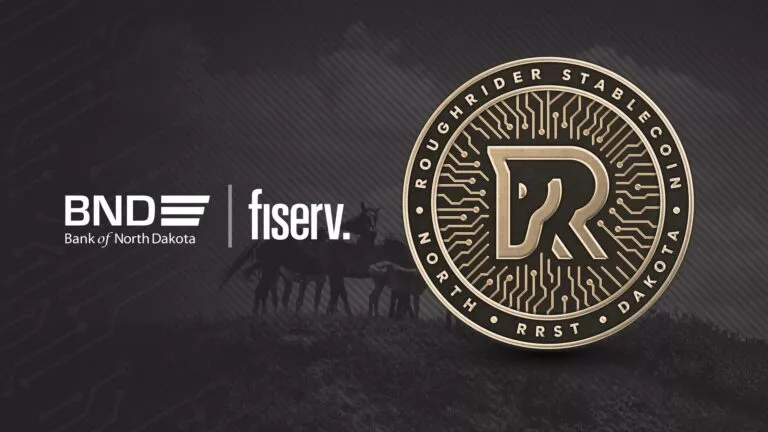
North Dakota Plans “Roughrider Coin” Stablecoin in Bid to Modernize State Finance
North Dakota to launch Roughrider Coin, a USD-backed stablecoin through the Bank of North Dakota and Fiserv by 2026.
North Dakota is preparing to enter the digital currency arena with the launch of “Roughrider Coin,” a USD-backed stablecoin developed in partnership with Fiserv and issued through the Bank of North Dakota, the only state-owned bank in the United States. The initiative positions North Dakota as the second U.S. state, after Wyoming, to explore a government-backed digital currency.
Officials say the project is intended to modernize the state’s financial infrastructure and streamline payments between consumers, banks, and local businesses. A pilot program is scheduled for 2026, involving select community banks and credit unions, though both regulatory approvals and technical frameworks are still being finalized.
Governor Kelly Armstrong described the initiative as a step toward greater financial innovation and independence. “As one of the first states to issue our own stablecoin backed by real money, North Dakota is taking a cutting-edge approach to creating a secure and efficient financial ecosystem for our citizens,” Armstrong said. “The new financial frontier is here, and the Bank of North Dakota and Fiserv are helping our institutions embrace new ways of moving money.”
The state’s chosen name, Roughrider Coin, pays tribute to President Theodore Roosevelt and his famous cavalry regiment. Although Roosevelt was not born in North Dakota, he spent several years living there, and his experiences in the state became central to his public image and political legacy.
Fiserv, a major fintech and payments technology provider, will oversee the infrastructure and blockchain integration necessary to launch the token. However, technical details remain under wraps, including which blockchain network will be used, how issuance will be managed, and what compliance safeguards will be implemented. This early stage mirrors Wyoming’s experience, which required extensive testing and consultation before finalizing its own stablecoin architecture.
While specifics are scarce, the initiative marks a significant step toward integrating state-level blockchain solutions within U.S. finance. A government-issued stablecoin could enable faster interbank settlements, reduced transaction costs, and improved cross-border payment systems. It could also enhance financial inclusion, particularly for smaller financial institutions that often face high settlement fees through traditional systems.
Still, the effort raises questions about interoperability with federal payment networks, data privacy, and liquidity management. Analysts note that without clear guidance on technical standards or federal oversight, the Roughrider Coin’s full potential—and its legal status—remains uncertain.
Despite those challenges, North Dakota’s move signals a growing willingness among U.S. states to experiment with blockchain-backed public finance. As digital assets become increasingly mainstream, the Roughrider Coin could become a model for future state-issued stablecoins, blending innovation with the stability of a fully backed U.S. dollar asset.