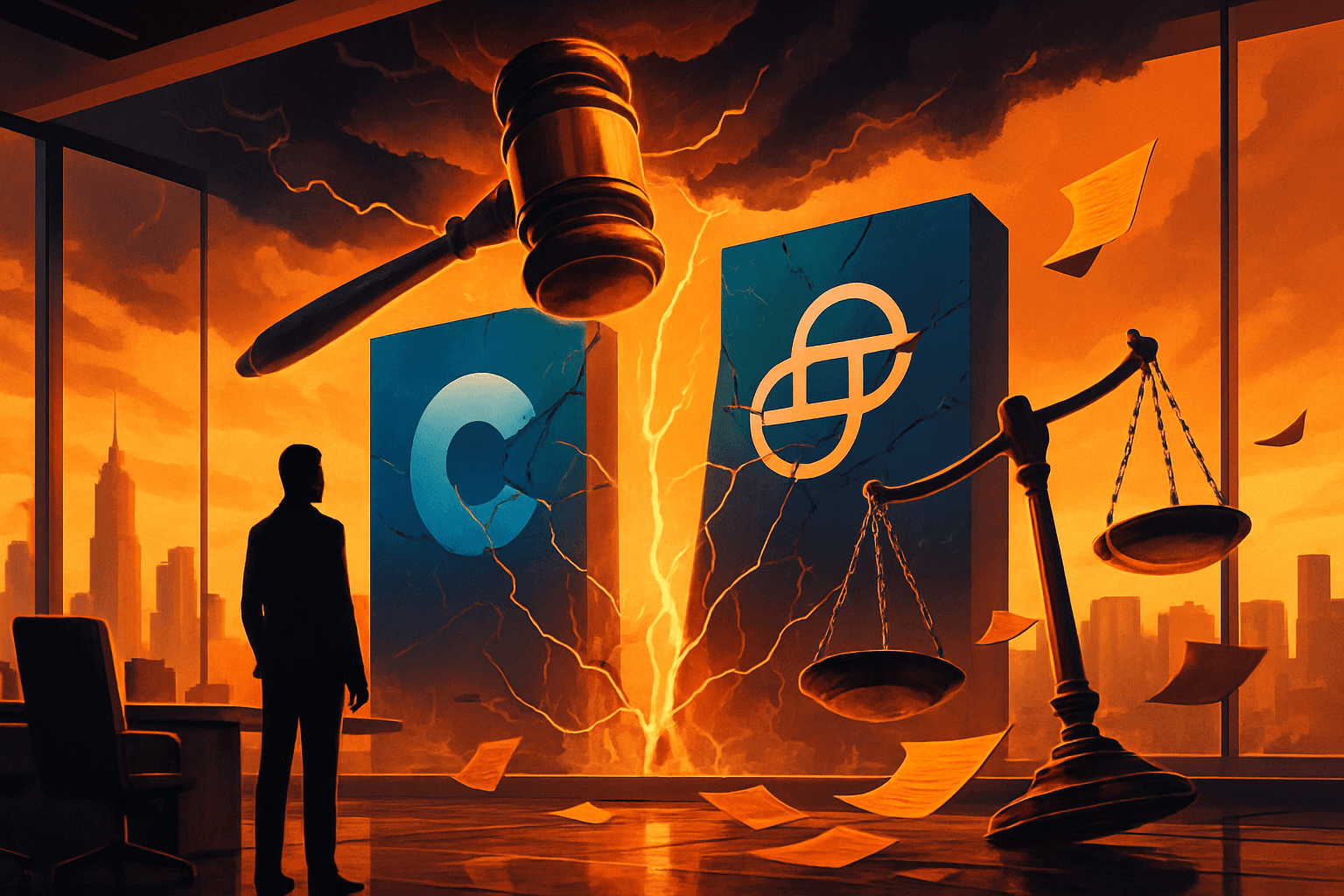
New York AG Sues Coinbase and Gemini Over Unlicensed Prediction Markets
New York AG Letitia James filed lawsuits against Coinbase and Gemini, alleging both exchanges ran unlicensed prediction markets in violation of state law. The cases could set national precedent for how event-based trading platforms are regulated.
New York AG Sues Coinbase and Gemini Over Unlicensed Prediction Markets
New York Attorney General Letitia James filed lawsuits against Coinbase and Gemini this week, alleging both exchanges operated unlicensed prediction markets in violation of state law. The suits target the companies' event-based trading products specifically, leaving their core exchange operations untouched, but the legal pressure adds another layer of regulatory complexity for two of the most prominent names in U.S. crypto.
James was direct in her characterization of the products. "Gemini and Coinbase's so-called prediction markets are just illegal gambling operations," she said, framing the enforcement action as consumer protection rather than a broader attack on crypto. The AG's office argues that both platforms offered New York residents the ability to bet on real-world outcomes without holding the state licenses required to run such operations.
Prediction markets allow users to buy and sell contracts tied to the outcome of future events, from election results to sports scores to macroeconomic indicators. When a user's prediction is correct, the contract pays out; when it is wrong, the position expires worthless. Proponents argue these platforms function as legitimate information markets, aggregating crowd wisdom into probabilistic forecasts. Critics, including James, argue the mechanics are functionally identical to gambling. That definitional dispute sits at the heart of both lawsuits.
The jurisdictional question may prove to be the most contested legal ground. Coinbase and Gemini are expected to argue that prediction markets fall under the purview of the Commodity Futures Trading Commission (CFTC), the federal regulator that oversees derivatives and event contracts, rather than state gambling authorities. The CFTC has taken a cautious but not entirely hostile stance toward prediction markets in recent years, approving certain event contracts through platforms like Kalshi while blocking others. If the exchanges can establish federal preemption, New York's case weakens considerably. That argument is far from guaranteed to succeed, and state courts have historically given AG James wide latitude in consumer protection matters.
New York's regulatory posture toward crypto has never been accommodating. The state's BitLicense framework, introduced in 2015, remains one of the most demanding licensing regimes in the country and has driven several crypto companies to exit the New York market entirely. James has previously pursued enforcement actions against other crypto entities, including a case against Tether and Bitfinex that ended in an $18.5 million settlement in 2021. The pattern suggests these lawsuits are not isolated moves but part of a deliberate strategy to extend state oversight into emerging crypto product categories before federal regulators establish clear rules.
Prediction markets grew significantly in public visibility following the 2024 U.S. election cycle, during which platforms like Polymarket drew mainstream attention for their accuracy in forecasting electoral outcomes. That surge in interest attracted regulatory scrutiny at multiple levels. The CFTC subpoenaed Polymarket in late 2024, and several states have raised concerns about whether event-based trading platforms require gambling licenses. New York's lawsuits against Coinbase and Gemini accelerate that regulatory reckoning, putting two heavily capitalized and publicly visible companies at the center of a legal fight likely to set precedent for how prediction markets are classified across the United States.
Neither Coinbase nor Gemini had issued detailed public responses to the filings at the time of publication. Both companies have legal teams experienced in fighting regulatory actions and have previously pushed back against what they characterized as regulatory overreach. Coinbase, which trades publicly on Nasdaq under the ticker COIN, will face additional scrutiny from institutional investors watching how the lawsuit affects its product roadmap and compliance costs. For Gemini, still privately held and navigating its own recent regulatory history, the timing adds pressure as the company works to rebuild its standing after the collapse of its Earn lending program.
How courts ultimately classify prediction markets, as derivatives, information markets, or gambling, will shape not just these two cases but the entire category's future in the United States.