Nasdaq’s Crypto Index Expansion Signals Institutional Embrace of Altcoins
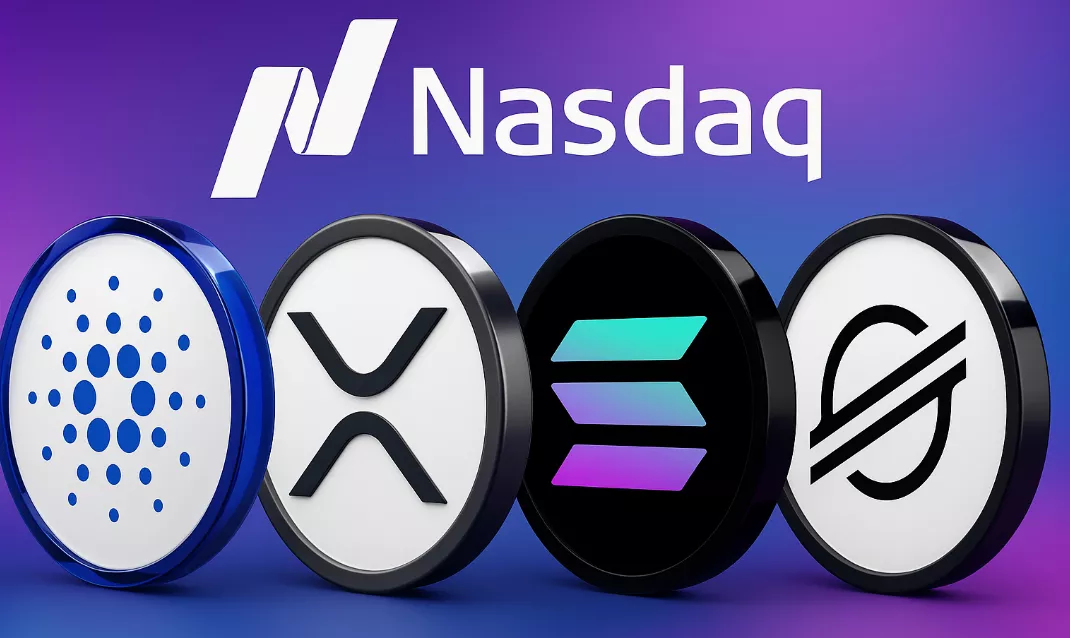
Nasdaq proposes adding XRP, Solana, Cardano, and Stellar to its crypto index, signaling broader institutional adoption of altcoins.
Nasdaq has submitted a proposal to the U.S. Securities and Exchange Commission (SEC) to expand its flagship Nasdaq Crypto Index (NCI) by including four additional digital assets: XRP, Solana (SOL), Cardano (ADA), and Stellar (XLM). This move would grow the index from two to six constituents, marking a critical step in institutional recognition of select altcoins.
The proposed change, filed on June 2, 2025, aims to align the holdings of the Hashdex Nasdaq Crypto Index US ETF (NCIQ) with the broader NCI, which already includes these altcoins. Currently, the ETF is limited to Bitcoin and Ethereum due to regulatory restrictions. By updating the rule under SEC’s Rule 19b-4, Nasdaq seeks to reduce the tracking error between the ETF and its reference index, increasing investor trust and product efficiency.
This regulatory push coincides with improving legal clarity for some digital assets. In particular, a federal court ruled in April 2025 that XRP does not qualify as a security, removing a major barrier to its institutional adoption. If the SEC approves the proposal by the expected deadline of November 2, 2025, the Hashdex ETF would be permitted to hold all six cryptocurrencies, significantly expanding its diversification potential.
The financial industry is closely watching this development, with analysts calling it a turning point for altcoin legitimacy. A broader inclusion in regulated financial instruments could catalyze substantial inflows and liquidity for these assets. It also underscores growing demand among institutional investors for exposure beyond Bitcoin and Ethereum, reflecting a more nuanced view of crypto’s role in diversified portfolios.
Traditional asset managers have increasingly integrated digital assets into investment strategies, and Nasdaq’s move aligns with this broader trend. The proposed additions are not arbitrary; each of the altcoins has demonstrated substantial market capitalization, developer activity, and ecosystem growth.
A positive SEC decision would also set a precedent for other index providers and ETF issuers. It could lead to a wave of similar products, expanding access to a more diverse set of crypto assets through compliant investment vehicles. That, in turn, would foster more robust infrastructure and regulatory dialogue around digital asset markets.
For the crypto industry, this proposal represents more than just index rebalancing—it’s a potential inflection point in the evolution of altcoin perception. The next few months will be crucial in determining whether regulatory bodies are ready to endorse a broader definition of institutional-grade digital assets.