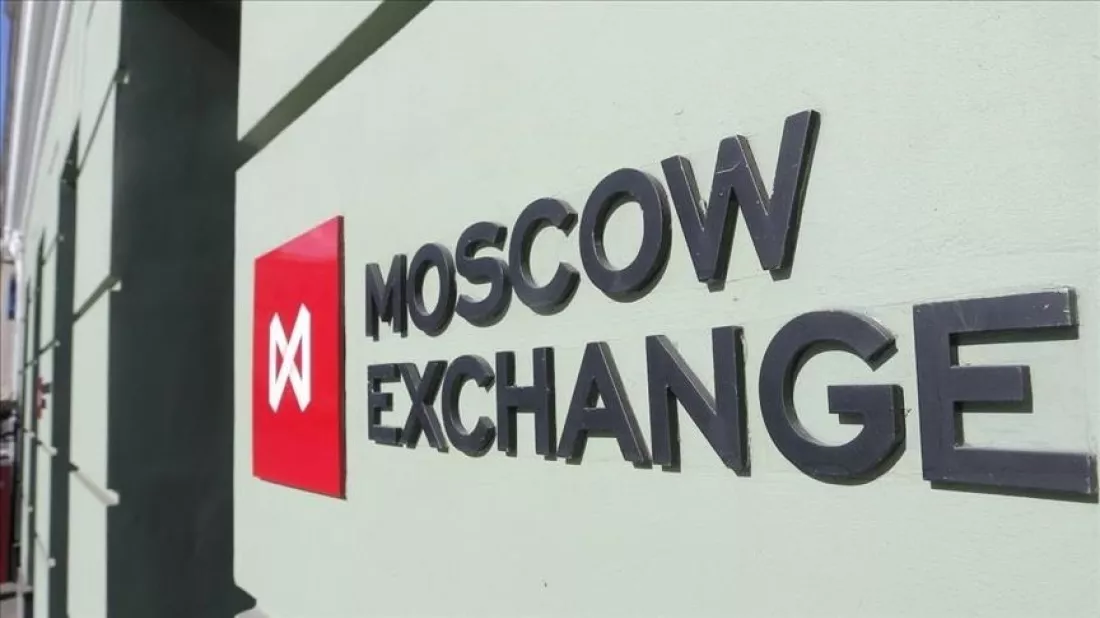
Moscow Exchange Expands Crypto Offering with Bitcoin Index Futures
MOEX to launch Bitcoin index futures amid growing demand for crypto derivatives among Russian institutional investors.
The Moscow Exchange (MOEX), Russia’s largest stock market, is preparing to launch a new crypto futures product tied to its proprietary Bitcoin index. The move marks the exchange’s second foray into cryptocurrency derivatives this month and reflects a surge in institutional demand for digital asset exposure.
In an interview with Russian business news outlet RBC, MOEX Managing Director Vladimir Krekoten revealed that the exchange will offer futures contracts based on the Moscow Exchange PFI Bitcoin Index (MOEXBTC), which was first calculated on June 10. This follows the earlier rollout of Bitcoin ETF futures, launched on June 4, based on BlackRock’s iShares Bitcoin Trust (IBIT)—the largest Bitcoin ETF globally.
Investor appetite has been strong. On its first day of trading, Bitcoin ETF futures on MOEX saw over 420 million rubles (roughly $5.3 million) in volume. Since then, the total has grown to nearly 7 billion rubles, with over 10,000 qualified investors participating. “These are very good indicators for such a short period of time,” Krekoten noted, underscoring the product’s early success.
BlackRock’s IBIT currently holds more than $70 billion in Bitcoin, representing over half the capital allocated across all U.S. Bitcoin ETFs, according to Sosovalue data. Spot Bitcoin ETFs have played a key role in driving institutional interest, offering indirect exposure to BTC without the need for direct custody.
MOEX is also eyeing further expansion of its crypto product lineup. Plans are underway to introduce mutual funds and structured bonds linked to cryptocurrency indices. Discussions are ongoing with asset management firms, and MOEX claims to already have the technical infrastructure needed.
Still, regulatory constraints loom large. While the Central Bank of Russia has approved the issuance of crypto derivatives, access remains limited to “highly qualified” investors. The final criteria are still under review, but current proposals suggest thresholds of at least 100 million rubles (around $1.25 million) in assets or 50 million rubles in annual income.
The competitive landscape is heating up. Major Russian financial institutions—including Sberbank and broker Finam—are racing to develop crypto-linked offerings. Sber has already issued structured bonds whose yields are tied to Bitcoin’s price and exchange rate movements between the ruble and the U.S. dollar. These instruments are also listed on MOEX.
With geopolitical tensions continuing to shape global markets, Russia’s push into regulated crypto derivatives signals an effort to modernize its financial sector while maintaining tight control over retail access. The MOEXBTC futures launch may be the clearest indication yet that digital assets are gaining traction within Russia’s traditional financial architecture.