Meta Launches USDC Creator Payouts on Solana and Polygon in Colombia and Philippines Pilot
Meta has launched a pilot allowing eligible creators in Colombia and the Philippines to receive earnings in USDC stablecoins via Solana and Polygon, with Stripe handling payment infrastructure across Facebook, Instagram, and WhatsApp.
Meta Launches USDC Creator Payouts on Solana and Polygon in Colombia and Philippines Pilot
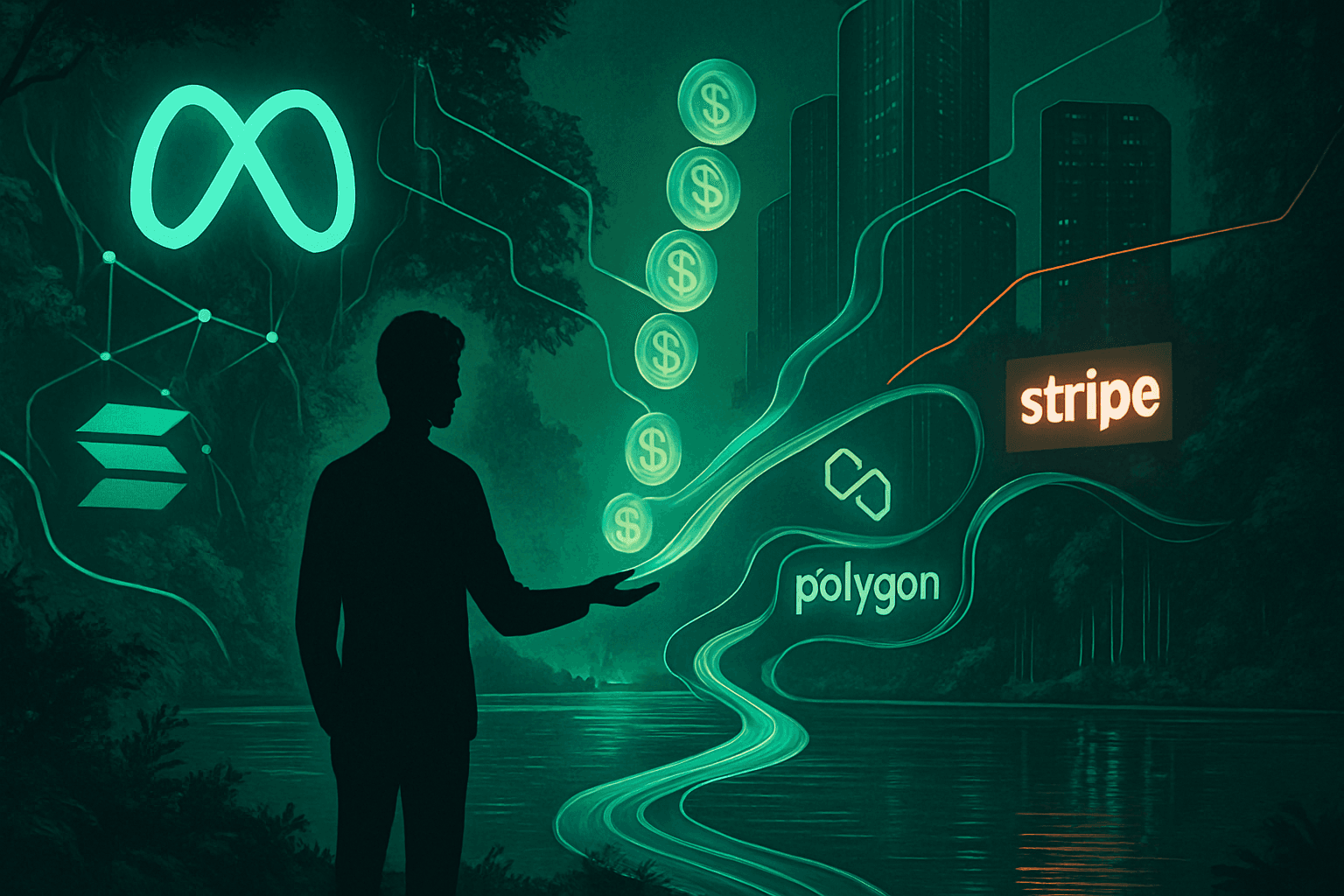
Meta has begun allowing eligible creators in Colombia and the Philippines to receive earnings in USDC stablecoins, settling transactions on Solana and Polygon blockchains through an infrastructure partnership with Stripe. The program covers Facebook, Instagram, and WhatsApp, and marks the company's most concrete move into crypto payments since its Libra project collapsed in 2022.
Creators enrolled in the pilot can link wallets including MetaMask, Phantom, and Binance Wallet to receive payouts directly in Circle's USDC, the dollar-pegged stablecoin. Meta's announcement targets eligible creators in both markets, though the company has not disclosed how many creators currently qualify or what the minimum payout thresholds are. Stripe handles the payment infrastructure layer, routing creator earnings from Meta's platforms onto the respective blockchains.
The choice of Solana and Polygon is deliberate. Both networks offer transaction costs measured in fractions of a cent, which matters when paying out creators who may be earning small amounts frequently. Ethereum's mainnet carries gas fees that would render micro-payouts economically unworkable. Polygon is an Ethereum layer-2 network that settles transactions on Ethereum while batching them to reduce cost and increase throughput. Solana operates as an independent layer-1 blockchain optimized for high-speed, low-cost transactions. The USDC supply on Solana has been growing sharply: Circle minted $500 million in USDC on the network on April 29, 2026, with weekly Solana USDC issuance reaching $3.25 billion, signaling significant institutional demand for dollar-denominated liquidity on that chain.
Colombia and the Philippines are not random test markets. Both countries have large, active creator populations on Meta's platforms and banking infrastructure that leaves many residents underserved by traditional payment rails. Remittances represent a substantial share of GDP in the Philippines, and the country has one of the highest rates of crypto ownership in Southeast Asia. Colombia has seen growing fintech adoption alongside persistent currency volatility. For creators in these markets, receiving USDC directly into a self-custodied wallet sidesteps correspondent banking fees and currency conversion delays that can eat into earnings from international platforms. The logic mirrors, at least structurally, the reasoning behind El Salvador's Bitcoin adoption: when legacy financial infrastructure creates friction, alternative rails become attractive.
The pilot also arrives as stablecoin legislation advances in the United States. The GENIUS Act, which would establish a federal framework for payment stablecoins, passed the Senate Banking Committee in March 2026, with a floor vote expected this summer. Meta's move into USDC payouts positions the company favorably within that regulatory conversation, aligning it with Circle rather than building a proprietary token. That is a meaningful lesson from Libra: issuing your own currency draws immediate regulatory fire. Using an existing, regulated stablecoin issued by a compliant company is a fundamentally different posture.
Several real risks accompany the rollout. Solana has experienced network outages in the past, and while the chain has been more stable through 2025 and into 2026, settlement failures on a payment product would erode creator trust quickly. Creators unfamiliar with blockchain technology must set up and secure their own wallets, a non-trivial onboarding hurdle for a population that may have never interacted with crypto. Regulatory environments in Colombia and the Philippines for stablecoin payments are still developing, and compliance obligations could shift. There is also the question of what happens to creators who receive USDC but need local currency: off-ramp infrastructure, the ability to convert USDC into Colombian pesos or Philippine pesos at reasonable rates, is not yet seamlessly integrated into most consumer wallets.
For the broader crypto industry, the signal is clear regardless of the pilot's eventual scale. Meta operates platforms used by more than three billion people. Integrating USDC payouts, even in two countries, normalizes blockchain-settled payments as a legitimate alternative to wire transfers and PayPal disbursements. If the pilot expands, it would represent one of the largest real-world deployments of stablecoin payment infrastructure ever attempted, measured not by transaction volume but by the number of ordinary people receiving crypto as income for the first time.