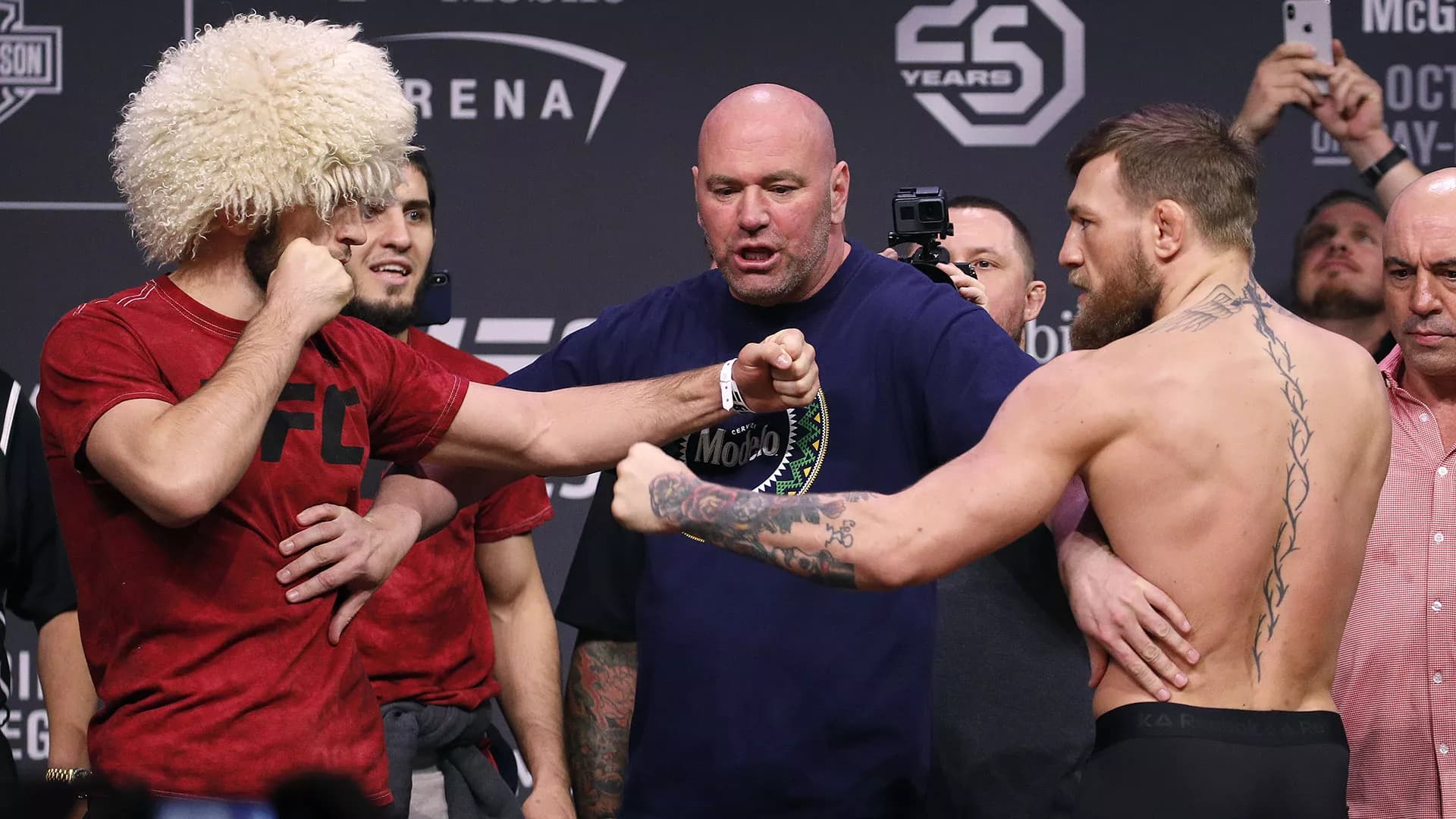
McGregor reignites rivalry with Khabib after accusing him of a multimillion-dollar NFT deception
McGregor accuses Nurmagomedov of scamming fans with a $4.4M NFT sale as their UFC rivalry spills into digital culture.
The rivalry between Conor McGregor and Khabib Nurmagomedov has resurfaced once again, this time far from the octagon and deep withdigital assets. A heated exchange erupted after Nurmagomedov launched a series of NFTs modeled after the papakha, the traditional Dagestani hat he popularized during his UFC career. The collection reportedly generated about $4.4 million, but the celebration quickly spiraled into controversy when McGregor accused his former opponent of deceiving fans.
According to social media posts, promotional material for the NFT drop disappeared shortly after the sale concluded. McGregor seized on those vanished posts as evidence of what he called a “scam,” alleging that Nurmagomedov had exploited his late father’s legacy and Dagestani cultural heritage to drive up demand before removing all traces of the campaign. In a blistering public comment, McGregor described the episode as “a shame and a stain,” questioning how someone with Nurmagomedov’s public reputation could “fire sell a bunch of digital NFTs online and then delete all of the content after they were sold.”
Nurmagomedov rejected the accusations in forceful terms, labeling McGregor an “absolute liar” and framing the NFTs not as a grift but as a legitimate attempt to celebrate the cultural symbolism of the papakha. He argued that the project offered genuine digital value and dismissed the allegations as a continuation of the personal hostility that has defined their relationship since McGregor’s defeat in their 2018 championship bout.
The dispute comes at a moment when combat sports figures are increasingly intersecting with digital culture, from fan tokens to sponsorships tied to blockchain firms. Yet the friction also exposes the fragile line between digital collectibles and the skepticism that often surrounds crypto-driven ventures, particularly those linked to celebrity endorsements. In this case, cultural representation adds another layer of sensitivity, amplifying the scrutiny around how heritage is deployed in commercial digital spaces.
McGregor, for his part, has experience navigating the unpredictable terrain of blockchain projects. He previously collaborated with Real World Gaming DAO to introduce a meme token called REAL, an initiative pitched as combining humor-driven crypto culture with tangible utility and clearer fundraising structures. The presale missed its targets, prompting the team to return funds to participants. Though that outcome lent McGregor an air of caution in retrospect, it also highlighted the volatility of the space in which both fighters now find themselves.
The flare-up over Nurmagomedov’s NFT release underscores how quickly public narratives can shift in the digital asset industry, especially when fueled by high-profile personalities with deeply entrenched rivalries. While the financial figures surrounding the papakha-inspired collection remain unverified, the backlash demonstrates the delicate dynamics that govern cultural representation, trust, and transparency in crypto markets.
For now, Nurmagomedov maintains that the project reflects an authentic tribute to his roots, while McGregor portrays it as an opportunistic grab for cash. Their disagreement illustrates a broader truth: even years after their last clash inside the cage, the arena for their rivalry continues to expand — now into the symbolic and often contentious world of digital collectibles.