Malaysia Launches One of Asia’s Toughest Crackdowns as Illegal Bitcoin Mining Drains $1.1B in Power
Malaysia intensifies its crackdown on illegal Bitcoin mining after $1.1B in stolen electricity and 14,000 illicit rigs uncovered.
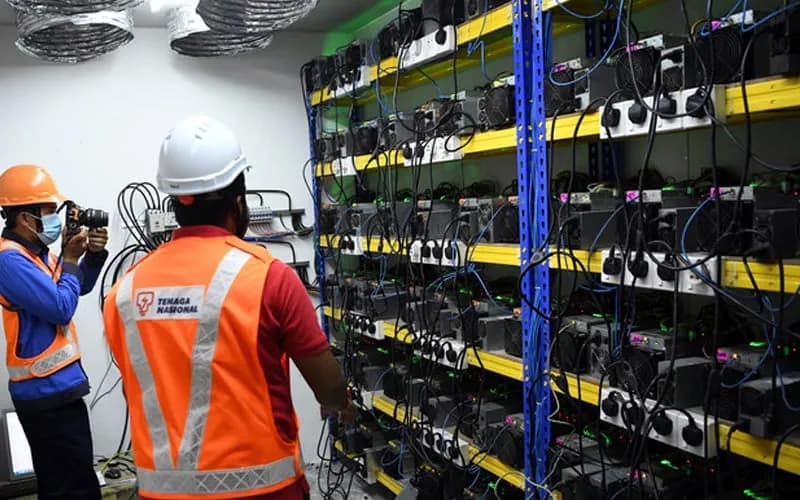
Malaysia is escalating its campaign against illegal Bitcoin mining operations with an enforcement strategy that blends high-tech surveillance, multi-agency coordination and aggressive site shutdowns. After years of mounting electricity theft tied to hidden mining farms, authorities now estimate that more than 14,000 illicit Bitcoin mining rigs have been discovered in the country since 2020, reflecting a problem so extensive that officials say it threatens national infrastructure.
The sheer scale of the losses is staggering. State utility Tenaga Nasional Berhad reports that illegal mining has siphoned off roughly $1.1 billion in electricity over the past five years, with nearly 3,000 new theft cases reported by early October alone. That volume of stolen power, officials note, could supply more than half a million Malaysians for an entire year. For policymakers, the issue has evolved from a nuisance into an economic and security threat demanding immediate structural action.
Authorities have expanded detection efforts using drones equipped to scan neighborhoods, commercial blocks and abandoned buildings for unusual heat signatures characteristic of industrial mining rigs. On the ground, enforcement teams use handheld tools designed to identify irregular electricity flow, while residents increasingly call in reports after hearing unfamiliar humming noises. In some raids, police found operators attempting to mask the sound of mining machines with looping bird calls or jungle ambience.
The government’s response now involves a coordinated task force formed on November 19, bringing together the Ministry of Finance, Bank Negara Malaysia and the national utility. Deputy Energy Minister Akmal Nasrullah Nasir, who chairs the committee, warned that the danger extends far beyond financial loss, arguing that overloaded circuits and unregulated rig clusters risk damaging critical energy infrastructure. He said the sophistication of the operations — from rapid relocation to elaborate heat-shielding and false-wall setups — suggests the involvement of organized criminal networks.
Investigations reveal that illegal mining groups repurpose a wide variety of structures to avoid detection. Vacant shop lots, unused suburban storefronts, abandoned houses and quiet warehouses have all been converted into clandestine mining hubs. ElementX Mall near the Strait of Malacca, a large commercial complex that never recovered from the pandemic, was partially taken over by miners in 2022; the operation surfaced only after a viral video exposed the activity. In Sarawak, a former logging yard was turned into a major mining facility, illustrating how operators exploit any location capable of supporting dense hardware clusters.
Although Bitcoin mining is legal in Malaysia if operators pay for electricity and taxes, Nasir expressed skepticism about the sector’s long-term viability, citing the instability of crypto markets. During the task force’s first meeting, officials even debated whether the country should consider a full prohibition on mining due to the mounting risks.
Malaysia’s crackdown has evolved into one of the most advanced enforcement campaigns in Asia, combining surveillance technology, inter-agency alignment and targeted policing. With illegal Bitcoin mining now treated as a systemic threat, authorities aim to curb electricity theft before it compromises the reliability of the national grid.