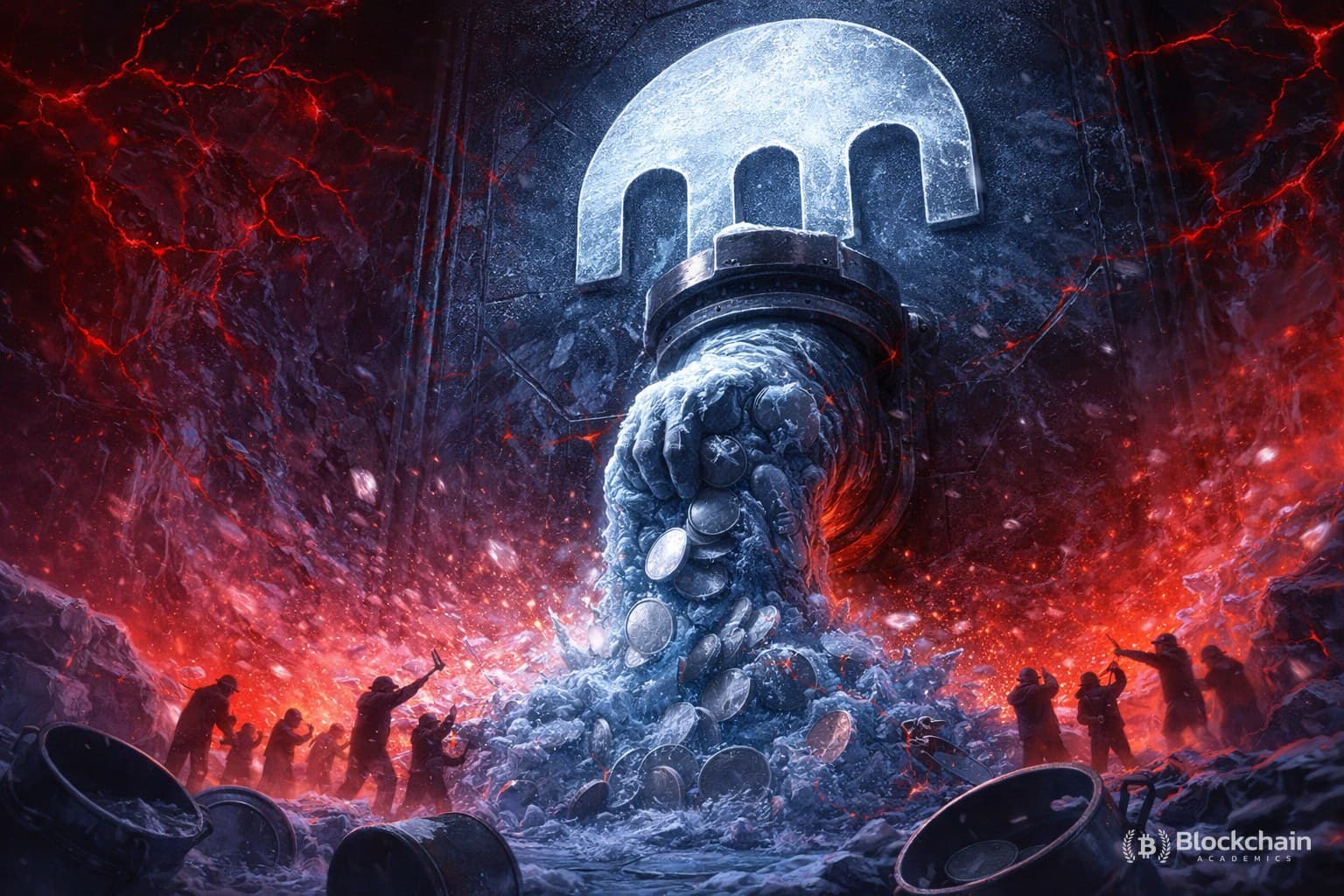
Kraken Withdrawal Delays Widen as 23 Funding Services Remain Degraded
Twenty-three funding services on Kraken are degraded or fully non-functional as of September 8, days after a multi-network failure cascaded through the exchange's infrastructure. The outage has left users unable to withdraw funds and raises questions about the exchange's infrastructure reliability.
Kraken Withdrawal Delays Widen as 23 Funding Services Remain Degraded
Twenty-three funding services on Kraken are degraded or fully non-functional as of Tuesday, September 8, days after a multi-network failure began cascading through the exchange's infrastructure and left an unknown number of users unable to move funds off the platform.
The breadth of the outage is notable. A single degraded payment rail is a routine technical nuisance. Twenty-three simultaneous service failures points toward something more systemic in Kraken's funding stack, whether that is a shared dependency, a middleware layer, or a third-party processor that routes across multiple networks. Kraken has not publicly disclosed the root cause.
For users, the practical consequence is straightforward and frustrating: withdrawals are stuck. The duration of the disruption compounds the concern. Days-long funding delays at a centralized exchange trigger a specific kind of anxiety in crypto markets, one shaped by the industry's history with exactly this failure pattern. Mt. Gox's withdrawal halts in 2013 and 2014 began as technical explanations before revealing deeper insolvency. FTX's liquidity crisis in late 2022 surfaced first as user complaints about slow withdrawals before the full picture emerged. Kraken's situation carries no evidence of solvency problems, and the comparison is not meant to imply equivalence. The point is that users have learned, through painful experience, to treat sustained withdrawal delays as a signal worth taking seriously.
The timing is awkward for Kraken specifically. The exchange has spent the past two years positioning itself as the most compliance-ready, institutionally credible alternative to Coinbase in the U.S. market. It secured a futures commission merchant license, pushed into retail stock trading, and has been vocal about its ambitions to bridge crypto and traditional finance. Operational failures of this kind cut against that narrative. Institutional counterparties and banking partners evaluate exchanges partly on infrastructure reliability. A multi-day, multi-network funding outage is not the profile Kraken wants circulating in those conversations.
The counter-case deserves fair treatment. Kraken has navigated technical incidents before without lasting reputational damage. The exchange's solvency is not in question, and funding delays, however disruptive, are categorically different from the liquidity crises that destroyed FTX and Mt. Gox. If Kraken restores services quickly and communicates transparently about root cause and remediation, the incident may register as a footnote rather than an inflection point. The regulatory compliance record and institutional relationships Kraken has built do not evaporate over a week of degraded service. Speed of resolution and quality of communication will determine how much reputational capital this costs.
What the incident does underscore is a structural vulnerability that applies across centralized exchanges. The funding layer, the plumbing that connects crypto custody to fiat rails and external networks, is often the least visible and most fragile part of the stack. Exchanges invest heavily in matching engine uptime and security audits. The payment infrastructure that actually moves money in and out receives less public scrutiny until it fails. When it fails across 23 services simultaneously, the question regulators and institutional partners will ask is not just what broke but how the exchange did not see this coming, and what its monitoring looks like.
Kraken has not issued a detailed public post-mortem as of this writing. Users reporting stuck withdrawals should monitor the exchange's official status page and, if funds remain inaccessible beyond reasonable timeframes, engage support directly rather than waiting for a platform-wide resolution announcement. The situation remains active.