Iran's Crypto Crackdown: Nobitex Hack Unleashes New Digital Cold War
A $100M cyberattack on Nobitex ignites Iran's crypto curfew, revealing the rise of politically-driven blockchain warfare.
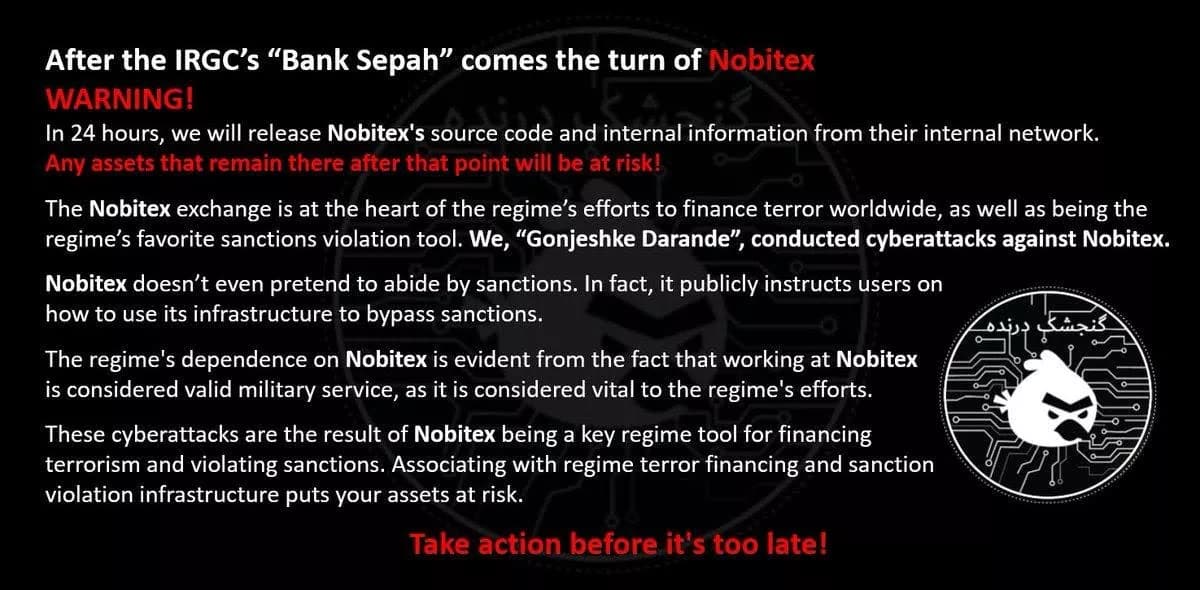
Iran's cryptocurrency sector was jolted into crisis this week following a devastating $100 million cyberattack on Nobitex, the country's largest digital asset exchange. The breach, claimed by the pro-Israel hacker group Gonjeshke Darande ("Predatory Sparrow"), has not only incinerated tens of millions in digital assets but also forced Iranian regulators to impose a sweeping night-time trading ban, disrupting the country's 24/7 crypto market.
The attack, launched in the early hours of June 18, exploited security gaps in Nobitex's hot wallets across major networks including Bitcoin, Ethereum, Dogecoin, and Solana. But this was no ordinary theft. Instead of laundering the stolen funds, the attackers funneled them into "burner" wallets with provocative anti-Iran messages, effectively destroying the assets in a politically charged act of cyber sabotage.
Unlike profit-driven hacks, this incident bore the hallmarks of ideological warfare. Blockchain forensics confirmed the irreversibility of the losses, with analysts from SlowMist and Elliptic tracing over $80 million worth of assets burned in wallets designed for no retrieval. The group accused Nobitex of abetting sanctions evasion and terrorism financing, threatening to expose its source code to further erode user trust.
Security researchers tied the breach to compromised employee credentials and infostealer malware, highlighting systemic vulnerabilities in Nobitex's internal protocols. In response, Iran’s Central Bank and Ministry of Industry swiftly implemented a nationwide curfew on crypto trading, restricting activity to between 10 a.m. and 8 p.m. daily. The emergency measure aims to curb capital flight and stem potential overnight attacks as geopolitical tensions flare.
The market reaction was immediate. Nobitex's branded wallet holdings plunged from $1.8 billion to $96 million in under 48 hours. Peer-to-peer trading saw USDT and TRX prices dip below global benchmarks, reflecting diminished investor confidence and liquidity pressure.
While Nobitex has pledged to compensate users through reserve funds and maintains that cold storage accounts remain secure, the reputational damage is significant. Critics argue that the government’s regulatory pivot—tightened KYC protocols and mandatory cold storage for exchanges—is a reactive move that may deter innovation in an already constrained ecosystem.
This hack differs sharply from past incidents in the region. Unlike financially motivated attacks such as the Bybit breach earlier this year, the Nobitex heist was an intentional act of destruction, weaponizing blockchain transparency to deal economic and psychological blows.
As cyber hostilities escalate across digital borders, experts warn that the emerging trend of "asset-burn" attacks could reshape cyber defense strategies. For nations operating in geopolitical crosshairs, robust exchange security is no longer optional—it’s a matter of national resilience.