ETHZilla’s High-Stakes Bet on Tokenized Housing Collides With a Sharp Fall in Ether Treasury Stocks
ETHZilla pushes deeper into tokenized lending with its Zippy acquisition as Ether-treasury stocks continue to drop.
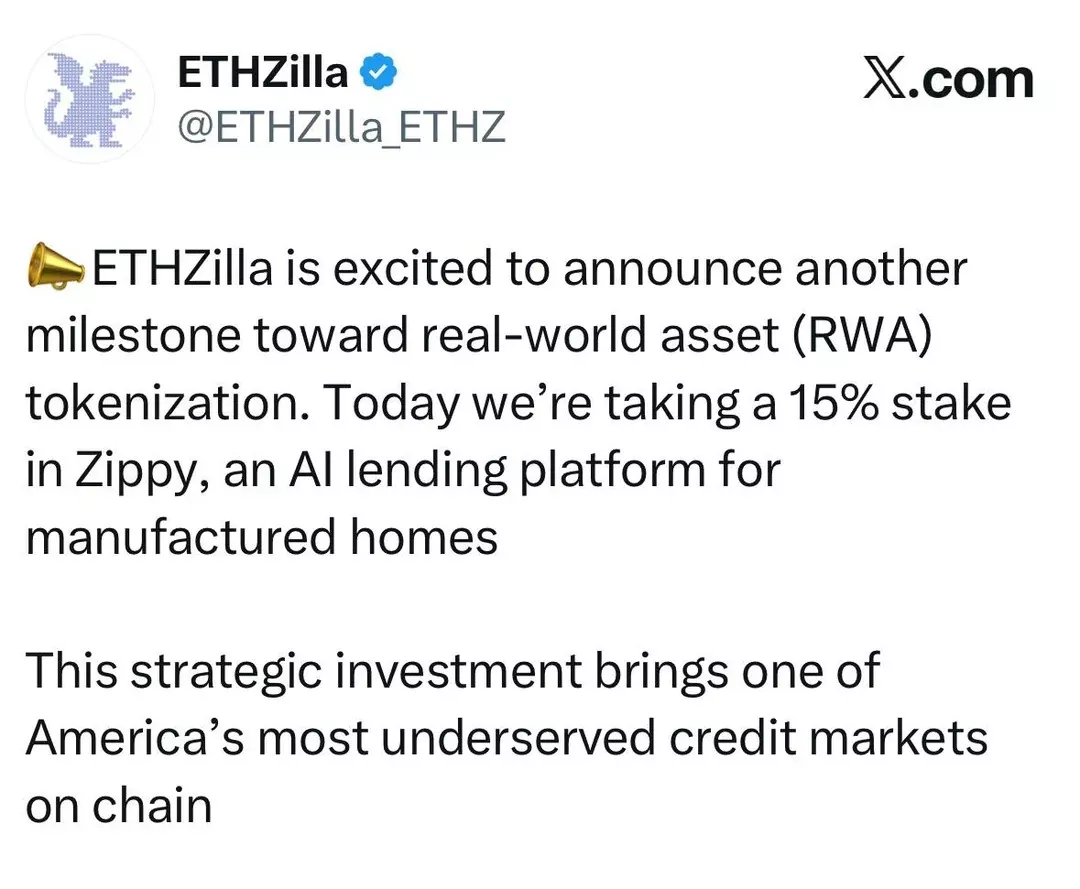
ETHZilla’s latest move into the tokenized lending market underscores the company’s attempt to redefine how real-world assets circulate on blockchain rails, even as its own Ether treasury strategy faces intense market pressure. The firm has acquired a 15% stake in Zippy, a U.S. lender specializing in manufactured-home financing, in a deal valued at $21.1 million. The transaction, split between cash and stock, marks ETHZilla’s second acquisition in only a week as it attempts to build an ecosystem dedicated to onchain distribution of chattel loans.
Zippy, founded in 2021, relies on an AI-driven underwriting platform tailored to manufactured homes, a sector often underserved by traditional financial services. ETHZilla intends to integrate Zippy’s technology with its own tokenization infrastructure, enabling loans to move seamlessly from origination into onchain forward-flow channels aimed at institutional buyers. As part of the agreement, ETHZilla will take a seat on Zippy’s board and secure a 36-month exclusivity arrangement that routes all of Zippy’s blockchain activity through its platform. The deal expands ETHZilla’s reach within the real-world asset sector, a field it has prioritized since repositioning itself as one of the largest Ether treasury holders.
The acquisition follows a similar deal completed just a week earlier, in which ETHZilla purchased a 20% stake in auto-finance startup Karus for $10 million. Together, the back-to-back transactions suggest a rapid acceleration in ETHZilla’s model: acquiring niche lenders and transforming their loan pipelines into blockchain-native products. But the aggressive expansion comes amid significant turbulence in the corporate Ether-treasury landscape.
ETHZilla’s own stock dropped roughly 10% on the day of the Zippy announcement and has fallen nearly 91% since its mid-August peak, tracking a broader collapse among companies holding Ether on their balance sheets. The firm’s shares surged from $45 to $107 shortly after adopting its Ether strategy in late July, only to retreat to around $10 as Ether itself slid from $4,946 in late August to near $3,365.
Other Ether-treasury firms have experienced similar declines. SharpLink Gaming, which expanded its Ether holdings after a major private placement earlier in the year, saw its stock plummet from $79 to roughly $12. Bitmine Immersion, led by Fundstrat co-founder Tom Lee, fell from a summer high of $135 to around $40. Analysts note that companies tying their corporate value directly to large crypto positions face amplified downside risk during market corrections, particularly if falling token prices threaten borrowing covenants or force liquidations.
Industry experts have warned that these strategies carry structural vulnerabilities. The combination of high volatility and treasury concentration can generate feedback loops that intensify sell-offs, especially when companies depend on Ether appreciation to support operations or investor confidence.
Even so, ETHZilla’s acquisition strategy highlights growing demand for tokenized real-world financial products. Manufactured-home loans represent a sizable but fragmented segment of consumer credit, and bringing these assets onchain could increase transparency, liquidity and standardization. Whether ETHZilla can scale this approach while navigating the stresses of a declining treasury remains an open question, but its rapid investment push signals an ambition to position itself at the center of blockchain-based lending markets.